2025 Ranger Raptor: Specs, Changes, and Value
Explore the 2025 Ranger Raptor's specs, changes from 2024, common issues, and pricing logic. An essential guide for potential buyers.
Gear in this article
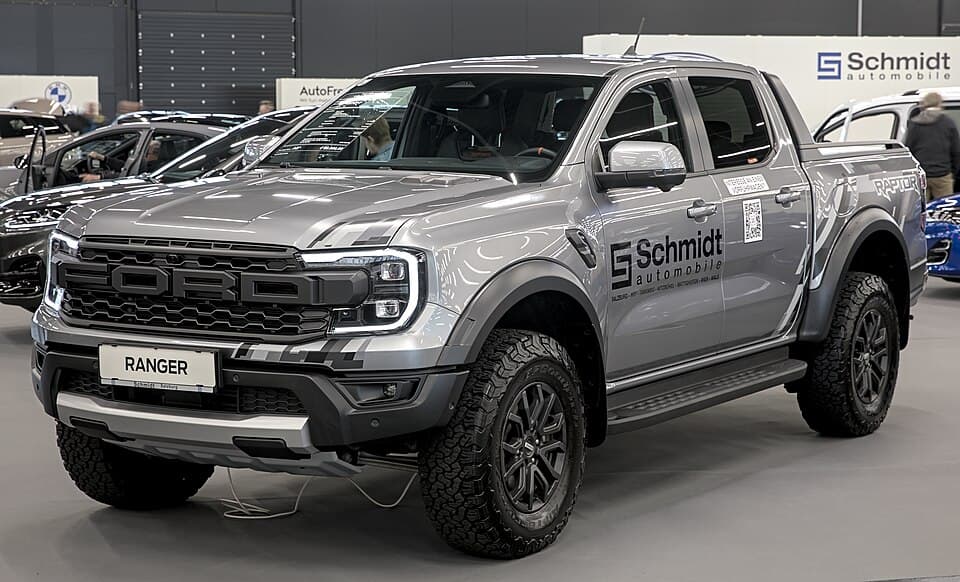
The 2025 Ranger Raptor is a carryover year: same 3.0L EcoBoost V6, same 10R80 ten-speed automatic, same Fox 2.5 Live Valve suspension, same five-foot bed and SuperCrew cab. The news for 2025 is new paint, better dealer availability after a rocky 2024 launch, and a deeper Ford Performance accessory catalog for the platform. Nothing moved under the sheet metal, which matters for anyone trying to decide whether to pay 2025 money or hunt for a discounted 2024.
Because this is only the truck's second model year in the US, the honest answer on "problems" is that there isn't much failure data yet. Most of what gets repeated online is either low-mileage, easy-to-spot stuff from current owners, or informed guessing based on what the shared EcoBoost family has done in other Fords. We'll separate the two below.
What actually changed from 2024
Short version: almost nothing mechanical. The engine, transmission, suspension tune, axle ratios, and tire package all carry over unchanged from the 2024 Ranger Raptor. Ford added new exterior colors and, according to dealers, fixed a lot of the ordering and allocation chaos that made 2024 trucks hard to find at sticker.
The bigger change is around the truck, not in it. The Ford Performance catalog for the T6.2 platform (the global architecture the Ranger Raptor and Ranger share) has grown, so bumpers, sliders, and suspension options that didn't exist at launch are now on shelves. If you're cross-shopping, that catalog gap is smaller than it was a year ago but still thinner than what exists for the full-size F-150 Raptor.
Specs that matter
| Spec | 2025 Ranger Raptor |
|---|---|
| Engine | 3.0L twin-turbo EcoBoost V6, 405 hp @ 5,750 rpm, 430 lb-ft @ 3,500 rpm |
| Transmission | 10R80 10-speed automatic |
| Front/rear suspension | Fox 2.5 Live Valve shocks, coil-sprung solid rear axle with a Watt's link (a lateral locating arm that keeps the axle centered side-to-side through travel) |
| Tires/wheels | 285/70R17 BFGoodrich All-Terrain KO2, 33 inches tall |
A few numbers worth knowing beyond the table. Ground clearance runs 10.7 inches, with approach, breakover, and departure angles of 33.0, 24.2, and 26.4 degrees. Ford rates water fording at 33 inches. Curb weight lands around 5,325 lbs (an estimate; confirm against your build sheet since options shift it), with 1,410 lbs of payload and a 5,510-lb tow rating, both of which track with what Ford has published for this platform. For context on how that stacks up against the full-size truck, see our breakdown of Ford Raptor towing capacity by generation.
EPA rates the Ranger Raptor at 16 city, 18 highway, 17 combined. Real-world mixed driving lands closer to 280-320 miles of range on the tank before the low-fuel light comes on, which is tight for a truck built to go off the beaten path. Ford doesn't publish an official 0-60 time; independent testing has clocked it in the mid-to-high 5 second range, call it 5.8 seconds as a working estimate rather than a factory number. Drive modes number seven, Baja included, and the only body style offered is SuperCrew with the 5-foot bed.
What's actually breaking on these trucks
Split this into two buckets: what current owners are reporting now, and what to watch for later based on the shared engine and transmission family.
Reported now, on actual 2024-2025 trucks:
- Rear axle skip on washboard. With nothing in the bed, the coil-sprung rear axle can step sideways on rough, repetitive surfaces. Owners report that loading roughly 200 lbs in the bed settles it out; a permanent fix is a rear shock revalve, which is a suspension tuning job, not a part swap.
- SYNC 4A lag and wireless CarPlay dropouts. This is a software complaint, not a hardware one. Taking Ford's over-the-air updates when prompted clears most of it; a wired cable instead of wireless CarPlay is the reliable workaround in the meantime.
- Bash plate coating wear. The front skid plate's factory coating can wear through to bare metal and surface-rust, especially on trucks that see gravel regularly. Cosmetic, not structural, and fixable with a strip-and-recoat.
- Fuel range anxiety. Not a defect, just physics: a small tank and a thirsty twin-turbo V6 add up to 280-320 miles mixed. Plan fuel stops on longer trips the way you would in any small-tank off-road truck.
Not confirmed on this truck yet, but worth watching because of the shared engine and transmission:
- Intake valve carbon buildup, the deposit buildup that forms on direct-injected EcoBoost engines and shows up as a rough cold idle or lost throttle response. On other EcoBoost applications this tends to surface past 60,000-90,000 miles, and no 2024 or 2025 Ranger Raptor has that kind of mileage on it yet. Read our EcoBoost carbon buildup explainer for what it actually does to an engine before you assume it applies here.
- 10R80 shift quality. The same transmission has shown harsh 1-2 shifts and torque converter shudder in other EcoBoost-powered Fords; see our 10R80 shift and shudder guide for the pattern. Whether the Ranger Raptor's tune and lighter curb weight change that story is genuinely unknown this early.
- Turbo boost solenoid faults. Same logic: a known failure mode on other twin-turbo EcoBoost engines, not something with a documented rate on this specific truck yet.
As of this writing there's no open recall campaign specific to the 2025 Ranger Raptor. Recall status changes, so run the VIN through NHTSA's lookup before you sign anything, not a forum thread.
What Ford covers
A 2025 Ranger Raptor carries Ford's standard new-vehicle coverage: 3 years/36,000 miles bumper-to-bumper, 5 years/60,000 miles on the powertrain. That means engine, transmission, and drivetrain failures inside those limits are Ford's problem, full stop. A TSB (technical service bulletin) is a documented repair procedure Ford issues to dealers, not free money, you still pay unless the truck is in warranty or Ford extends goodwill, which is discretionary and not something you can demand. Any dealer quote for warranty-adjacent work should start with "pull the VIN and check build date and mileage," not a guess.
Pricing logic
Ford's sticker for a 2025 Ranger Raptor starts in the mid $50,000s before options; the exact number moves with trim and destination, so get it from a dealer against your specific build rather than trusting a number printed a year ago.
The used market tells the more useful story. As of this writing, the site's own live listings show 2025 Ranger Raptors averaging $56,585 across 254 listings, 2024 trucks averaging $52,508 across 224 listings, and the newer 2026 trucks already running $61,660 average across 1,812 listings. Read that spread carefully: these trucks are not depreciating in the normal sense yet. Demand has stayed ahead of supply long enough that a one-year-old 2024 and a new 2025 sit within a few thousand dollars of each other on the used market, and 2026 trucks are already listing above both. If you're shopping used specifically to save money against new MSRP, a 2025 Ranger Raptor right now doesn't give you much of a discount, you're mostly paying for someone else's few thousand miles.
That changes the calculus against the full-size F-150 Raptor. If you're cross-shopping the two trucks, our side-by-side on Ranger Raptor versus F-150 Raptor walks through where the smaller platform actually makes sense and where it doesn't, including the bed and cab size question that trips up buyers moving down from a full-size truck; see also whether the Ranger Raptor is actually big enough for daily use.
Buying used: what to check
- Cycle both the front and rear lockers and confirm they engage and disengage cleanly, not just that the dash light comes on.
- Inspect the front bash plate and rear diff cover for coating wear, dents, or rust-through.
- Check whether the truck has been lifted and fitted with 35-inch tires. Stock geometry is tuned around the factory 33-inch KO2s; stepping up usually means a leveling kit and an alignment at minimum. Our 35s versus 37s tradeoff breakdown covers the fitment and cost tradeoffs even though it's written around the full-size truck, most of the logic carries over.
- Scan for stored codes, especially anything boost- or misfire-related, before you commit.
- Run a cold start and listen for a rough idle.
- If you can, run the truck over washboard or rumble strips to feel for the unladen rear axle skip.
- Confirm the infotainment software is current; an unupdated SYNC 4A system is an easy, free fix a seller should have already done.
- Check the tow hitch wiring and trailer module connector for corrosion if the truck has towed anything.
For a longer walkthrough built specifically around this platform, our used Ranger Raptor buying guide goes deeper on inspection steps than this section can.
The short version
- The 2025 Ranger Raptor is mechanically identical to 2024: same 405-hp 3.0 EcoBoost, same 10R80, same Fox 2.5 Live Valve suspension. New colors and better availability are the real changes.
- Most "problems" reported so far are low-mileage issues (rear axle skip, infotainment lag, bash plate coating); the higher-mileage EcoBoost risks like carbon buildup and turbo faults haven't had time to show up on this specific truck yet.
- Used 2024 and 2025 trucks are pricing close together right now ($52,508 and $56,585 average respectively on current listings), so buying used doesn't save much against new MSRP yet.
- Check real ownership costs before you sign; our Ranger Raptor cost of ownership breakdown covers fuel, maintenance, and insurance beyond the purchase price.
Deal alert
Shopping for one? Get new listings first
We sweep US dealer inventory and send you new Raptors matching your search — real listings, real asking prices, no spam.