2025 Bronco Raptor: Specs, Changes, and What to Pay
Explore the 2025 Bronco Raptor's specs, changes, known issues, and value. Compare used vs new, and understand what to expect.
Gear in this article
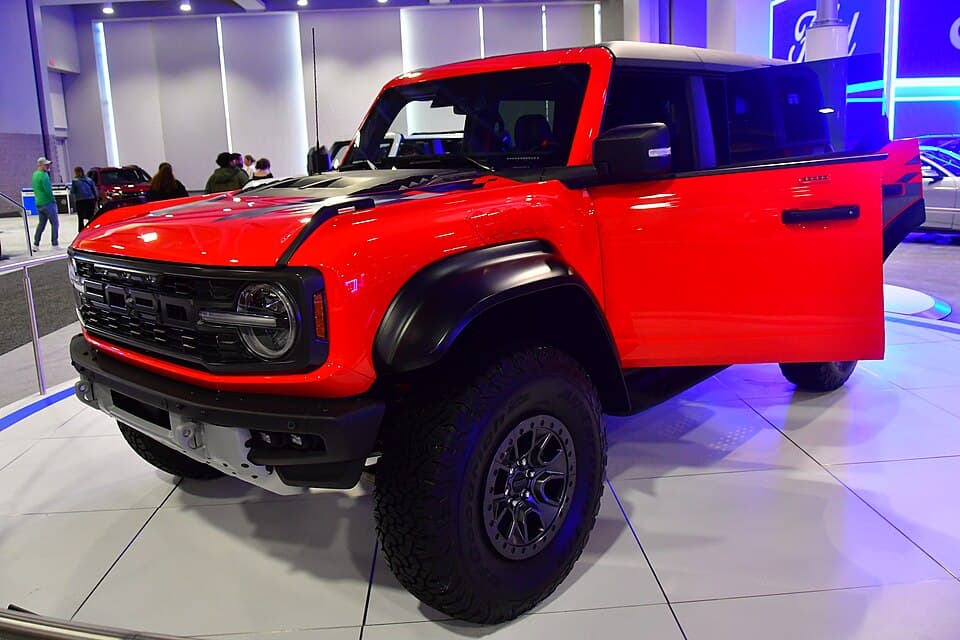
The 2025 Bronco Raptor carries over mechanically unchanged from 2024: same 3.0L EcoBoost V6 at 418 hp and 440 lb-ft, same 10-speed automatic, same HOSS (High-Performance Off-Road Stability Suspension) 4.0 setup with Fox 3.1 Live Valve shocks. New pricing starts in the low $90,000s before options, and the used market has already discounted a clean 2024 or 2025 truck well below that, which is where the better buy sits right now.
What actually changed for 2025
Nothing under the skin. Ford treated 2025 as a holding year on the Bronco Raptor after the larger 2024 content additions, and the only update worth mentioning is a revised infotainment build shared across the wider Bronco Raptor lineup, mostly software and screen behavior, not hardware.
If you're cross-shopping model years for mechanical differences, there is no reason to pay a premium for a 2025 over a well-kept 2024, and no reason to wait on a 2026 either unless Ford announces something specific. Check the current 2024 Bronco Raptor and 2022 Bronco Raptor writeups if you're weighing a used truck from either side of this one; the drivetrain story is the same across all three years.
The specs that actually matter
The 3.0L EcoBoost V6 makes 418 hp and 440 lb-ft, run through a 10-speed automatic and a two-speed electromechanical transfer case. HOSS 4.0 pairs Fox 3.1 Live Valve internals with roughly 13 inches of front wheel travel and 14 inches at the rear, figures Ford has published for this suspension package; confirm the exact numbers for your specific build against the current window sticker or Ford's published spec sheet, since trim and option combinations can shift them slightly. Water fording depth is rated among the deepest of any factory SUV, in the neighborhood of three feet, though you should treat any single inch figure you see quoted online, including on this site, as something to verify before you plan a crossing around it. For the full breakdown of how those numbers translate to real-world off-road behavior and 0-60 performance, see the Bronco Raptor specs page.
Fuel economy is the honest downside. EPA combined estimates land in the mid-teens, and with a fuel tank in the 20-gallon range that works out to an estimated 250-300 miles of real-world range, less in sand or at altitude where you're running more throttle. Carry a spare fuel container on long desert trips; nobody has published a real-world soft-sand range number worth quoting, and running the AC hard will eat into whatever you calculated on the drive out.
Width is also worth knowing before you plan a trail. The Bronco Raptor's fender flares make it noticeably wider than a Sasquatch-package Bronco, enough to catch on some rock garden gates and gaps a narrower rig walks through. Ford publishes exact width figures with and without mirrors in its spec sheet, and that number is worth pulling directly from Ford or your window sticker before you commit to a tight trail rather than relying on a figure repeated secondhand. If a trail's width rating matters to your route, measure the gap yourself.
Known problems on the 2025 Bronco Raptor
None of these are unique to the 2025 model year specifically. Owners report the same issues across 2022-2025 Bronco Raptors, since the hardware hasn't changed, though nobody has published a failure-rate number worth quoting for any of them. Every cost below is a shop-quote range, not a fixed price, and it swings with region and whether the dealer or an independent does the work.
Front-end clunk from upper ball joints and control arms
The most common complaint. A clunk over bumps and vague steering feel, sometimes showing up as early as 20,000 to 40,000 miles on trucks driven hard. The fix is a full upper control arm assembly, not just the ball joint, and shops generally quote $700-1,800 depending on whether they find play in one side or both. The Bronco Raptor front-end clunk guide covers the diagnosis and repair path in detail, including how to tell this apart from a worn sway bar link before you pay for parts you don't need.
Removable top wind noise and water leaks
Wind roar above 60 mph and water intrusion at the header seal or rear corners after a wash or heavy rain. Start with latch adjustment and reseating the seals, which costs nothing but labor time; if that doesn't solve it, replacement seals run roughly $300-700 installed.
Carbon buildup on the 3.0 EcoBoost
Direct-injected engines don't wash fuel across the intake valves, so carbon accumulates on them over time. Expect a rough cold idle and a misfire code past roughly 60,000 miles. A walnut blast service clears it, typically $500-900, and a catch can slows the buildup rate without eliminating it. The EcoBoost carbon buildup explainer covers why this happens on every direct-injected EcoBoost, not just the Bronco Raptor's 3.0.
Front tire feathering
The wide factory track combined with 37-inch tires produces feathering on the inner or outer shoulder faster than you'd expect, and it sounds like a bad wheel bearing before you look at the tread. Rotate every 5,000 miles and get an actual alignment, not just a tire shop eyeball check. Alignments run roughly $150-400 depending on region and whether the shop has to source Bronco Raptor-specific alignment specs. See the Bronco Raptor wheel and tire fitment guide if you're also considering a tire size change, since that changes the feathering picture.
Windshield cracks
The raked, oversized glass takes rock hits from the 37s ahead of it, and this truck's windshield carries a forward-facing camera for driver assist features. Repair chips the day they happen, budget around $120; a full replacement that requires camera recalibration runs $700-1,500.
Locker actuator faults
A locker warning light, or a locker that engages and then won't release until you cycle the ignition. Usually an actuator or wiring issue at the axle, roughly $400-1,100 to sort depending on which locker and whether it's a connector problem or a failed actuator.
Turbo wastegate actuator rattle
Metallic chatter at idle that tracks with turbo speed rather than engine RPM, distinct from a loose heat shield. This one does not have an established repair cost worth quoting; get a shop to confirm the diagnosis before assuming it's the actuator and not something cheaper.
Hardtop panel rattles
Ticks and creaks from the roof panels and rear top section over washboard roads. Reseating the panels and retorquing the latches is free if you do it yourself; felt tape at the contact points handles most of the rest for under $400.
Buying used: what to actually check
- Grab each front wheel at 12 and 6 o'clock and rock it to check for ball joint play.
- Hose down the roof seams and header seal, then check the carpet and headliner for water staining.
- Cycle both the front and rear lockers and confirm each one disengages on its own.
- Run a hand across the inner shoulder of the front tires, feeling for a feathered edge.
- Check the rocker panels and lower doors for impact damage, given the width this truck carries on narrow trails.
- Inspect the windshield in raking light for chips that have started to spread.
- Ask for service records on any modified truck. Lift kits and tire upsizing change CV angles and driveshaft geometry, and a bad alignment history compounds the ball joint wear problem.
- Cold-start it and listen through the first 60 seconds of idle for a rough, hunting idle that points to carbon buildup.
The full step-by-step version of this, including what a pre-purchase inspection shop should be checking that a visual walk-around misses, is in the used Bronco Raptor buying guide.
What to actually pay
| Model year | Average used asking price | Context |
|---|---|---|
| 2024 | roughly $71,400 | Largest used supply, most room to negotiate |
| 2025 | roughly $81,100 | Thinner used inventory, closer to new pricing |
| 2026 | roughly $88,000 | Mostly new or near-new units, smallest discount off MSRP |
A caveat on that table: these are live-listing averages pulled from the site's pricing data, and the underlying listings are tagged by Bronco model year rather than broken out strictly by the Raptor trim versus other Bronco trims in every case, so treat them as directional for the Raptor rather than an exact transaction figure. They also move with region and mileage, and they're asking prices, not what trucks actually sell for.
A lightly used 2025 with low mileage and a clean inspection often sits several thousand dollars under a comparably equipped new build, since you skip the first year of depreciation and the truck still carries most of its factory coverage.
On that last point: Ford's new vehicle limited warranty covers the powertrain for 5 years or 60,000 miles from the original in-service date, whichever comes first, plus separate bumper-to-bumper coverage for a shorter term. A used truck does not reset that clock. Pull the VIN and ask the selling dealer exactly how much of each term is left before you assume you're covered.
New pricing for a 2026 Bronco Raptor runs roughly $90,000-93,000 before options, as an estimate based on current listing averages; confirm the window sticker with your dealer rather than trust a single number here, and shop more than one dealer since markup still shows up in some markets on allocation-constrained trims.
For the ownership side of that equation, fuel, insurance, tires, and maintenance over a few years, see the Bronco Raptor cost of ownership breakdown. If you're deciding between this and a Gen 3 F-150 Raptor for similar money, the Gen 3 Raptor vs Bronco Raptor comparison lays out the real tradeoffs in bed capacity, width, and trail behavior.
Worthwhile first mods
Most buyers add sliders and skid protection before anything else, since the factory underbody isn't built for the width-limited trails this truck gets taken on. A set of rock sliders paired with a full skid plate package often lands somewhere in the $1,800-3,600 installed range, but that swings hard on brand, coverage area, and regional labor rates, so get an actual shop quote for your build before treating that as a fixed number.
Beyond that, a set of Baja Designs Squadron Sport pods and a proper recovery setup, a Warn Zeon 10-S winch with a Factor 55 FlatLink E, covers the accessories most owners actually use rather than ones that just look good in a parking lot. For a ranked list of what's worth the money and what isn't, see Bronco Raptor accessories that are actually worth it.
The short version
- The 2025 Bronco Raptor is a carryover year: same 418-hp 3.0L EcoBoost, same HOSS 4.0 suspension, no mechanical changes worth paying extra for.
- Known issues (ball joints, carbon buildup, tire feathering, roof seals) are the same across 2022-2025 and none of them are deal-breakers if you inspect for them before buying.
- A used 2024 or 2025 at roughly $71,000-81,000 beats new pricing in the low $90,000s for most buyers, and a lightly used truck still carries most of its factory powertrain coverage, confirm the exact remaining term with the dealer using the VIN.
- Budget for an alignment and tire rotation routine from day one if the truck already has 37s, since feathering is the fastest way to waste a tire set on this truck.
Deal alert
Shopping for one? Get new listings first
We sweep US dealer inventory and send you new Raptors matching your search — real listings, real asking prices, no spam.