2024 Ranger Raptor: Specs, Problems, and Value
Explore the 2024 Ranger Raptor's specifications, common issues, and value. From engine power to payload capacity, learn everything you need to know.
Gear in this article
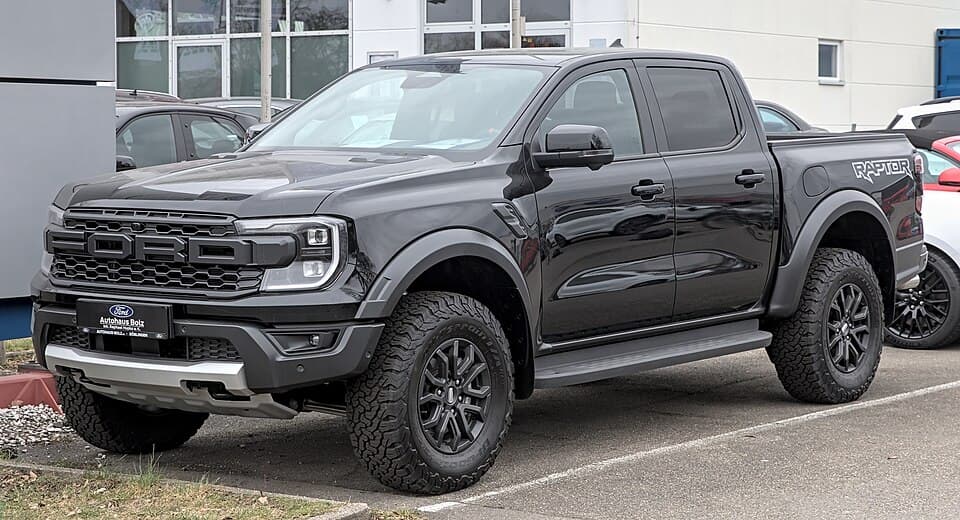
The 2024 Ranger Raptor is the first Ranger Raptor sold in the US, and it comes with a 3.0L twin-turbo EcoBoost V6 rated at 405 horsepower and 430 lb-ft, a 10-speed automatic, Fox 2.5 Live Valve shocks, and a base MSRP that started just under $57,000 before destination. The truck is capable and well-engineered for its size, but the first-year issues owners report cluster around fuel range, a skittish unladen rear end on washboard, and the usual direct-injection carbon questions that come with any turbocharged EcoBoost. Used pricing takes real explaining before you trust any number you see online, including the one below in our own data, so read the pricing section before you set a budget.
What You're Actually Buying: Engine, Suspension, Numbers
| Spec | 2024 Ranger Raptor |
|---|---|
| Engine | 3.0L twin-turbo EcoBoost V6 |
| Output | 405 hp / 430 lb-ft |
| Transmission | 10-speed automatic (10R80 family) |
| Front/rear suspension | Fox 2.5 Live Valve shocks, coil-sprung solid rear axle, Watt's link |
| Differentials | Electronic locking front and rear |
| Tires (stock) | 33-inch BFGoodrich KO2 |
| Base MSRP | just under $57,000, before destination |
| Used pricing | see note below, blended Ranger data does not isolate the Raptor trim |
We're leaving ground clearance off this table on purpose. Figures that circulate online for this truck are inconsistent with each other, and we are not going to repeat a number we cannot confirm against Ford's current published spec sheet. Pull it up by VIN or trim before you make a buying decision based on it, because the number has real consequences for approach and departure angle math if you are planning to run anything rockier than a graded trail.
The suspension architecture is the real story here. A coil-sprung solid rear axle on a Watt's link, with Live Valve shocks that adjust damping in real time, is a genuinely unusual setup for a midsize truck and it is a large part of why this thing rides the way it does off road. For the full breakdown of that hardware and how it compares to the full-size truck's setup, the Ranger Raptor specs page has the deeper numbers, including 0-60 figures, which nobody should trust from a forum post without a controlled test behind them.
If you are cross-shopping this against the F-150 version, the honest comparison is less about horsepower and more about what you actually need day to day. That tradeoff is covered in detail on the Ranger Raptor versus F-150 Raptor comparison.
What a Used 2024 Ranger Raptor Actually Costs
Here is where we have to be careful with our own numbers. Our used-market tracker puts the blended 2024 Ranger average, across every trim from base XL work truck through Raptor, at around $52,500 across roughly 224 live listings. That figure is nearly useless to you as a Raptor buyer. It is dragged down hard by fleet-spec XLs and mid-trim Lariats that sell for a fraction of what a Raptor does, and the Raptor is by a wide margin the most expensive trim in the Ranger lineup.
What that means in practice: expect a used 2024 Ranger Raptor to list well above that blended $52,500 average, likely closer to the truck's original MSRP band than a typical two-year-old depreciation curve would suggest, since first-model-year trucks with a cult following tend to hold value better than the nameplate average. The honest range depends on mileage, whether it carries the Performance package, and your region, and we are not going to hand you a specific number we cannot back with Raptor-isolated sales data. Price the exact truck in front of you against current listings for that trim, not against any blended average, including ours.
Fuel Range Is the Complaint You Will Hear Most
A twin-turbo V6 working through a 10-speed to move a lifted midsize truck on 33s is not going to sip fuel, and the Ranger Raptor's tank is not large. Owners report a mixed-driving range in the 280 to 320 mile estimate, and that drops hard once you add weight, run at highway speed on the tires it ships on, or spend a day wheeling in low range. That is not a defect, it is the tradeoff of the platform, but it catches buyers coming from a half-ton who assume a smaller truck sips less fuel. For the lineup-wide picture including how the full-size Raptor and Raptor R compare, see what owners actually get for Raptor MPG. The practical fix most owners land on is simply planning fuel stops and carrying a bed-mounted auxiliary can for remote trips, not chasing an efficiency mod that does not exist for this engine.
Rear Axle Skipping on Washboard
Symptom: the unladen rear end steps sideways on corrugated dirt roads, most noticeable empty and at moderate speed.
This is a function of a light rear end on a solid axle meeting a damper tune calibrated for a range of payloads, not a worn part. It shows up on the 2024 model year because that is the only US model year so far. Two real fixes exist: load the bed with 150-200 lb of gear, which settles it immediately and costs nothing, or have the rear shocks revalved by a suspension shop familiar with Live Valve systems, which shops quote in the rough range of $800-1,500 depending on whether they are reprogramming the electronic damping or doing a full valve stack rebuild. Most owners never bother with the revalve and just live with the behavior unladen, since it mostly matters on washboard roads you are crossing, not ones you are actually wheeling.
Carbon Buildup and the Direct-Injection Question
The 3.0L EcoBoost in the Ranger Raptor is direct-injected, which means it carries the same basic carbon-on-the-intake-valve exposure every modern direct-injection engine has, since fuel never washes the back of the intake valve the way it does on a port-injected engine. This is a documented pattern on the full-size truck's 3.5L EcoBoost, covered in detail on what carbon buildup actually does to an EcoBoost engine, and the physics apply to the 3.0L as well, though the two engines are different enough in design that owners should not assume an identical failure rate. Nobody has published a failure-rate number for the 3.0L worth quoting yet, since it is only a couple of model years into US sales. Watch for a rough cold idle or a stored misfire code as the early symptom. A walnut-blast cleaning runs roughly $500-900 depending on the shop and whether they pull the intake manifold, and a catch can installed early is cheap insurance in the $150-350 range, though it will not eliminate buildup entirely, only slow it.
Turbo and Boost System Faults
Some owners report a loss of power and a limp-mode warning tied to a boost control solenoid or wastegate actuator fault. This is the kind of fault that throws a code and a shop can diagnose on a scan tool in under an hour, so do not let anyone tell you it requires guesswork. Replacement of the solenoid or actuator typically runs $400-900 including labor, varying by whether the dealer or an independent shop does the work and whether it is one bank or both. This is the kind of turbo component failure that shows up occasionally across EcoBoost applications in general; treat any specific Ranger Raptor failure-rate claim you see online as unverified until Ford or NHTSA complaint data says otherwise.
What Ford's Warranty Actually Covers
The Ranger Raptor carries Ford's standard new-vehicle warranty: 3 years/36,000 miles bumper-to-bumper and 5 years/60,000 miles on the powertrain, covering the engine, transmission, and drivetrain components against defects in material or workmanship. A Technical Service Bulletin is not free money, it is Ford's documented repair procedure for a known pattern, and a dealer will only perform it at no charge if your truck is still inside the relevant warranty window for the part in question. If you are past that window and a dealer or service advisor offers to cover a repair anyway, that is goodwill, which is entirely at Ford's discretion and depends heavily on your dealer relationship and service history. Call your dealer with your VIN before you assume anything is covered.
Buying Used: What to Actually Check
- Lockers. Cycle the front and rear electronic locker and confirm both engage and disengage cleanly with the dash indicator confirming lock.
- Bash plate and diff cover. Rock strikes are common on a truck bought specifically to go off road; look for creased or dented skid plates, not just scratches.
- Tire size and ride height. Check whether the truck is still on the stock 33-inch KO2 or has been modified, since a leveling kit or larger tire changes the ride and the speedometer calibration.
- Scan for codes. A pre-purchase scan catches stored boost and misfire codes before they show up as a check-engine light on your drive home.
- Cold start. Listen for a rough idle on a true cold start, the clearest early sign of carbon buildup.
- Washboard test drive. If you can find a corrugated dirt road, run it unladen and confirm the rear-end behavior is what you expect and not something more serious like worn bushings.
- Tow hitch wiring. If the truck has towed anything, check the 7-pin connector and wiring harness for wear, a common point of corrosion on trucks that see mud and water crossings.
If you are deciding whether this truck is even the right size for what you do, the honest answer depends heavily on bed length and interior space compared to the full-size Raptor, which the size reality check on the Ranger Raptor covers without the marketing spin. For a line-by-line used-buying walkthrough, see the full Ranger Raptor used buying guide, and for what it actually costs to keep on the road year over year, the Ranger Raptor cost of ownership breakdown has the maintenance math.
The short version
- The 2024 Ranger Raptor's 3.0L EcoBoost makes 405 hp and 430 lb-ft, and it launched at a base MSRP just under $57,000 before destination.
- Do not trust a blended used-Ranger average as a stand-in for Raptor pricing. Our own tracker's 2024 Ranger figure (around $52,500) spans every trim from base XL to Raptor, and the Raptor sells well above that blend, so price the specific trim and listing, not the nameplate average.
- The real-world annoyances are short fuel range, a light rear end that steps out on washboard unladen, and direct-injection carbon buildup that is normal for this engine family, not a defect.
- Ford's powertrain warranty runs 5 years/60,000 miles; a TSB is a repair procedure the dealer should perform free only if you are still inside the relevant coverage window, and anything past that is goodwill, not an entitlement.
- Scan for codes, cycle both lockers, run a washboard road, and verify ground clearance and any other geometry figures against Ford's current spec sheet rather than a forum post before you sign.
Deal alert
Shopping for one? Get new listings first
We sweep US dealer inventory and send you new Raptors matching your search — real listings, real asking prices, no spam.