2022 Bronco Raptor: Specs, Problems, and Used Value
Explore the 2022 Bronco Raptor's specifications, known issues, and used car values. Find out what to expect when considering this powerful off-road vehicle.
Gear in this article
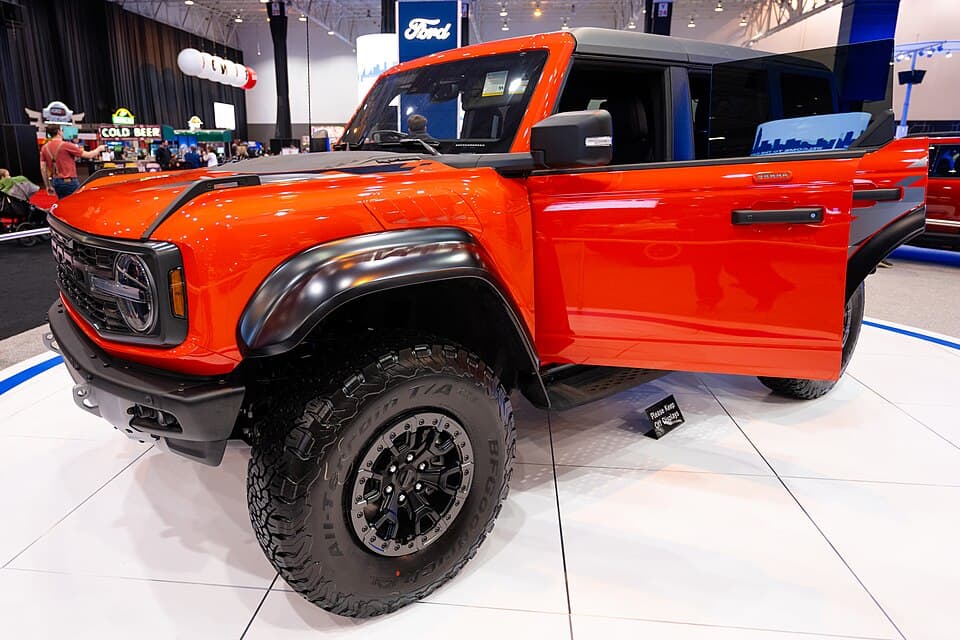
The 2022 Bronco Raptor runs a 3.0L EcoBoost V6 rated at 418 horsepower and 440 lb-ft of torque, paired with a 10R60 ten-speed automatic. Launch-year trucks had real but mostly moderate issues: premature upper ball joint wear, carbon buildup past 60,000 miles, and locker actuator faults. Used 2022 models average around $63,600 as of late 2026, though that number moves fast depending on mileage and whether the truck has been wheeled hard.
That price sits well below what a F-150 Raptor R brings used, but it is still a significant used-vehicle price for a two-door SUV carrying its share of launch-year issues. What follows is what you actually get, what breaks, and what to check before you sign.
Specs that matter
The 3.0L EcoBoost here is a different engine than the 3.5L in the F-150 Raptor lineup, built on a smaller displacement but boosted harder for a comparable power figure. It routes through a 10R60 automatic (a variant of the 10-speed used elsewhere in the Ford lineup) and a two-speed electromechanical transfer case.
The suspension is Ford's HOSS 4.0 package: factory Fox 3.1 Live Valve shocks with 13 inches of front wheel travel and 14 inches at the rear, running on 37-inch BFGoodrich All-Terrain T/A KO2 tires. Ground clearance sits at 13.1 inches. Ford's published curb weight is an estimated 5,730 pounds, which shifts some with options packages, and it is heavy for the truck's footprint, which explains a lot of the ride and brake behavior owners report.
Towing capacity tops out at 4,500 pounds, modest next to a half-ton Raptor, and EPA fuel economy lands at 15 city, 16 highway, 15 combined. That combined number off a 20.8-gallon tank means real-world range under 300 miles, tighter in sand or at altitude. Owners who run this truck in the desert plan fuel stops the way they plan tire pressure.
For side-by-side comparisons against the F-150 platform, the Gen 3 F-150 Raptor vs Bronco Raptor: Same Money, Very Different Truck breakdown covers which chassis actually suits which use case.
What actually breaks on launch-year trucks
Premature upper ball joint and control arm wear
This is the one that shows up most in owner complaints. Symptoms: a clunk over bumps, vague or wandering steering at speed, usually surfacing somewhere in the 20,000 to 40,000 mile range. The fix is replacing the upper control arms as complete assemblies rather than just the ball joint, and shops generally quote $700-1,800 depending on labor rates and whether both sides need it. This is covered in more detail in Bronco Raptor Front-End Clunk: Ball Joints, Sway Bar Links, or Something Worse, which walks through diagnosing it against sway bar link wear, since the symptoms overlap.
Intake valve carbon buildup
Direct-injected EcoBoost engines do not wash fuel across the intake valves the way port-injected engines do, so carbon accumulates on the valve stems over time. On this truck it tends to show up past 60,000 miles as a rough idle or misfire codes. A walnut blast (a media-blasting cleaning process using crushed walnut shell to strip the valves without damaging them) runs $500-900 at most independent shops. This is not unique to the Bronco Raptor; it is a known characteristic of direct-injection EcoBoost engines generally.
Locker actuator faults
Both axles get electronic lockers, and some launch-year trucks show a locker warning light or a locker that engages fine but will not release until you cycle the ignition. Repair usually means replacing the actuator or chasing wiring at the axle, and that is a $400-1,100 repair depending on which axle and whether it is a connector issue or a dead actuator.
Minor stuff worth knowing about
The removable roof leaks or whistles on some trucks, usually fixed by reseating the seals or adjusting the latches, often free under warranty or a few hundred dollars out of pocket. Front tire feathering on the 37s is common enough that regular rotations and a careful alignment matter more on this truck than on a street SUV. If a set is worn past saving, the stock BFGoodrich KO2 37x12.50R17 is the straightforward like-for-like replacement, though plenty of owners switch tread patterns at replacement time. Turbo wastegate actuator rattle shows up on some EcoBoost units and usually means replacing the actuator, quoted at roughly $500-1,100 per side when a shop does it.
None of these are catastrophic. None of them are a reason to walk from an otherwise clean truck. But they are all reasons to negotiate price or ask for records.
What Ford covers
Ford's powertrain warranty on a 2022 model year generally runs 5 years or 60,000 miles, whichever comes first, covering the engine, transmission, and drivetrain components against defects. A used 2022 Bronco Raptor bought today may still have coverage remaining depending on in-service date and mileage; check the build date and current mileage against the warranty terms, not just the calendar year.
A TSB (technical service bulletin, a repair procedure Ford publishes for a known issue) is not a free repair. It tells a dealer how to fix something correctly. Whether you pay for it depends on whether the truck is still in the powertrain or bumper-to-bumper window, and whether Ford extends goodwill, which is discretionary and tied to dealer relationship and service history, not a guarantee.
If you are buying used and want to understand what ownership costs beyond the purchase price, Bronco Raptor Cost of Ownership: What Owners Actually Pay breaks down maintenance, insurance, and fuel costs an owner actually sees.
Used value and what moves the price
At roughly $63,600 average across live listings as of late 2026, a 2022 Bronco Raptor sits meaningfully below the 2023 ($65,964) and 2024 ($71,395) model years, which makes sense given depreciation curves and the fact that 2022 was the launch year with the issues above still working through the fleet.
What actually moves price on an individual truck:
- Mileage and use case. A desert-driven truck with sand in every seam is worth less than a daily driver with the same mileage, even if both run fine.
- Service records on the ball joints. A truck that has already had the upper control arms replaced is arguably in better shape than one that has not, assuming it was done right.
- Modifications. Rock sliders and skid plates can be a selling point if installed well; a tune or supercharger claim should make you ask hard questions about warranty exposure.
- Roof and top condition. Water staining on the headliner or dried-out seals around the removable top are a fair reason to ask for a lower price.
Buying used checklist
- Rock each front wheel at twelve and six o'clock to check for ball joint play.
- Hose down the removable top and check the header seal and rear corners for leaks.
- Cycle both the front and rear lockers and confirm they engage and release cleanly.
- Run a hand across the inner shoulders of the front tires for feathering.
- Inspect the rocker panels and lower doors for trail damage.
- Check the windshield in raking light for chips or cracks, since ADAS recalibration (the cameras and sensors behind lane keeping and adaptive cruise) adds real cost to a windshield replacement.
- Confirm tire size and geometry match factory spec; an owner who has gone to aftermarket wheels may have altered offset in ways that accelerate wear.
- Cold-start it and listen for a rough idle or hesitation that points at carbon buildup.
If you want a longer-form pre-purchase walkthrough that applies across the lineup, Ford Raptor Pre-Purchase Inspection Checklist: What to Check Before You Sign covers frame, electrical, and drivetrain checks that apply here too, with Bronco-specific notes where it differs.
The short version
A 2022 Bronco Raptor brings real off-road capability (the 3.0L EcoBoost, HOSS 4.0 suspension, and factory Fox Live Valve shocks) at a used price averaging around $63,600 as of late 2026. The known issues, mainly upper ball joint wear and carbon buildup, are real but fixable for a few hundred to under $2,000 depending on the repair, not reasons to avoid the truck outright. Buy on service history and a clean pre-purchase inspection, confirm remaining powertrain warranty against the build date, and budget for tires and alignments more often than you would on a regular Bronco.
Deal alert
Shopping for one? Get new listings first
We sweep US dealer inventory and send you new Raptors matching your search — real listings, real asking prices, no spam.