Running Glamis in a Raptor: What to Know Before You Go
Glamis is the biggest sand dune complex in North America and a stock Raptor handles it better than almost any factory truck, if you air down, run a flag, and stay out of the bowls beyond your skill. Here is the permit, the pressures, and where a full-size truck fits among the buggies.
Gear in this article
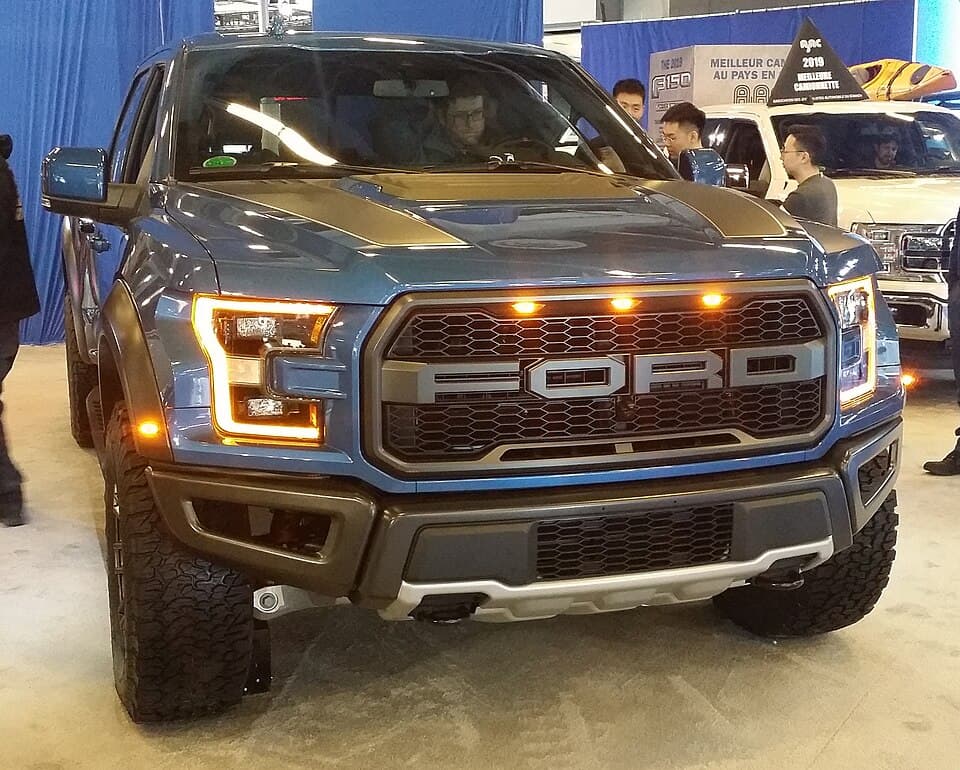
A stock Raptor handles Glamis better than almost any other factory truck, full stop. Air down to roughly 15-20 psi as a starting point, run a whip flag so the buggies can see you over the dune crests, stay out of the bowls you have not scouted, and a Gen 2 or Gen 3 on the factory KO2s will follow buggy lines all day. Where it does not belong is deep in the bowls at night with a hundred cars and no idea who is committed to a line you are also committed to.
Glamis, officially the Imperial Sand Dunes Recreation Area, is BLM-managed land in the southeastern corner of California near the Arizona border. It is the largest dune complex in North America, and it is also one of the busiest off-road destinations in the country on a good holiday weekend. Both of those facts matter before you air down.
When to go and why the calendar is not a suggestion
The riding season runs roughly October through April, with Halloween and Presidents Day weekends drawing the biggest crowds the dunes see all year. Outside that window, most of the open dune areas close, and the ones that stay open get dangerously hot. Summer surface temperatures at Glamis run well past what a stock cooling system or a stranded person wants to deal with. This is an off-season-only trip. If you are looking at a June date, change it.
Weekends inside peak season are also when Glamis stops being a dune complex and starts being a small city. Generators, RVs, glow sticks, quads, buggies, and full-size trucks all sharing a wash after dark. Go on a weekday in January if you want the place to feel like a truck commercial. Go on Presidents Day Saturday if you want to see what a season's worth of visitors actually looks like concentrated in one spot.
Permit: what you need and where to get the real number
BLM requires a permit to ride here in season, sold as a weekly or seasonal pass. Prices change from year to year, so this site is not going to print a number that is stale in six months. Check the BLM El Centro field office page for Imperial Sand Dunes before you leave, buy it before you get to the entrance, and keep it visible in the windshield. BLM rangers check for a valid permit and a whip flag at the wash entrances, and they are not sympathetic to "I did not know."
The flag is not optional gear, it is the rule. Dunes have blind crests everywhere, and a whip flag (a tall fiberglass pole with a bright flag on top, mounted to the front bumper) is how the truck coming the other way knows you exist before your roofline clears the dune. BLM's minimum height requirement is worth confirming on the current Imperial Sand Dunes page rather than trusting a number off a forum, but plan on at least 8 feet as the practical standard most riders run. Mount it where it will not tear off the first time you catch a lip wrong, and treat it as part of the truck, not an accessory you forgot at home.
Air pressure: the actual variable that matters
A stock Raptor is heavier than nearly everything else running these dunes. Curb weight lands somewhere in the neighborhood of 5,700 to 6,000 lbs as an estimate, depending on generation and cab configuration, and tire pressure is the single biggest lever you have over how that weight floats. Start around 15-20 psi as a baseline and adjust from there based on how the truck feels. Too high and the tire cuts through soft sand like a knife instead of floating on top of it. Too low on a truck this heavy and you risk a bead unseating in a hard turn or a big compression.
This is a starting point, not a spec. Stock tire size differs by generation: a Gen 2 (2017-2020) rides on a 315/70R17, a Gen 3 (2021 and up) moves to a 315/70R18. A Raptor running 37s on a set of King 3.0 coilovers up front is not going to want the same number as a stock truck on the factory Fox shocks, and sand temperature, dune steepness, and how loaded the bed is all move the target. Bring a gauge and an air-down tool, and bring a compressor to air back up before you hit pavement. An onboard unit like the ARB Twin Onboard Air Compressor earns its keep here more than almost anywhere else you will run a Raptor.
Where a stock Raptor fits, and where it does not
The mellow on-ramps at Glamis, places like Gecko Road and Wash Road, are exactly where a stock Raptor should spend its first day. Established, well-traveled lines, moderate grades, room to bail out if you misjudge a hill. This is where the factory suspension and the stock gearing earn the truck's reputation. A stock Raptor is genuinely one of the more capable factory-built trucks on sand, largely because Ford already tuned the suspension and throttle mapping for exactly this kind of terrain, whether it is a Gen 2 or a Gen 3.
The named features, Oldsmobile Hill, Razorback, Comp Hill, China Wall, are a different conversation. These are steep, high-consequence dunes where buggies weighing a fraction of a full-size truck, running paddle tires, do things a heavy stock truck cannot. A stock Raptor can climb some of this terrain, but the truck sinks more than a buggy will and momentum management is unforgiving. If you stall out three-quarters up a steep face with buggies coming over the blind side behind you, that is not a mechanical problem, it is a decision problem. Know the dune before you commit, and if you cannot see the exit or the landing, do not be the truck learning that in front of an audience.
Witching hour, the after-dark stretch when every dune in the main bowl areas lights up with headlights and traffic density goes up while visibility goes down, is honestly not a great time for a first-timer in a full-size truck. It is spectacular to watch. It is a bad place to be still figuring out how your Raptor handles a blind crest.
Recovery: what actually works in sand
A winch is close to useless in Glamis unless another vehicle happens to be nearby and willing to be an anchor. There are no trees, no rocks, nothing solid to hook to in open dune, and a winch with nothing to pull against just spins. Bring recovery boards instead, dig them in ahead of the tires, and use a kinetic recovery strap with a buggy or another truck for anything a board and some digging cannot solve. Keep a shovel in the bed. It gets used more than any tool you own out there.
Traveling with at least one other vehicle is the real recovery plan. Solo trips into the bowls are how people end up walking miles in soft sand for a cell signal.
The short version
- Go October through April only. Summer heat and off-season closures make this a peak-season trip, and Presidents Day and Halloween weekends are the busiest and most crowded times to be there.
- Buy your BLM permit ahead of time and check the current price and requirements on the BLM El Centro page, not a forum post.
- Run a whip flag, confirm the current minimum height on the BLM page, and plan on at least 8 feet as the practical standard.
- Air down to roughly 15-20 psi as a starting point, and adjust from there based on how the truck floats and how heavy the build is.
- Stick to Gecko Road and Wash Road while you learn the dunes. Save Oldsmobile Hill, Razorback, and China Wall for when you know the exits and the crowd pattern.
- Bring boards, a strap, and a second vehicle. A winch with nothing to anchor to is dead weight in the sand.
For the full detail sheet on this spot, see the trail record for Glamis, and for a rockier comparison of what a stock truck can and cannot do, see running Johnson Valley in a Raptor.
Owner questions
- What tire pressure should I run in a Ford Raptor at Glamis?
- Start around 15-20 psi as a baseline when airing down for the dunes, then adjust from there based on how the truck feels. Too high and the tire cuts through soft sand like a knife; too low on a heavy truck risks a bead unseating in a hard turn or big compression.
- What tire size comes stock on a Gen 2 versus Gen 3 Raptor for dune riding?
- A Gen 2 Raptor (2017-2020) rides on a 315/70R17, while a Gen 3 (2021 and up) moves to a 315/70R18. Stock tire size differs by generation, which is part of why the recommended air-down pressure is a starting point rather than a fixed spec.
- How tall does my whip flag need to be to ride at Glamis?
- Plan on at least 8 feet as the practical standard most riders run, though you should confirm BLM's current minimum height requirement on the Imperial Sand Dunes page rather than trusting a forum number. The flag is a mounted fiberglass pole with a bright flag on top, required so oncoming vehicles see you over blind crests.
- When is the best time to visit Glamis in a Raptor, and when should I avoid it?
- The riding season runs roughly October through April; outside that window most open dune areas close and remaining ones get dangerously hot. Halloween and Presidents Day weekends draw the biggest crowds, so a weekday in January will feel far less crowded than Presidents Day Saturday.
- Which Glamis dunes are safe for a stock Raptor versus which should I avoid as a beginner?
- Gecko Road and Wash Road are mellow, well-traveled lines ideal for a stock Raptor's first day. Named features like Oldsmobile Hill, Razorback, Comp Hill, and China Wall are steep, high-consequence dunes better suited to lightweight paddle-tire buggies, where a heavy stock truck sinks more and momentum management becomes unforgiving.
Deal alert
Shopping for one? Get new listings first
We sweep US dealer inventory and send you new Raptors matching your search — real listings, real asking prices, no spam.