Raptor Brake Upgrades: What Actually Helps a 6,000-lb Truck
Most Raptor brake complaints are pad compound and heat management, not rotor size, and the honest upgrade path starts at $300 in pads, not $6,000 in big-brake kit. Here is what each level buys you, by generation and by how you actually use the truck.
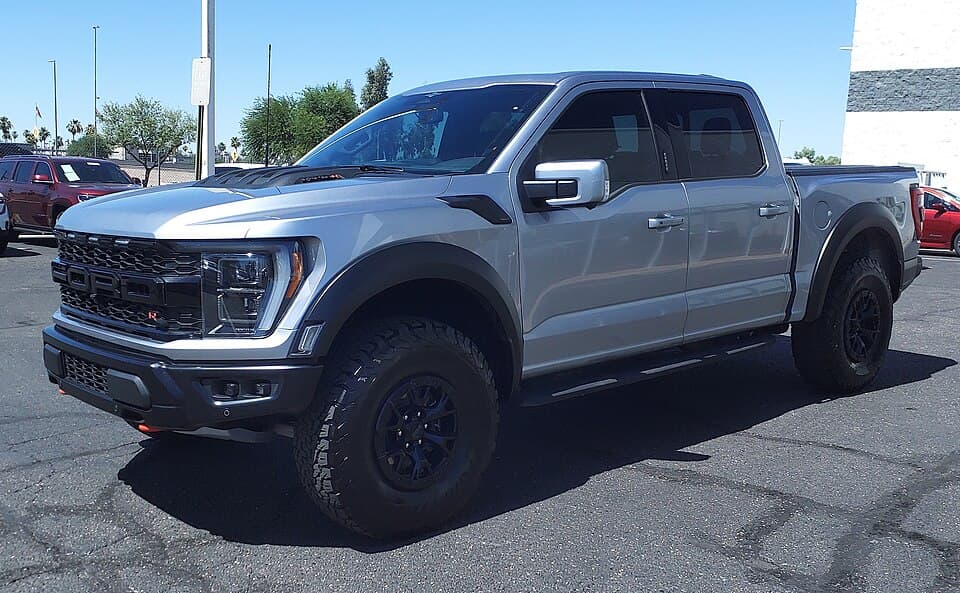
A stock Raptor's brakes are not undersized for the truck. They are undersized for what owners actually do to the truck: add 35s or 37s, load a chase rack and a full tank of fuel, then run desert whoops or tow a trailer and wonder why the pedal goes long and soft. Start with pads and fluid, not rotors. Most complaints disappear at that first rung, which runs $300-600 in parts, before you ever look at a big-brake kit.
That is the honest ladder, and it holds across every generation from the Gen 1 to the Raptor R. What changes by truck is how hard you have to push before you need the next rung.
Why these trucks eat brakes in the first place
The Gen 2 runs roughly 5,700-5,900 lb curb weight depending on cab and options. The Gen 3 is close behind at roughly 5,950 lb. The Raptor R is the heaviest of the lot at roughly 6,100 lb, and that is before a passenger, a cooler, or a bed full of recovery gear.
That mass has to stop from highway speed using the same basic four-piston front, single-piston rear layout Ford has run since Gen 1, with real but incremental upgrades along the way. Add 35s or 37s and you are not just adding unsprung weight, you are adding rotating mass at the wheel, which is the hardest kind of weight for a brake system to arrest. A 37 also increases the effective lever arm on the brake, meaning the same clamping force does less work than it did on a 35. If you are running 37s or thinking about it, read the tradeoffs first in 35s vs 37s on a Raptor: Every Tradeoff, Measured, because tire choice changes your braking margin before a single brake part changes hands.
Then there is heat. Desert running means repeated hard stops from speed with no real cooldown between them, and that cooks brake fluid, which is hygroscopic (it absorbs moisture from the air over time) and loses boiling point as it does. Boil the fluid and you get a pedal that goes to the floor on a long descent or a string of whoops, not because the pads gave out but because the fluid did.
The ladder, ranked by cost
Work down this list in order. Skipping to the bottom because a rotor kit looks impressive online is how people spend $6,000 to fix a $300 problem.
| Rung | What it is | Typical cost | Fixes |
|---|---|---|---|
| 1. Pads + fresh fluid | Better pad compound, DOT 4 or DOT 5.1 fluid flush | $300-600 | Fade, noise, dust, most pedal complaints |
| 2. Braided stainless lines | Replace rubber flex lines | $150-400 (parts + labor) | Spongy pedal feel, pedal travel under load |
| 3. Rotors | OEM-spec or slotted/drilled replacements | $400-900 | Warped rotor pulsation, high-mileage glazing |
| 4. Big-brake kit | Larger caliper/rotor package | $2,500-6,000+ | Track-level fade, very rarely needed on a street/trail truck |
Rung 1 solves most complaints on every generation of Raptor. The factory pad compound on all of these trucks is tuned for daily-driver quiet and low dust, which means it is not the pad you want if you are towing, running sand at speed, or carrying 37s. A more aggressive street/off-road compound (metallic or ceramic-metallic blend) holds up better under repeated heat cycles and gives you a firmer initial bite. The tradeoff is real: more aggressive pads mean more brake dust on your wheels, sometimes a cold-morning squeal until they come up to temperature, and slightly less "quiet luxury truck" pedal feel. If your Raptor is a daily driver that occasionally sees dirt, a mild upgrade pad is plenty. If it is a desert truck that occasionally sees pavement, go more aggressive and accept the dust.
Fluid matters as much as the pad. If your truck has never had a fluid flush and it is more than two or three years old, do that regardless of what pad you choose. A shop will typically bundle a flush with a pad job for a few hours of labor.
Rung 2, braided lines, replaces the rubber flex hoses that expand slightly under hard braking, which is what gives you that soft, long pedal feel even with fresh pads and fluid. This is a real fix for pedal feel, not a placebo, but it is a smaller gain than most people expect and it does nothing for fade. Do it after pads and fluid, not instead of them.
Rung 3, rotors, is warranted if your rotors are actually warped (you feel a pulsation through the pedal under braking, not just noise) or worn past minimum thickness at high mileage. Slotted or drilled rotors help shed a little more heat and gas during hard, repeated stops, but on a street-driven Raptor they are a marginal gain over a quality OEM-spec rotor. Do not buy rotors to fix a problem that is actually pad glazing or fluid.
Rung 4, a big-brake kit, is the last rung for a reason. These kits run $2,500-6,000+ installed depending on brand and whether you need spacers to clear your wheels, and for the overwhelming majority of Raptor owners they solve a problem that pads and fluid already solved. The exception is a truck that sees genuine repeated track-speed braking or very heavy trailer-assisted towing without trailer brakes doing their share, where fade shows up even with good pads and fresh fluid. That is a small minority of owners, and if you are not sure which one you are, you are probably not in it.
Towing: check the trailer before you touch the truck
If your brake complaint only shows up while towing, the truck brakes are frequently not the problem. Every Raptor and Raptor R with the factory tow package includes an integrated trailer brake controller, and a fading or grabby pedal while towing is very often a trailer brake controller that is set wrong, a trailer brake magnet that is dragging or dead, or a trailer axle that needs its own brake service. Check trailer brake gain and trailer brake condition before you spend a dollar on the tow vehicle's pads. For the actual tow ratings by generation, see Ford Raptor Towing Capacity: Every Generation, Real Numbers.
The Raptor R is its own case
The Raptor R carries more weight and more available speed than any other Raptor, and front brake wear shows up as a real cost item on this truck, not a rumor. Our own cost breakdown in What a Raptor R Actually Costs to Own, Not Just to Buy calls this out directly: budget for front pads wearing faster than you would expect from a truck this size, because the supercharged 5.2L V8 gives you the speed to actually use the brakes hard, repeatedly, in a way the 3.5 EcoBoost trucks rarely see in normal use. If you own an R and drive it like the R, rung 1 (a quality pad, fresh fluid, inspected more often than the service interval assumes) is not optional, it is maintenance.
What Ford covers
Brake pads, rotors, and fluid are wear items. They are not covered under the bumper-to-bumper or powertrain warranty on any generation, new or used. If a Raptor still under the factory bumper-to-bumper warranty (3 years/36,000 miles on new Ford trucks) shows a genuine brake system defect, such as a caliper that seizes or a line that fails prematurely, that is a warranty conversation with your dealer. Normal wear from towing, off-road use, or bigger tires is on you, and no TSB (a published repair procedure, not free labor) changes that.
The short version
- Start with a better pad and fresh fluid, budget $300-600, and it fixes most complaints on every generation.
- Add braided lines next if pedal feel is still soft, then rotors only if you have an actual warp or worn-out rotor.
- Save a big-brake kit for genuine track-level fade. Most owners never need one.
- 35s and 37s make the brakes work harder before you change a single brake part. Know that tradeoff going in.
- If the complaint only shows up while towing, check the trailer's brakes and controller settings before you touch the truck.
- On a Raptor R, treat front pad wear as expected maintenance, not a defect.
Owner questions
- My Raptor's pedal feels soft and spongy - what should I fix first before buying a big-brake kit?
- Start with pads and fresh fluid, not rotors. A better pad compound plus a DOT 4 or DOT 5.1 fluid flush runs $300-600 and fixes most pedal complaints, fade, noise, and dust issues. Only move to braided stainless lines ($150-400) or rotors ($400-900) if problems persist, saving big-brake kits ($2,500-6,000+) for genuine track-level fade.
- How much does a brake big-brake kit cost on a Raptor, and do I actually need one?
- A big-brake kit runs $2,500-6,000+ installed depending on brand and wheel clearance needs, but it's the last rung on the ladder for a reason - most owners' problems are already solved by pads and fluid. It's only warranted for genuine repeated track-speed braking or heavy trailer-assisted towing without trailer brakes doing their share.
- Why do my brakes fade more after putting 37s on my Raptor?
- A 37 adds rotating mass at the wheel, which is the hardest kind of weight for a brake system to arrest, and it also increases the effective lever arm on the brake, meaning the same clamping force does less work than it did on a 35. This changes your braking margin before any brake part changes hands.
- My Raptor R's front brake pads seem to wear out fast - is that normal or a defect?
- That's expected maintenance, not a defect. The Raptor R carries more weight and speed than any other Raptor, and the supercharged 5.2L V8 gives you the speed to actually use the brakes hard, repeatedly. Budget for front pads wearing faster than you'd expect from a truck this size, and treat rung 1 (quality pads, fresh fluid, more frequent inspection) as non-optional maintenance.
- My brakes only feel bad when I'm towing my trailer - is it the truck's fault?
- Frequently not. Every Raptor and Raptor R with the factory tow package includes an integrated trailer brake controller, and a fading or grabby pedal while towing is very often a trailer brake controller set wrong, a dragging or dead trailer brake magnet, or a trailer axle needing its own brake service. Check the trailer's brakes and controller gain before spending money on the truck's pads.
Deal alert
Shopping for one? Get new listings first
We sweep US dealer inventory and send you new Raptors matching your search — real listings, real asking prices, no spam.