Ranger Raptor Mods: The First Five Worth Doing
Enhance your Ranger Raptor with these five essential modifications. From fuel range to lighting, we cover the must-have upgrades for your midsize off-roader.
Gear in this article
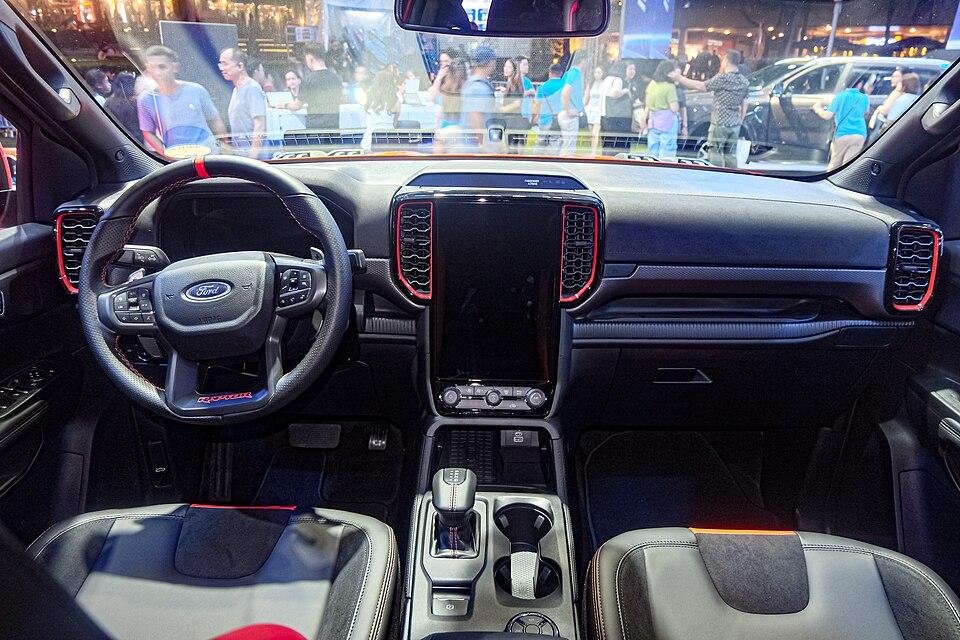
The first five mods worth doing on a Ranger Raptor are, in order of value for the money: real auxiliary lighting, a fuel-range and recovery setup, underbody skid plates and rock sliders, a tire upgrade that stays close to factory fender clearance, and a 93 octane tune. None of these are required to run the truck the way Ford built it, and none of them are cheap. But if you're putting real trail hours on a 2024-2026 Ranger Raptor, these are the five that fix an actual gap in the stock truck instead of just adding weight and noise.
The US Ranger Raptor runs a twin-turbo 3.0L EcoBoost V6 (Ford rates it at roughly 405 hp and 430 lb-ft; confirm the exact figures on our Ranger Raptor spec breakdown) paired to a 10-speed automatic, on a shorter, narrower platform than its F-150-based sibling. That size difference is exactly why some mods that make sense on a full-size Raptor do not translate here, and why a few of these picks are smaller-dollar than what you'd spend on a Gen 2 or Gen 3 truck.
1. Add real driving lights before anything else
The factory headlights and fogs on a Ranger Raptor are fine for a street truck and mediocre for anything run at night off-pavement. This is the mod almost every owner who actually wheels the truck does first, because it's the one with the most obvious payoff relative to cost.
A pair of Baja Designs LP9 Pro pods mounted to the bumper or an A-pillar bracket is a common path for a mix of flood and long-range throw. If you want a broader look at pod and bar options across the lineup, the site's LED light pod and fog upgrade guide covers beam patterns and amperage draw in more detail than fits here.
Budget $900-1,800 installed, and that range swings on whether you run lights alone or add a bar, and whether you pay a shop to run relay wiring and a dedicated switch panel versus doing it yourself over a weekend. This is a DIY-friendly job for anyone comfortable running wire and fishing a firewall grommet; shops typically quote this as roughly 2-4 hours of labor plus parts.
2. Fix the fuel range and carry real recovery gear
The Ranger Raptor's fuel tank is smaller than the full-size Raptor's, and the truck burns more gas off-road under boost than its mileage sticker suggests. If you're planning trips into places like Johnson Valley OHV Area or multi-day runs where the nearest station is a real problem, range stops being theoretical. The site's Ranger Raptor MPG and real-world range breakdown has the actual tank size and what owners report getting, worth reading before you buy anything here.
The cheap fix is a bed-mounted auxiliary fuel container (owners commonly run something in the 2 to 5 gallon range) secured to a mount or rack rather than loose in the bed. Pair it with actual recovery gear: traction boards, soft shackles, a kinetic recovery rope, and an ARB Twin Onboard Air Compressor so you can air down for sand or rock and air back up without carrying a separate pump. A winch is a bigger step. Owners commonly report the factory front bumper on the US truck isn't drilled or rated for a winch mount out of the box, which would mean a bumper swap on top of the winch itself, but confirm that against a specific bumper maker's fitment chart for your model year rather than taking it as settled. The site's winch fitment guide is written around the full-size truck's bumper, but the mounting principles (winch plate, fairlead, synthetic rope) carry over.
Budget $400-1,100 for fuel container, air compressor, and a basic recovery kit. A winch and a compatible bumper pushes that well past $2,000 and belongs in its own build decision, not this starter list.
3. Protect the underbody with skid plates and rock sliders
Factory skid coverage on the Ranger Raptor is better than a regular Ranger, but the rocker panels are still exposed, and most owners who actually hit rock ledges rather than gravel roads end up wanting heavier-gauge coverage than stock. This is the mod that prevents a cracked oil pan or a crushed rocker from turning a weekend trip into a tow bill.
Most of the big-name aftermarket armor makers, including the shop behind the RCI Full Skid Plate Package, build their catalogs around the F-150-based Raptors first. Before you order, confirm with the manufacturer that the specific kit is listed for the Ranger Raptor's chassis and mount points, not just the full-size truck. Rock sliders are the separate piece most people forget until they've already dented a rocker panel on a ledge; the general principles in the site's rock slider protection breakdown apply here even though it's written around the full-size truck.
Budget $1,400-3,000 for skids and sliders together, and that range swings hard on whether you DIY the install (most skid plates bolt to existing mount points in an afternoon) or pay a shop, and whether the sliders need welding versus bolting to existing frame points.
4. Upgrade the tires without wrecking the fitment
The Ranger Raptor ships on a factory tire close to 33 inches in diameter. The single biggest fitment mistake owners make is assuming this truck handles tire upsizing the way a full-size Raptor does. It does not, because the wheelbase, fender width, and suspension travel were engineered around that stock diameter specifically.
Staying at the stock size and just upgrading tread compound, moving to a different all-terrain or a mild mud-terrain in the same diameter, is the no-drama path: no alignment surprises, no rubbing, no speedometer error. Owners who have gone up a size commonly report needing a small leveling spacer and some fender liner trimming to clear a taller tire, though exactly how much trimming depends on your wheel offset and backspacing, so treat that as a general pattern rather than a guarantee for your truck. Any size change will throw off your speedometer and odometer accuracy unless it's recalibrated. For the actual clearances on your specific wheel and backspacing, use the site's wheel and tire fitment guide before you order anything, not a forum photo of someone else's truck.
Budget $900-1,600 for a set of four tires mounted and balanced, plus an alignment check. Add an estimated $150-300 if the shop needs to recalibrate the speedometer after a size change, and confirm that cost with your specific dealer or shop since it depends on whether it's a simple reflash or a separate module.
5. Tune the engine, and know what you're trading
A flash tune is one of the cheaper ways to change how the truck drives, and it's also the one with the most warranty and fuel-quality fine print. Ford allows the Ranger Raptor to run on 87 octane, but the truck's rated output assumes higher-octane fuel; the site's octane breakdown for this truck covers exactly what Ford specifies and why it matters before you tune.
A 93 octane tune package built for this platform recalibrates the ECU's fuel and timing tables around premium gas rather than the factory 87 octane baseline. Tuners on this platform generally claim improved low-end response and smoother shift mapping, but nobody has published an independent dyno number for the Ranger Raptor's 3.0L worth repeating here, so treat any specific horsepower claim from a tuner's marketing page as exactly that, not a verified figure. Ask whoever you buy from for actual datalogs taken off this engine, not a tune ported from the Explorer ST or Lincoln Aviator version of the same 3.0L EcoBoost.
On warranty: under the federal Magnuson-Moss Warranty Act, Ford can't deny an unrelated powertrain claim just because you have a tune installed; the dealer has to show the tune caused the specific failure. In practice, dealers still push back hard on this when a transmission or turbo fails on a tuned truck, so read the site's Ranger Raptor warranty and tune breakdown before you buy anything, and keep a way to flash back to stock before any dealer visit.
Budget $500-900 for the tune alone. Pairing it with an intake or axle-back exhaust pushes the total power path closer to $1,200-2,600, and that's a separate decision from the base tune.
What we left off this list
Suspension is the obvious absence. The factory shocks on the Ranger Raptor are already a legitimate piece of equipment, and most owners get real value out of the truck before they need aftermarket coilovers or bypass shocks. If you're building toward bigger desert speed later, that's a second-round purchase, not a first-five item.
Budget by mod
| Mod | What it fixes | Typical budget | Labor |
|---|---|---|---|
| Lighting (LP9 pair) | Weak stock night visibility off-road | $900-1,800 | Roughly 2-4 hrs, DIY-friendly |
| Fuel range + recovery | Short range, no onboard air | $400-1,100 | Mostly DIY |
| Skid plates + sliders | Thin factory skids, exposed rockers | $1,400-3,000 | Half day to full day |
| Tire upgrade (stock size to one size up) | Marginal stock tread for real trail use | $900-1,600 | Roughly 1-2 hrs plus alignment |
| 93 octane tune | Leaves performance and response on the table | $500-900 | Under an hour |
Prices above are estimates that swing by region and whether you DIY or pay a shop; call around with your specific truck before you budget off this table.
The short version
Lighting and a fuel/recovery kit are the cheapest, lowest-risk mods and the ones most owners do first. Skid plates and sliders are the mod that actually prevents a bad trail day from becoming an expensive one, but confirm any armor kit is actually specced for the Ranger Raptor before you buy it, not just for the F-150-based trucks. Stay close to the stock tire diameter unless you've confirmed fitment on your specific wheel and offset, and don't assume it upsizes like a full-size Raptor. A tune is worth doing last, and only after you've read what it does to your warranty position, not just what it does to the dyno graph.
Deal alert
Shopping for one? Get new listings first
We sweep US dealer inventory and send you new Raptors matching your search — real listings, real asking prices, no spam.