Airing Down a Raptor: Tire Pressure for Sand, Rocks and Trails
Learn the optimal tire pressures for your Raptor on various terrains, including sand, rocks, and trails. Get tips and gear recommendations for better traction and performance.
Gear in this article
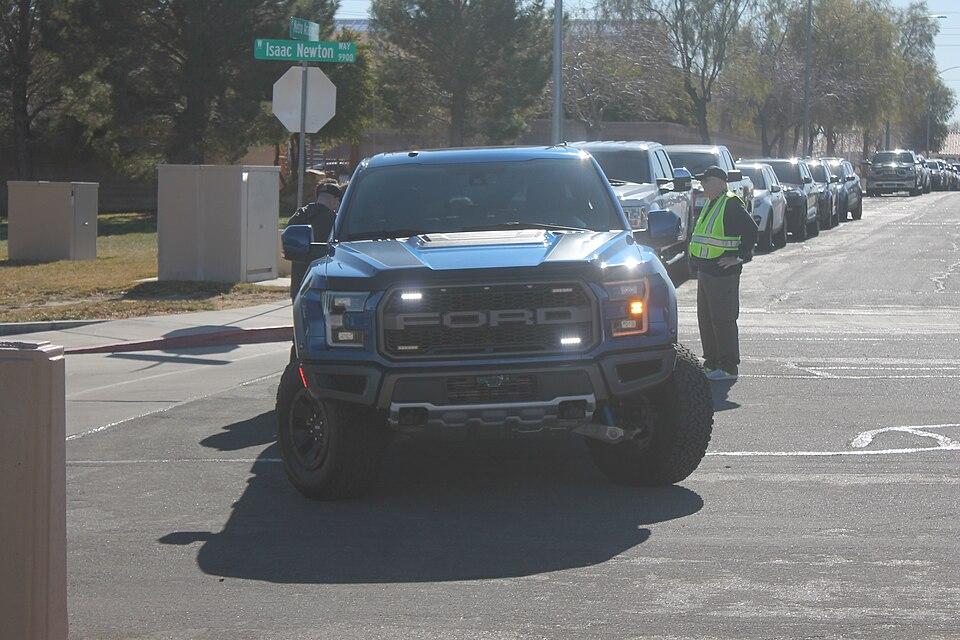
Airing down means dropping tire pressure below the door-jamb highway number to grow the contact patch, and the right number depends on tire, load, and terrain, not a chart. There is no Ford-published off-road pressure for any Raptor variant, so treat every psi figure you see online, including ranges you might find elsewhere on this site, as a starting point to test and adjust, not a spec to trust blindly.
What you are actually changing when you air down is the shape and size of the contact patch. Less pressure lets the tire bulge out at the sidewall and flatten under the tread, which spreads the truck's weight over more rubber. On sand that extra footprint is flotation. On rocks it is a softer, more conforming tire that wraps around obstacles instead of bouncing off them. On washboard trail the same softness takes the edge off the hits before they reach the shocks, whether those are the stock twin-tube dampers or an upgraded set like a King 3.0 IBP front coilover kit.
Why there is no single correct psi number
Pressure that works is a function of tire size and construction, vehicle weight, and how hard you are pushing. A Gen 2 Raptor on a 35-inch all-terrain weighs and loads differently than a Ranger Raptor on its factory 33s, and a Bronco Raptor running 37s for sand duty is a different math problem than a stock Gen 3 Raptor on its 37 Performance Package tires. Add a passenger load, a winch bumper, or a bed full of recovery gear and the same psi behaves differently.
The honest process: start at your tire manufacturer's recommended pressure range for off-road use, drop in small increments, and watch what the tire actually does. A sidewall that bulges so much the tire looks like it is rolling off the bead is too low. A tire that still bounces hard over whoops or washboard is still too high. You are tuning by feel and by watching the tire, not by hitting a number off a forum post.
Sand
In soft sand the goal is flotation, keeping the tire from digging a trench instead of floating across the surface. Owners running dunes at places like Glamis / Imperial Sand Dunes Recreation Area or Silver Lake Sand Dunes typically air down more aggressively here than for any other terrain, because the penalty for running too high is getting stuck, not tire damage. The tradeoff is that very low sand pressures make the tire more prone to rolling off the bead in a hard turn, which is why beadlock wheels like the Method Race Wheels 701 Beadlock show up so often on dedicated dune trucks. If you are running a standard clincher wheel, be more conservative and lean on technique (steady throttle, avoid sharp steering inputs) rather than chasing the lowest number you can find.
Rocks
Rock trails call for a more moderate reduction than sand. You want enough give in the sidewall to let the tire wrap around a ledge and keep the tread in contact, but not so little pressure that you risk pinching the tire between a rock and the wheel bead, which can cut the sidewall or crack the bead seal. This is the terrain where it matters most to air down gradually and recheck, since a tire that is fine at one pressure on a flat trail can pinch the moment you load a front corner climbing a shelf. Running something like Windrock Park or Rausch Creek Off-Road Park, most owners settle on less of a drop than they would run in sand, and lean on rock sliders like an RCI SuperCrew Rock Sliders kit to take the hits a softer tire can't fully absorb.
General trail and washboard
For graded dirt, two-track, and washboard, most owners run the smallest reduction of the three, enough to soften impact harshness and improve grip on loose surfaces without softening the sidewall so much that cornering feels vague or the tire overheats at speed. Trail running tends to involve longer stretches at higher speed than rock crawling, and underinflated tires generate more heat from sidewall flex, which is a real failure mode on a long, fast trail day. If you are planning a longer run, check out the Sand Hollow State Park or Johnson Valley OHV Area trail guides on this site, both of which cover terrain that shifts between sand, rock, and graded trail inside the same loop, which means you may be airing up and down more than once in a single day.
How to air down and back up without wrecking a tire day
- Stop on level, stable ground before you start. Airing down on a slope or in soft sand makes it harder to get an even reading on all four corners.
- Check pressures cold if possible, before the tires have built up heat from driving.
- Deflate in small steps and recheck with a quality gauge after each one. A tire deflator that lets you dial in a target pressure saves real time over sitting there with a valve stem tool.
- Watch the sidewall bulge as you go. If it looks like the bead is close to unseating in a tight turn, you have gone too far for that wheel and tire combination.
- Reinflate before you touch pavement again. Underinflated tires on a paved road build heat fast, wear unevenly on the shoulders, and handle worse in an emergency maneuver. This is not optional.
Gear that makes the airing-up part painless
The part owners actually hate is reinflating four tires with a cheap 12-volt compressor that takes fifteen minutes per tire. An onboard system changes that math. The ARB Twin Onboard Air Compressor is a popular permanent install for owners who air down regularly, since it is built into the engine bay and can air up a 37-inch tire in a couple of minutes instead of standing around with a portable pump. It is not cheap and it is not a weekend bolt-in for most trucks, so weigh it against how often you actually air down versus just carrying a decent portable compressor in the bed.
Risks of getting it wrong
Air down too little and you lose most of the benefit, you are just driving a stiffer truck on loose terrain. Air down too much and you risk a pinch flat (the tire compresses enough that the wheel bead cuts or crushes the tire casing against a rock or hard edge), a bead that unseats in a hard corner, or excess heat buildup if you forget to reinflate before a long highway stretch home. None of these are exotic failure modes, they are the actual way tires get damaged on trail days, and they are all avoidable by airing down gradually, watching the tire instead of a fixed number, and reinflating before pavement.
The short version
- There is no universal psi number for sand, rocks, or trail on any Raptor variant. Start from your tire maker's off-road guidance and your door-jamb placard, then adjust by watching the tire, not by copying a forum number.
- Sand generally wants the most aggressive reduction for flotation, rocks want a moderate drop for cushioning without pinching, and general trail wants the smallest drop to cut harshness without overheating the sidewall at speed.
- Always reinflate to the door-jamb pressure before driving on pavement.
- An onboard compressor like the ARB Twin Onboard Air Compressor is worth it if you air down often; otherwise a decent portable unit covers most owners fine.
Deal alert
Shopping for one? Get new listings first
We sweep US dealer inventory and send you new Raptors matching your search — real listings, real asking prices, no spam.