Bronco Raptor vs Bronco Badlands: Is the Raptor Worth It?
Compare the Bronco Raptor and Bronco Badlands trims to see if the Raptor's premium features justify the cost.
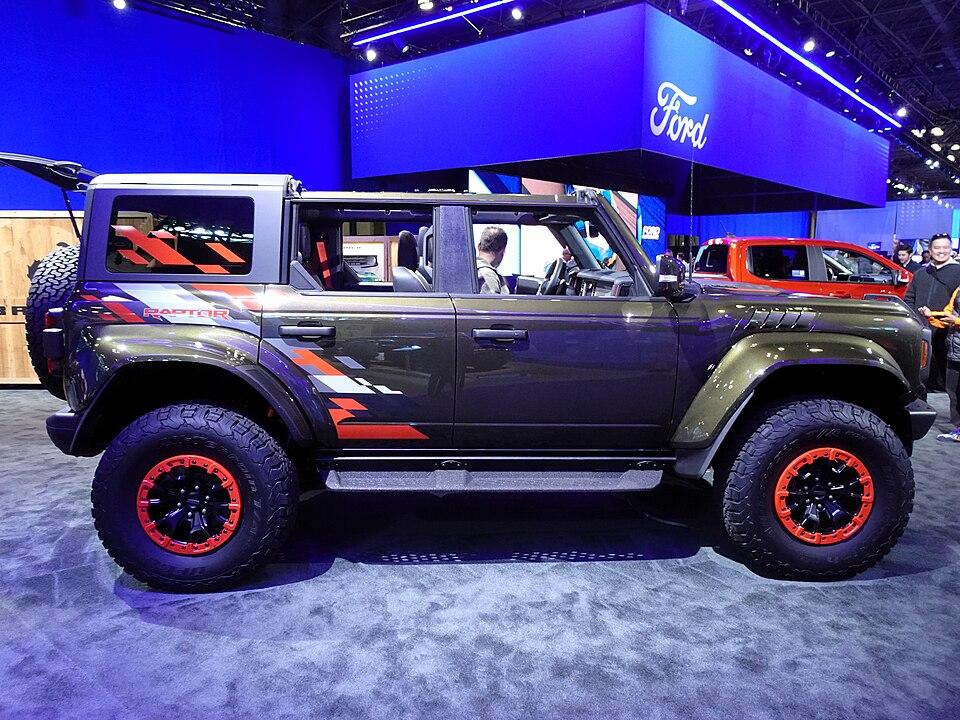
The short answer: the Bronco Raptor is worth it if you actually run the desert fast and need the suspension travel and 37s to do it without breaking parts. If your off-roading is trails, rock crawling, or weekend overlanding at normal speeds, a well-optioned Badlands with the Sasquatch Package does most of what you need for meaningfully less money, and you can put the difference into fuel, tires, or a real accessory budget.
This is not a close call on capability. It is a close call on whether you need the capability the Raptor adds.
What you're actually paying for
They share the four-door Bronco cabin layout and the removable top and doors, but the Raptor sits on a widened track with its own fenders, hood, and interior trim. Where they split mechanically is the running gear.
The Bronco Raptor runs a 3.0L EcoBoost twin-turbo V6, HOSS 4.0 suspension with Fox 3.1 Live Valve internal bypass shocks, a widened track, and 37-inch tires. The Badlands runs a 2.3L EcoBoost I-4 standard, with a 2.7L EcoBoost V6 available, paired with HOSS 2.0 suspension using Bilstein position-sensitive dampers, per Ford's current Badlands spec page. Front and rear electronic lockers are a Badlands-trim feature, not something unique to the Raptor and not something you only get by adding Sasquatch. The Sasquatch Package adds 35-inch tires and 4.7 axle gearing, and typically keeps the Badlands' Bilstein dampers. HOSS 3.0 with Fox internal-bypass dampers is a separate Badlands option (and is bundled on the 2026 four-door Badlands Wildtrak package); it is not automatic with Sasquatch alone.
We're not going to quote a Badlands horsepower or torque figure here because Ford has not published final 2026 numbers we're confident citing, and this comparison doesn't need them to make its point. What matters is that both the Raptor and the Badlands offer front and rear locking differentials: the Raptor is not winning that column by default, despite what you'll read elsewhere. The real gap is in suspension architecture, tire size, and how much abuse the chassis is built to absorb at speed.
Suspension and off-road geometry
The Fox 3.1 Live Valve shocks on the Raptor are a different class of damper than the Bilstein units on a base Badlands, and they're a step beyond even the optional HOSS 3.0 Fox internal-bypass dampers. Live Valve reads terrain and adjusts damping in real time; HOSS 3.0 Fox shocks are a quality passive tune, not an adaptive one. If you spend real time in whoops or washboard at speed, that difference is not subtle. It's the entire reason the Raptor exists.
Ford lists seven G.O.A.T. drive modes (Goes Over Any Type of Terrain) on both the 2026 Badlands and the Bronco Raptor; the Raptor's set includes Baja, the high-speed desert mode, and that is seven modes total, not seven plus Baja. A Sasquatch Badlands will handle moderate trail work, sand, and rock at a reasonable pace. It is not built to survive repeated high-speed compression events the way the Raptor's suspension and structure are.
Tires and width
37s versus 35s sounds like a minor spec line, but it changes ground clearance, approach and departure geometry, and how much square footage of rubber you have under you in sand or on ledges. The Raptor's widened track (plus wider fenders to match) also changes its stability margin at speed that the standard-width Badlands body does not have, Sasquatch package or not.
Price gap: what it actually buys
Ford's build-and-price tool is the only reliable source for current Badlands and Raptor pricing, since configurations and packages change by model year and region. We're not going to put a number on the Badlands here because we have not verified one for the current model year, and a wrong number in a buying guide is worse than no number.
What we can say with confidence: the site's Bronco Raptor listings averaged $87,978 across 2,908 2026-model-year ads as of November 2, 2026. Those are asking prices, and a 2026 average is weighted toward new and near-new trucks, so use it as a market snapshot, not a transaction price or a Badlands number. The spread between a well-equipped Badlands and a Raptor is real and it is not small. Before you decide, run both configurations through Ford's tool with the options you'd actually order (Sasquatch on the Badlands side) rather than comparing a bare Badlands sticker to a loaded Raptor sticker.
Reliability: what we can and can't tell you
We are not going to claim the Badlands has fewer problems than the Raptor. Nobody has published a comparative failure-rate number between these two trims worth quoting, and anyone telling you otherwise is guessing.
What is documented on the Raptor specifically: owners report front-end clunks tracing back to ball joints, sway bar links, or upper control arm wear, and a running list of other common complaints that's worth reading before you sign. None of this is unique to the Raptor trim's extra hardware in an obvious way; some of it may simply reflect that Raptor buyers drive harder and notice wear sooner. If you want the ongoing cost picture before you commit, the Bronco Raptor cost of ownership breakdown walks through what owners are actually spending on maintenance and repairs year over year, separate from the purchase price.
Who should buy which
Buy the Raptor if: you run sand at speed, you've priced out 37-inch tires and Live Valve shocks as separate purchases and realize the factory package is cheaper than building it yourself, or you tow/haul less and prioritize suspension travel over interior refinement.
Buy a Sasquatch Badlands if: your off-roading is mixed trail work, moderate rock crawling, or overlanding at sane speeds, you want a narrower, more trail-friendly Bronco with front and rear lockers without paying Raptor money, and you'd rather spend the price difference on Bronco Raptor-fit rock sliders (RTR or White Knuckle both list Raptor fitment), a thicker skid package if you actually crawl rocks, or a proper roof rack, and still have money left over.
If you're cross-shopping outside the Bronco lineup entirely, the Bronco Raptor vs Wildtrak comparison covers the trim just below Badlands, and the Bronco Raptor vs Jeep Wrangler Rubicon 392 comparison is the other direction people cross-shop before buying either Ford.
The short version
- The Raptor's real advantage is Fox 3.1 Live Valve suspension, 37s, and a widened track built for sustained high-speed desert driving, not trail crawling.
- Both trims have front and rear locking differentials; that is not a Raptor-exclusive feature.
- A Sasquatch-equipped Badlands (35s, lockers, 4.7 gears) covers most trail and moderate off-road use for less money; add the optional HOSS 3.0 Fox dampers if you want that suspension, because Sasquatch does not include it by itself.
- Use Ford's build-and-price tool for current numbers on both trims before deciding; don't trust a flat price gap quoted anywhere else, including here.
- Reliability data comparing the two trims directly does not exist yet. Budget for known Raptor-specific wear items regardless of which way you go.
Deal alert
Shopping for one? Get new listings first
We sweep US dealer inventory and send you new Raptors matching your search — real listings, real asking prices, no spam.