Bronco Raptor vs Bronco Wildtrak: Is the Upgrade Actually Worth It
The Raptor trim adds a wider track, bigger tires, and different suspension for a real price jump over a well-equipped Wildtrak. This piece works out what that money actually buys on trail and on the street, and who should skip it.
Gear in this article
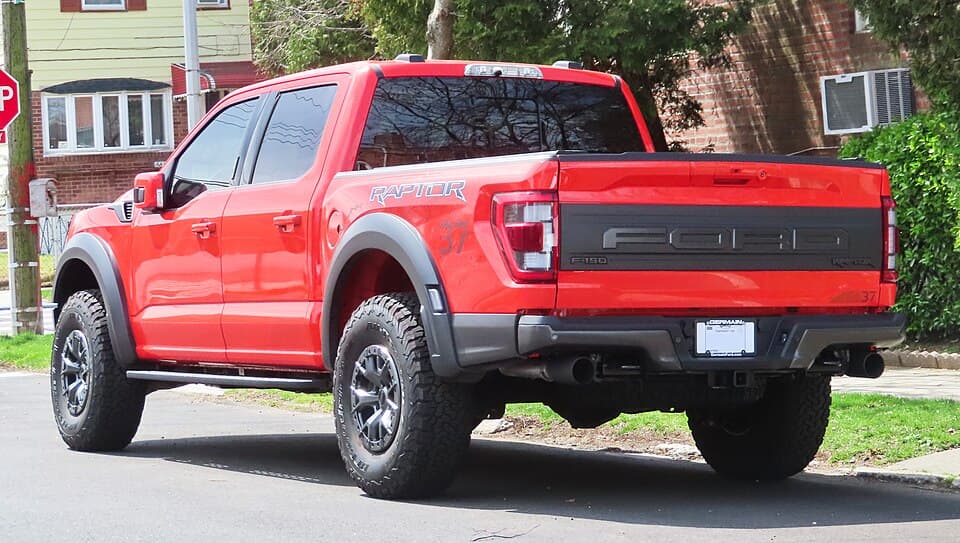
The Bronco Raptor costs meaningfully more than a fully loaded Bronco Wildtrak, and for most of that gap you are buying width, wheel travel, and a suspension tune built for triple-digit desert speed you will probably never use. If you wheel hard, run whoops, or want the fastest stock Bronco Ford makes, the money is well spent. If your trail day looks more like a graded fire road and your daily commute is 90 percent of your mileage, a well-optioned Wildtrak on a good all-terrain tire gets you most of the capability for a lot less truck payment.
What the price gap actually looks like
Configure both trims on Ford's build-and-price tool with the same options before you compare a single number. A loaded Wildtrak with the Sasquatch package, leather, and the tech options closes a lot of the gap to a base Bronco Raptor, but the Raptor still sits well above it, generally by a real five-figure margin, though the exact gap depends on the model year and how each truck is optioned.
Do not trust a number you read last year. Ford has moved Bronco pricing every model year since launch, and the used market has moved with it. Our own live listings data for the Bronco nameplate, blended across every trim from base to Raptor, shows the average transaction price climbing every year, from the mid $60,000s in 2022 toward the mid-to-high $80,000s in the most recent model years. That number is useful for one thing only: it tells you the whole lineup has gotten more expensive over time. It cannot tell you whether the Raptor's dollar premium over a comparably equipped Wildtrak has grown, shrunk, or held steady, because the blend includes base Broncos, Big Bends, and Outer Banks trims alongside Raptors, and we do not have a trim-isolated series to point to. If that specific premium matters to your decision, pull current MSRP for both trims from Ford directly, then check what dealers in your area are actually asking over or under sticker, because that markup swings by region and by how hot Raptor allocation is that quarter.
Powertrain and suspension: what you are actually paying for
The Wildtrak's standard engine is a turbocharged 2.3-liter four-cylinder EcoBoost, the same base engine used across most non-Raptor Bronco trims. A 2.7-liter twin-turbo V6 is available as an option on the Wildtrak, and it is a genuinely stronger engine, but it is still not the same hardware Ford put in the Raptor.
The Bronco Raptor runs a 3.0-liter twin-turbocharged V6 that Ford does not offer in any other Bronco trim, tuned specifically for this truck with cooling and induction hardware sized for sustained desert running rather than a quick stab of throttle on a highway on-ramp. Exact horsepower, torque, and 0-60 figures change by model year, so check the current numbers rather than repeat whatever you saw quoted for the launch year. We keep those numbers current on our Bronco Raptor specs and 0-60 breakdown.
The bigger functional difference is underneath. The Bronco Raptor runs Fox Live Valve shocks (electronically adjustable dampers that change compression and rebound in milliseconds based on what the truck is doing), with meaningfully more wheel travel than the Wildtrak's suspension, a wider track, and a factory tire in the 37-inch class. Confirm the exact tire size and travel figures for your specific model year against Ford's published specs, since these numbers can shift slightly across production years. The Wildtrak, even with the Sasquatch package's 35-inch tires and locking rear differential, is tuned as a capable all-terrain package, not a high-speed desert suspension. It rides on coil-over shocks that are good, not Fox Live Valve good.
That difference in suspension architecture is the actual product you are buying with a Bronco Raptor. It is not badge, it is hardware that costs real money to engineer and build, which is why the trim carries a real premium rather than a marketing one.
Real off-road capability differences
Where the Bronco Raptor separates itself is at speed, in the rough. Run a whoop section at Glamis or a rutted desert two-track and the extra wheel travel and Live Valve tuning let the truck absorb hits that would send a Wildtrak's chassis into a head-toss the driver feels in the seat. The wider track adds real stability at speed and on off-camber sections. If your plan is running dunes like Glamis or Silver Lake at a pace where the Wildtrak would need to slow down, the Raptor is doing a job the Wildtrak was not built for.
For rock crawling and slow technical trail work, the calculus flips. A Wildtrak with the Sasquatch package, a locking rear diff, and a set of aggressive all-terrains handles most marked trails at places like Moab or Big Bear/Holcomb Valley without drama. Extra wheel travel matters less at 5 mph than at 50, and the Bronco Raptor's width can actually work against you on a tight, tree-lined trail where the Wildtrak threads through with room to spare. If your off-road time is mostly low-speed technical stuff rather than open desert, you are paying a real premium for capability you will rarely access.
Daily driving trade-offs: ride, width, tire cost
Live Valve suspension is genuinely good on pavement, adjusting on the fly so the ride is calmer than the hardware would suggest. But the Bronco Raptor is still a wider, heavier truck riding on 37s, and that shows up in two places: parking, and tire bills. The extra track width makes tight garage stalls and narrow street parking noticeably harder to judge than in a Wildtrak, and it is a truck you will clip a curb with before you learn its corners.
Tire cost is the recurring expense nobody budgets for. A set of four 37-inch tires in a load range built for this weight and speed typically runs into four figures, and the exact total depends heavily on brand and where you buy. Options like the BFGoodrich KO2 that fit this class of truck are not cheap to replace when they wear. Our tire buying guide covers what owners actually pay across brands and how fast desert running eats tread compared to street miles. The Wildtrak's 35s on Sasquatch, or its smaller standard tire without that package, cost less to replace and last longer if most of your mileage is pavement. Factor that into the ownership math, not just the sticker price, the way we break down for the F-150 Raptor in our daily-driving cost piece.
One more thing worth reading up on before you buy used: some early Bronco Raptor owners have reported a front-end clunk over rough pavement, and it comes up often enough in owner forums that we wrote up the likely causes in our Bronco Raptor clunk diagnosis piece. We do not have a recall or TSB (technical service bulletin, a published repair procedure, not free work by itself) number to point to for this, and nobody has published a failure rate worth quoting. Treat it as something to listen for on a test drive and a pre-purchase inspection, not a confirmed defect.
Resale and depreciation: too early to call with confidence
The Bronco Raptor has only been on the market a handful of model years, which means there is not yet the multi-year used-price history that lets us speak with confidence the way we can for the F-150 Raptor, where we track depreciation curves by generation in detail. Anyone telling you the Bronco Raptor holds value better or worse than a loaded Wildtrak is guessing, informed guessing at best. Treat any specific resale percentage you read, including ours, as speculative until there is more used-market data to point at. If resale certainty matters to your decision, that uncertainty itself is a data point: the F-150 Raptor nameplate has a long track record, the Bronco Raptor does not yet.
The short version
- Weekend rock crawler or mostly-trail owner running graded or technical trails at low speed: a well-optioned Wildtrak with Sasquatch does the job for less money and less tire expense.
- Desert runner who wants to hold speed through whoops and rough two-track: the Bronco Raptor's Fox Live Valve suspension and extra travel are the real product here, and the premium buys hardware you will actually use.
- Mostly-pavement owner who wheels a few times a year: skip the Raptor trim. You are paying for suspension travel and width you will not access, and you will feel the tire and fuel cost every month instead.
- Get exact current MSRPs and specs for both trims from Ford's build page before you decide, not last year's numbers, and if cross-shopping the F-150 lineup too, see how the Bronco Raptor stacks up against a Gen 3 F-150 Raptor at similar money.
Owner questions
- How much more does a Bronco Raptor cost compared to a fully loaded Bronco Wildtrak?
- Even when a Wildtrak is loaded with the Sasquatch package, leather, and tech options, the Bronco Raptor still sits well above it, generally by a real five-figure margin. The exact gap depends on the model year and how each truck is optioned, so pull current MSRP for both trims from Ford directly rather than relying on last year's numbers.
- What engine does the Bronco Raptor have versus the Wildtrak?
- The Wildtrak's standard engine is a turbocharged 2.3-liter four-cylinder EcoBoost, with a 2.7-liter twin-turbo V6 available as an option. The Bronco Raptor runs a 3.0-liter twin-turbocharged V6 that Ford does not offer in any other Bronco trim, tuned specifically with cooling and induction hardware sized for sustained desert running.
- What suspension technology does the Bronco Raptor use that the Wildtrak doesn't?
- The Bronco Raptor runs Fox Live Valve shocks, electronically adjustable dampers that change compression and rebound in milliseconds based on what the truck is doing, along with meaningfully more wheel travel, a wider track, and a factory tire in the 37-inch class. The Wildtrak, even with Sasquatch's 35-inch tires and locking rear differential, rides on coil-over shocks that are good, but not Fox Live Valve good.
- Has the average Bronco transaction price gone up over the years?
- Yes. Live listings data blended across every Bronco trim from base to Raptor shows the average transaction price climbing every year, from the mid $60,000s in 2022 toward the mid-to-high $80,000s in the most recent model years. This blended figure only shows the whole lineup has gotten more expensive, not whether the Raptor's specific premium over Wildtrak has changed.
- Is there a known issue to watch for when buying a used Bronco Raptor?
- Some early Bronco Raptor owners have reported a front-end clunk over rough pavement, coming up often enough in owner forums to warrant a dedicated write-up on likely causes. There is no recall or TSB (technical service bulletin) number to point to, and no published failure rate, so treat it as something to listen for on a test drive and pre-purchase inspection rather than a confirmed defect.
Deal alert
Shopping for one? Get new listings first
We sweep US dealer inventory and send you new Raptors matching your search — real listings, real asking prices, no spam.