Running Hollister Hills in a Raptor: What to Know Before You Go
Hollister Hills is close enough to the Bay Area to be a day trip and tight enough to punish a full-size truck. Here is what a Raptor can and cannot do there.
Gear in this article
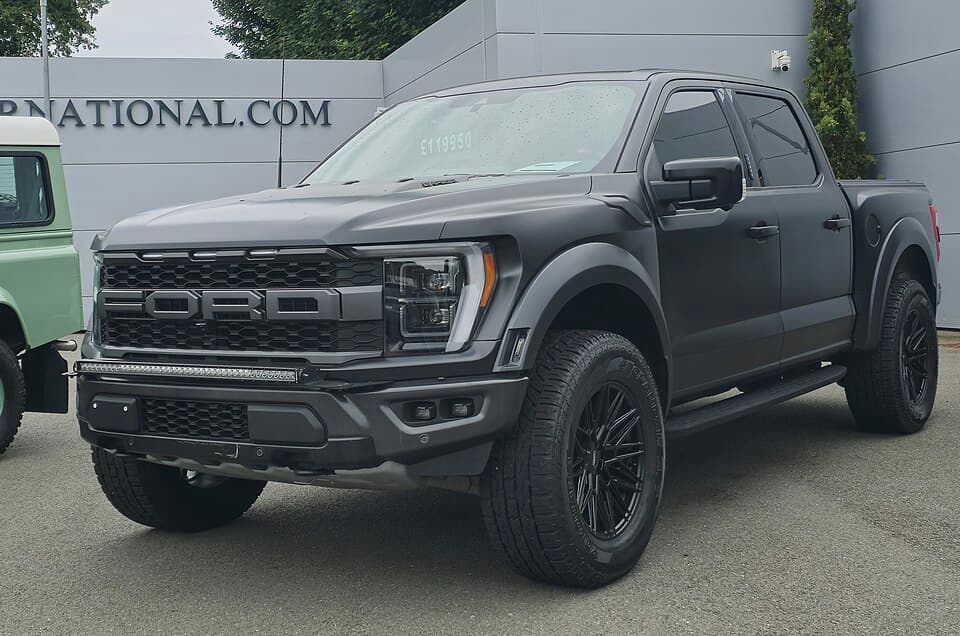
Hollister Hills SVRA sits in San Benito County, about 90 minutes south of San Jose and a genuine day trip from most of the Bay Area. It is also the wrong kind of trail network for a stock-width Raptor to run without a plan: most of the terrain was cut for dirt bikes, quads, and Jeep-width rigs, and a full-size truck on 35s or 37s will find its real limit is not traction, it is inches. This is not a "can it climb" park. It is a "will it fit" park.
The short version up front: a Gen 2 or Gen 3 Raptor can absolutely have a good day at Hollister Hills, but only on the wider, truck-rated trails, and you need to know which ones those are before you show up. Bring the trail map, air down, and do not chase a Jeep down anything marked narrow.
Where it is, access, permits and fees
Hollister Hills SVRA is a California state vehicular recreation area (SVRA) run by California State Parks, off Cienega Road south of the town of Hollister. It is one of the closest OHV parks to the Bay Area, which is the whole draw: no overnight drive, no Friday-afternoon caravan to the desert.
Entry is a day-use fee per vehicle, and California State Parks has changed SVRA fee structures before, so treat any number you hear on a forum as stale. Check the Hollister Hills SVRA page and the official California State Parks site directly before you go, and budget for the possibility that fees differ for weekends, holidays, and camping add-ons. Some areas of the park require a separate vehicle sticker or day pass purchased on site or online in advance, and that process has also shifted over the years. Do not plan a trip around a fee you read once a couple years back.
Hours are gate-to-gate and posted at the park, typically opening early and closing well before dark; confirm the current posted hours before you drive down, since they do get adjusted seasonally. Bring a printed or downloaded trail map. Cell service inside the park is inconsistent, and you do not want to be relying on a live map when you are trying to figure out whether the trail ahead narrows past your mirrors.
Which trails suit a full-size truck and which are genuinely too tight
This is the part that actually matters for a Raptor owner, and it is the part most general OHV writeups skip.
Hollister Hills was built out over decades primarily for motorcycles, ATVs, and narrower 4x4s. The park does designate certain routes and areas as appropriate for full-size, street-legal vehicles, and those are the ones worth your gas money. Everywhere else, the recurring problem is width, not power or clearance. A stock Gen 2 or Gen 3 Raptor is a full-size half-ton truck, noticeably wider body-to-body than a Wrangler or a side-by-side, and with mirrors extended it is wider still. Fold your mirrors before you commit to anything you have not scouted, and if a trail sign or the map marks a route as ATV/motorcycle-only or "not suitable for full-size vehicles," believe it. Getting wedged between trees or a rock cut two miles in is not a story, it is a tow bill and possibly a park citation.
The areas built around the main staging zones and the truck-legal loops are where a stock or lightly modified Raptor will actually have fun: enough elevation change and rough surface to work the suspension, without the trail narrowing to Jeep width. If you have already put money into aftermarket coilovers, this is where they earn it. Both a King 2.5 remote-reservoir coilover kit and a Fox 3.0 internal bypass setup will let you carry more speed over the chop than the stock dampers on any given Raptor generation, though exactly how much stock shocks are giving up varies by model year and trim, so do not assume your truck's factory setup matches another owner's without checking your window sticker or build sheet. If you are on stock shocks, you will still have a good time here, just at a lower pace over the rougher sections.
What you should not do is treat Hollister Hills like Johnson Valley or Moab and assume any marked trail is fair game for a full-size truck. Talk to the ranger station or the park staff at check-in and ask specifically which loops are appropriate for your vehicle's width. They deal with this question constantly and would rather tell you now than pull you out later.
Season and conditions, including wet-weather closures
Hollister Hills is a clay-heavy soil park, and California State Parks closes SVRA trails to protect them (and your truck) when they are saturated. Wet-weather closures at Hollister Hills are common in winter and after significant rain, and they can happen with short notice. This is not a park where you show up in January assuming it will be open; check the official status page or call ahead the morning you plan to go.
Best conditions are generally late spring through early fall, once the ground has dried out but before extreme heat sets in during peak summer. Dust is a real factor in the dry months, both for visibility on tighter sections and for anyone running behind you.
What to air down to and what recovery gear to bring
Hollister Hills is hardpack, clay, rock, and loose decomposed granite in sections, not sand, so you are not chasing the same low pressures you would run at Glamis or Silver Lake. For terrain like this, a common starting point owners on 35s or 37s report is somewhere in the high teens to low twenties psi, as a rough estimate, enough to soften the ride over rock and rutted sections without risking a sidewall roll on a hard edge. That number swings with tire brand, sidewall construction, and load, so treat it as a starting point, not a target: check it against your tire manufacturer's load and inflation chart and adjust from there based on how the tire looks loaded on the actual trail. Air back up before you hit the highway home; a portable compressor like the ARB twin onboard air compressor pays for itself the first time you have to do this twice in a day because you misjudged a section.
Recovery gear worth actually bringing: a set of traction boards, a real recovery strap rated for your truck's weight, and a shovel. A winch is less critical here than at a dedicated rock park like Windrock or Rausch Creek, but if you already run one, a Factor 55 FlatLink E on the front bumper does not hurt. Rock sliders are worth more at Hollister Hills than a winch is, since the risk profile skews toward scraping rocker panels on tight, off-camber sections rather than getting properly stuck. If you are running 37s, check the fender liners and control arms for rubbing before you go, and see what actually protects the underside versus what is just added weight if you are planning to spend real time on the rockier loops. Fitting 37s in the first place is its own project; the cost breakdown on fitting 37s to a Gen 2 covers what that actually runs.
Is it worth the trip in a Raptor
Yes, with a caveat. As a close-to-the-Bay-Area day trip, Hollister Hills is worth the drive for a Raptor owner who wants seat time without burning a weekend on the road to the desert. The terrain will work the suspension and give you real elevation change, and the truck-legal loops are genuinely fun in a Gen 2 or Gen 3.
The caveat is that this is not a park where a full-size truck gets to run everything. If your goal is to point your Raptor down any trail on the map, you will be disappointed and possibly stuck. If your goal is a solid half-day or full day on the sections actually built for width like yours, plus a shakeout for a build you are planning to run somewhere bigger, it delivers. Owners heading toward Moab or Johnson Valley later in the season often use Hollister Hills exactly this way: a nearby proving ground, not the main event.
Width is also worth weighing before you buy, not just before you drive down. A Ranger Raptor is narrower body-to-body than a full-size F-150 Raptor and has an easier time on tight trails purely on that basis. A Bronco Raptor splits the difference: still wider than a Wrangler-class rig but with a shorter wheelbase than a full-size truck. On price, the gap is real and worth knowing before you cross-shop: our own listings data currently puts a used 2023 Raptor R at an average around $102,000 against a same-year F-150 at roughly $69,600, a gap of about $32,000 for the supercharged 5.2. That is a national average across live listings and will move by region and options, so treat it as a benchmark, not a quote. See Is the Ranger Raptor Actually Big Enough? for the width tradeoff in more detail.
The short version
- Verify fees, hours, and any wet-weather closure status directly with California State Parks before you drive down; do not trust an old number.
- Stick to the trails and loops marked appropriate for full-size vehicles. Width, not power, is what strands a Raptor here.
- Air down for hardpack and rock, not sand pressures, and treat any psi number, including ours, as a starting point to check against your tire's load chart.
- Bring traction boards, a rated strap, and a shovel; a winch is nice to have, not essential, and rock sliders matter more than either.
- Worth the trip as a Bay Area day run and a shakeout drive, not as a place to run every trail on the map.
Owner questions
- What tire pressure should I run at Hollister Hills SVRA in my Raptor?
- A common starting point owners on 35s or 37s report is somewhere in the high teens to low twenties psi, since the terrain is hardpack, clay, rock, and loose decomposed granite rather than sand. Treat that as a rough starting point only, checking it against your tire manufacturer's load and inflation chart and adjusting based on how the tire looks loaded on the actual trail.
- Can a stock Ford Raptor run every trail at Hollister Hills?
- No. Most of the terrain was cut for dirt bikes, quads, and Jeep-width rigs, so a full-size Raptor on 35s or 37s will find its real limit is inches, not traction. Stick to routes and areas California State Parks designates for full-size, street-legal vehicles, fold your mirrors before scouting anything unfamiliar, and believe any sign marking a trail ATV/motorcycle-only or unsuitable for full-size vehicles.
- What recovery gear should I bring to Hollister Hills in a Raptor?
- Bring a set of traction boards, a real recovery strap rated for your truck's weight, and a shovel. A winch is less critical here than at a dedicated rock park like Windrock or Rausch Creek, but a Factor 55 FlatLink E on the front bumper doesn't hurt if you already run one. Rock sliders matter more than a winch since the risk skews toward scraping rocker panels on tight, off-camber sections.
- How much more does a Raptor R cost than a regular F-150, based on current listings?
- Listings data currently puts a used 2023 Raptor R at an average around $102,000 against a same-year F-150 at roughly $69,600, a gap of about $32,000 for the supercharged 5.2. That figure is a national average across live listings that will move by region and options, so it's a benchmark rather than a quote for any specific truck.
- When is the best time to run Hollister Hills, and can it close for weather?
- Best conditions are generally late spring through early fall, once the clay-heavy ground has dried out but before extreme summer heat sets in. California State Parks closes SVRA trails to protect them when saturated, and wet-weather closures are common in winter and after significant rain, sometimes with short notice, so check the official status page or call ahead the morning you plan to go.
Deal alert
Shopping for one? Get new listings first
We sweep US dealer inventory and send you new Raptors matching your search — real listings, real asking prices, no spam.