Overlanding a Raptor: Build the Weight Budget Before the Parts List
The Raptor is a tempting overland base until you do the math: roughly 1,200-1,400 lb of payload, and a tent, rack, drawers, water, and two passengers spend it all. Here is the weight-first build order that keeps the truck working the way Ford tuned it.
Gear in this article
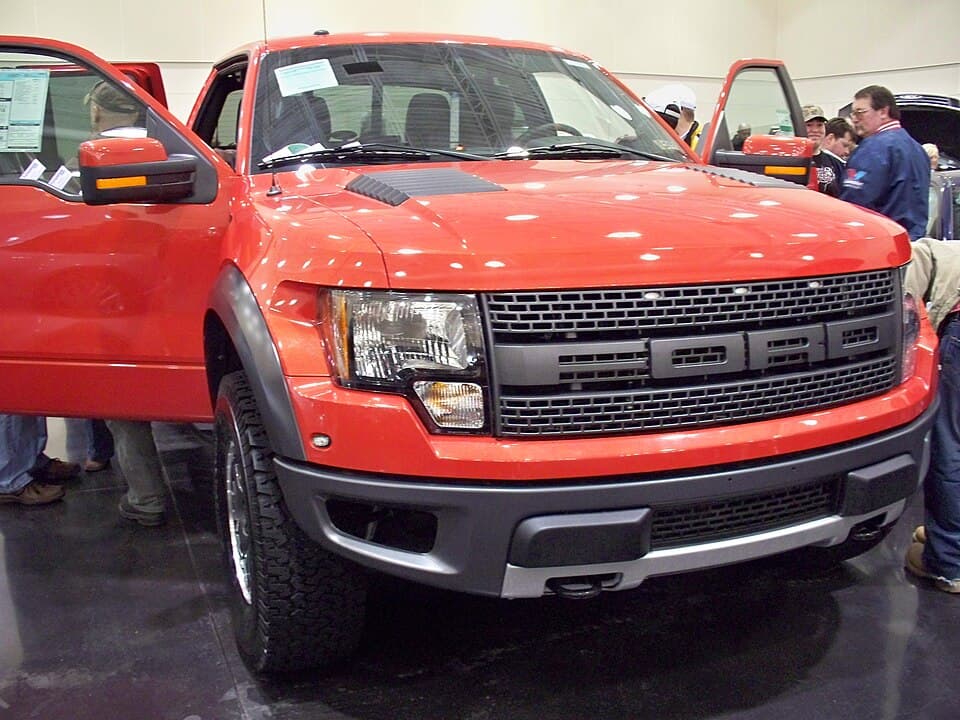
Payload wins the argument before you buy a single part. A Gen 2 or Gen 3 F-150 Raptor carries roughly 1,200-1,400 lb of payload depending on cab, trim and options, per the door sticker, and a rooftop tent, a rack, a drawer system, water and two adults with gear will burn through that number faster than most owners expect. Build the weight budget first, in this order: door sticker, minus people and fluids, minus fuel-adjacent gear, then shop for the rest of what is left. Do the math before the parts list, not after.
Start with the door sticker, not the brochure
Every truck has a yellow certification label on the driver door jamb with a GVWR (gross vehicle weight rating, the max the whole truck can weigh loaded) and a payload figure calculated for that specific build. Raptor payload is not one number across the lineup. A SuperCrew Gen 2 with the heavier options can sit closer to 1,200 lb, while a lighter-optioned truck can crack 1,400 lb. We cover the full breakdown by year and trim in our payload deep dive; go read your actual sticker before you read the rest of this piece.
Payload includes passengers, cargo, and any aftermarket weight bolted to the truck: bumpers, racks, sliders, winches, all of it. It does not stack with towing capacity; those are separate numbers, covered in our towing capacity breakdown by generation, and towing a trailer while loaded for overlanding stacks tongue weight onto payload too.
The worked example: a real Gen 2 build
Take a used Gen 2 SuperCrew, a common starting point for a build like this. Raptor pricing runs well above a base F-150 (the used market for a comparable-year F-150 XL or Lariat averages roughly $40,000-45,000, but Raptors themselves command a real premium over that, so check actual Raptor listings rather than pricing off a base-truck average). For the weight math here, what matters is the door sticker, not the price tag: say yours reads a hypothetical 1,340 lb, right in the middle of the typical Gen 2 range. Use your own truck's real number, not this one, before you shop.
Subtract before you shop:
- Two adults, roughly 340-400 lb combined with clothes and boots, an estimate that obviously varies by who is in the truck.
- A full tank plus water, call it 40-60 lb of margin if you are filling jerry cans (fuel itself is already accounted for in the curb weight Ford used to calculate payload, but topped-off jerry cans and a full onboard water tank are not).
- Driver-added fluids and loose gear already living in the cab, an honest 20-30 lb nobody weighs.
That leaves roughly 850-940 lb for everything else: the rack, the tent, the drawers, the fridge, recovery gear, tools, food, and a second passenger's overnight bag. Now price the parts against that number, not against a truck full of options in a magazine photo.
What the gear actually weighs
These are ranges because trim, material and options vary. Weigh what you actually buy before you mount it, but use this to sanity-check a build before you spend money.
| Item | Typical weight | Notes |
|---|---|---|
| Hard-shell RTT (rooftop tent) | 120-165 lb | Soft-shell tents run lighter, 90-130 lb |
| Roof rack (e.g. Prinsu roof rack) | 35-55 lb | Before anything is mounted to it |
| Drawer system (e.g. DECKED drawer system) | 200-215 lb | Loaded with tools and recovery gear, add another 80-150 lb |
| Bed liner (e.g. BedRug bed liner) | 25-40 lb | Usually replaces a spray-in liner, near wash |
| 12V compressor fridge, 40-60qt | 40-55 lb | Add 20-40 lb once loaded with food and drinks |
| Onboard air, twin compressor | 25-35 lb | Mounted, not counting the airline and fittings |
| Recovery kit (straps, shackles, board, kit bag) | 30-50 lb | A second traction board adds another 15-20 lb |
| Winch (e.g. Warn Zeon 10-S) | 70-80 lb | Usually paired with a heavier aftermarket bumper too |
Stack a hard-shell tent, a rack, a loaded drawer system, a fridge and a modest recovery kit and you are at roughly 500-620 lb before food, water jugs, a second passenger's gear or a winch bumper. On the worked example above, that already eats most of the 850-940 lb left after people and fuel. This is why overlanding a Raptor is a weight-budget exercise, not a parts-list exercise.
What sag does to the factory suspension tuning
Ford's Live Valve shocks and the Fox 3.0 dampers on Gen 2, and the equivalent factory tuning on Gen 3 and the Raptor R, are tuned around a specific ride height and spring rate assuming Raptor-normal loads: a driver, some gear, occasional desert speed. Overlanding weight is different. It is not occasional, it sits on the truck constantly, and it is concentrated high and to the rear (roof tent, drawers, fridge).
Load a Gen 2 down with 500-700 lb of overland gear and the rear squats measurably. That changes ride height, softens the effective spring rate under load, and moves the truck's center of gravity up and back, exactly the wrong direction for a vehicle whose stability tuning depends on where the weight sits. The electronically adjustable damping on Live Valve trucks can partially compensate, but it cannot restore lost ride height, and a sagged rear end also eats into your remaining suspension travel before you hit a whoop section.
This is where a Deaver add-a-leaf pack earns its place on a Gen 2 that is carrying real camping weight full-time, not just for a weekend. It restores ride height and firms up the rear spring rate under load without touching the factory dampers. Pair it with Foutz progressive rear bump stops if you are also running 35s or 37s, since the stock bump stops were tuned for stock ride height and an unladen rear end; loaded and lifted, you can run out of usable travel before the stop is doing its job.
None of this applies the same way to Gen 3 or the Raptor R without checking current parts fitment for that generation's rear suspension, and it does not apply to the Ranger Raptor or Bronco Raptor, which use different rear suspension designs entirely (independent rear on Bronco Raptor, leaf-sprung but a different geometry and payload rating on Ranger Raptor). Confirm fitment before ordering anything.
Where the Raptor wins and where it loses against a Power Wagon or Tacoma
The Raptor's strength as an overland base is everywhere except carrying capacity. It rides better loaded and unloaded than a Power Wagon on rough, fast terrain, it is noticeably quicker, and the factory suspension (King, Fox, or Live Valve Fox depending on year, detailed in our King vs Fox vs ICON whoops comparison) is simply a better tool for covering ground fast.
Where it loses: payload and fuel range, both directly relevant to overlanding. A Power Wagon's rated payload generally runs higher than a comparably equipped Raptor's, though both numbers swing hard by cab, bed and options, so compare actual door stickers rather than headline specs. A properly built Tacoma starts lighter, so a given gear load costs it a smaller share of its payload even where its absolute number is lower than the Raptor's. The Raptor's advantage in speed and suspension travel does not help you if you are over payload before you have loaded the cooler.
Fuel range: the number people forget to budget
The 3.5-liter EcoBoost Raptor's real-world fuel economy is worse than the window sticker once you are loaded, aired down, or running at altitude. Our MPG article covering what owners actually see across generations is the number to plan a route around, not the EPA combined figure. A loaded, roof-tent-equipped Gen 2 running 35s can see real-world mileage drop noticeably on trail-heavy days, which cuts your safe range on a single tank compared to the same truck stock. Budget fuel range the same way you budget payload: know the real number before you plan a remote loop, and carry extra fuel capacity as its own line item in the weight budget, not an afterthought.
The short version
- Read your truck's actual door-sticker payload before shopping. It is not a brochure number, and our payload breakdown shows how much it varies by trim.
- Subtract passengers, fuel-adjacent gear and loose cab weight first. What is left is your real gear budget, and a tent, rack, drawers and fridge alone often eat 500-700 lb.
- On a Gen 2 carrying that weight full-time, a Deaver add-a-leaf pack and Foutz progressive bump stops restore the ride height and travel the factory suspension tuning assumed you would not give up.
- The Raptor beats a Power Wagon or Tacoma on speed and suspension composure, and loses on payload margin and real-world fuel range. Plan the route around actual observed MPG, not the window sticker.
Owner questions
- How much payload does a Gen 2 F-150 Raptor actually have for overlanding gear after subtracting passengers and fuel?
- Using a hypothetical door-sticker figure of 1,340 lb (middle of the typical Gen 2 range), subtract 340-400 lb for two adults with clothes and boots, 40-60 lb for a full tank plus jerry cans and water, and 20-30 lb for driver-added fluids and loose cab gear. That leaves roughly 850-940 lb for the rack, tent, drawers, fridge, recovery gear, tools, and food.
- How much weight will a rooftop tent, rack, drawer system and fridge add to my Raptor build?
- A hard-shell rooftop tent runs 120-165 lb (soft-shell 90-130 lb), a roof rack like the Prinsu adds 35-55 lb before mounting anything, a DECKED drawer system is 200-215 lb loaded with tools and recovery gear, and a 40-60qt fridge is 40-55 lb. Stacked together with a modest recovery kit, that's roughly 500-620 lb before food, water, or a winch bumper.
- Do I need suspension upgrades on a Gen 2 Raptor if I'm carrying overland gear full-time?
- Yes—loading 500-700 lb of overland gear makes the rear squat measurably, changing ride height and softening the effective spring rate. A Deaver add-a-leaf pack restores ride height and firms the rear spring rate under load without touching the factory dampers. Pair it with Foutz progressive rear bump stops if running 35s or 37s, since stock bump stops were tuned for an unladen, stock-height rear end.
- Is a Ford Raptor or a Power Wagon a better base for an overland build?
- The Raptor rides better loaded and unloaded on rough, fast terrain, is noticeably quicker, and its factory suspension (King, Fox, or Live Valve Fox depending on year) is a better tool for covering ground fast. Where it loses is payload and fuel range: a Power Wagon's rated payload generally runs higher than a comparably equipped Raptor's, though both swing by cab, bed and options.
- What real-world fuel economy should I expect from a loaded Raptor for range planning, and does the EPA number apply?
- No—the 3.5-liter EcoBoost Raptor's real-world fuel economy is worse than the window sticker once you're loaded, aired down, or at altitude. A loaded, roof-tent-equipped Gen 2 running 35s can see real-world mileage drop noticeably on trail-heavy days, cutting your safe range per tank, so plan routes around observed MPG rather than the EPA combined figure.
Deal alert
Shopping for one? Get new listings first
We sweep US dealer inventory and send you new Raptors matching your search — real listings, real asking prices, no spam.