2024 vs 2025 vs 2026 Ranger Raptor: What Actually Changed, Per Ford's Own Spec Sheets
Mechanically the US Ranger Raptor has carried over since 2024, but Ford's spec sheets for each year disagree on payload, fuel capacity, crawl ratio, brake rotors and torque rpm. Here is every difference, with the source for each year, and what it means if you are choosing a used one.
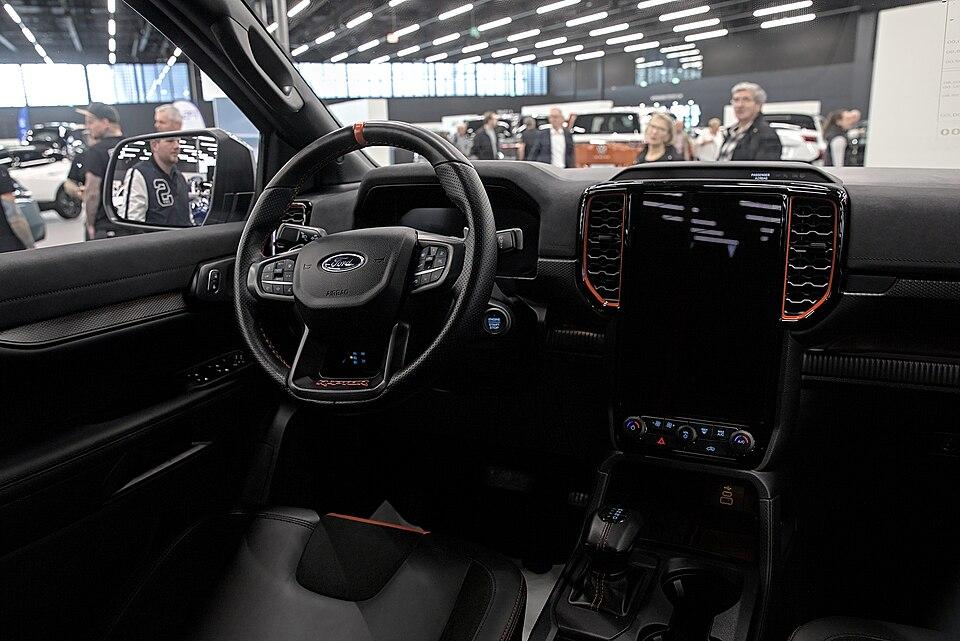
The short answer: the US Ranger Raptor has not changed mechanically since it launched for 2024. Same 405 hp 3.0L EcoBoost twin-turbo V6, same 10-speed SelectShift automatic, same 5,510 lb max tow rating, same 16 city / 18 highway / 17 combined EPA rating all three years. What has changed is Ford's own paperwork: the 2024, 2025 and 2026 technical spec sheets disagree with each other on payload, fuel tank size, crawl ratio, front brake rotor size and whether the engine lists a torque peak at all. None of that is a hardware recall or a mid-cycle update Ford announced. It is three different documents giving three different numbers for what looks like the same truck.
That matters if you are cross-shopping a 2024 against a 2025 or 2026 on a used lot and a salesperson quotes you a payload or fuel capacity number off a sticker. The number on the window sticker depends entirely on which year's sheet it came from, not on what's actually different under the truck.
Payload: three different numbers, no announced change
This is the one that will actually bite you if you're buying for towing or hauling.
- The 2024 Ford Ranger Raptor technical spec sheet lists max payload at 1,375 lb. An earlier launch-version PDF for the same model year had said 1,411 lb, so even 2024 isn't internally consistent across Ford's own document history.
- The 2025 Ford Ranger Raptor technical spec sheet lists 1,411 lb, while ford.com's 2025 Raptor model page shows 1,375 lb for the same model year. Two Ford sources, same year, two numbers.
- The 2026 Ford Ranger technical spec sheet lists 1,373 lb.
For what it's worth, ford.com's 2026 FAQ page shows 1,513 lb, which matches the 2.7L Ranger's payload figure in the 2026 PDF, not the Raptor's. That looks like a web copy error on Ford's part, not a real spec, and we'd ignore it.
Practical read: payload on this truck has sat somewhere in the low-to-mid 1,300s to low 1,400s the entire run, depending on which document you trust. If you're close to the limit with a bed full of gear and passengers, don't plan around the higher number from any single sheet. Check the door jamb sticker on the actual truck you're buying, since that reflects the build, not a marketing PDF.
Fuel capacity: 20.3 gallons becomes 20 gallons
The 2024 spec sheet lists a 20.3 gallon tank. The 2025 sheet and the 2026 ford.com page both list 20 gallons. That is a 0.3 gallon difference, inside normal rounding and measurement variance for a tank spec, and not something we'd call a running change without Ford saying so.
What doesn't change: this is a thirsty small truck. Fuel range is already the most common owner complaint across every model year, as covered in the Ranger Raptor reliability data, and a 0.3 gallon swing on paper does not move that needle.
Crawl ratio: 61.59:1 jumps to 67.88:1, but only in Ford's documents
This is the biggest numerical gap on the list, and it is worth being careful about what it actually means.
The 2024 spec sheet lists a max crawl ratio of 61.59:1. A separate 2024 launch-era PDF had listed 67.88:1 for the same model year. The 2025 and 2026 sheets both settle on 67.88:1. Crawl ratio is a function of the transfer case low range, the transmission's lowest gear, and the axle ratio multiplied together, and none of the individual components Ford lists (same 10-speed gear set, same 2-speed transfer case) appear to change across the three documents. The more likely explanation is that the 2024 production sheet simply had a math or transcription error that got corrected starting with the 2025 document, not that Ford quietly swapped gearing in the field. We would not treat this as a confirmed hardware difference between a 2024 and 2025 truck, but if you're comparing the two years' sheets side by side, expect the discrepancy and don't panic over it.
Related to this, the rear axle ratio shows the same kind of inconsistency: the 2024 and 2025 sheets list a 4.27 rear axle ratio (the 2025 sheet also lists 4.27 up front), while an early 2024 launch document had listed 4.70 front and 3.73 rear. Again, this reads like a documentation correction rather than a running change, but we'd flag it rather than silently average it.
Front brake rotors: 12.24 inches becomes 13.42 inches
This is the one place a buyer cross-shopping a 2024 against a 2025 or 2026 might reasonably wonder if the truck got a real brake upgrade.
- 2024 spec sheet: front rotor 12.24 x 1.33 in.
- 2025 spec sheet: front rotor 13.42 x 1.34 in (341 x 34 mm).
- 2026 spec sheet: 341 x 34 mm, matching the 2025 figure.
That's a meaningful jump in rotor diameter on paper, over an inch. Ford has not published a bulletin or press note describing a mid-cycle brake hardware change on the Ranger Raptor, so we can't confirm this as a verified running change versus a correction to the 2024 document. If you're shopping a 2024 specifically and brake performance or replacement parts interchange matters to you, this is worth asking a dealer parts department to confirm against the actual part numbers on your VIN, not the spec sheet. For general brake wear and upgrade context across the Raptor lineup, see the Raptor brake upgrade guide.
Torque rpm: only the 2026 sheet gives you a number
All three years list 430 lb-ft of torque. Only the 2026 spec sheet tells you where that peak happens: 430 lb-ft at 4,500 rpm, alongside 405 hp at 5,750 rpm. The 2024 and 2025 sheets give the torque figure with no rpm attached at all. Some outlets covering the truck have listed the torque peak closer to 3,250 rpm, which doesn't match Ford's own 2026 figure, so treat anything other than the Ford PDF number as unverified.
This is a documentation gap, not a performance difference. There's no indication the 2024 or 2025 trucks make peak torque at a different point in the rev range than the 2026; Ford's early sheets just didn't publish the number.
Fuel delivery: port-and-direct versus direct-only
The 2024 spec sheet describes the 3.0L EcoBoost's fuel delivery as port plus direct injection. The 2025 and 2026 sheets describe it as direct injection only. This is the kind of spec that would matter if it reflected an actual change to the fuel system, since port injection helps control intake valve carbon buildup, a known issue on this engine family (see carbon buildup on the EcoBoost). Ford has not announced a fuel system change on the Ranger Raptor, so we'd treat this as another case of the spec sheet language changing without a confirmed hardware change behind it. If you own or are buying a 2024 specifically, it is worth asking a dealer to confirm what your truck's fuel system actually is, since this is one place where getting it wrong matters for maintenance expectations.
Front headroom: 39.8 inches to 41.0 inches
The 2024 sheet lists 39.8 inches of front headroom. The 2025 sheet lists 41.0 inches. That's over an inch of difference for a cab that, by every other dimension Ford publishes, didn't change. We'd read this as a measurement or documentation difference rather than Ford raising the roofline a year into production. No other interior or exterior dimension on the sheets moved to match it.
What stayed identical across all three years
Everything that actually determines how the truck drives and tows:
| Spec | 2024-2026 |
|---|---|
| Engine | 3.0L twin-turbo EcoBoost V6, 405 hp |
| Transmission | 10-speed SelectShift automatic |
| Max towing | 5,510 lb |
| EPA rating | 16 city / 18 hwy / 17 combined |
| Tires | LT285/70R17, 33-in all-terrain |
| Shocks | Fox 2.5-in Live Valve |
The EPA figures are confirmed independently of Ford's own sheets, via fueleconomy.gov's listings for the 2024, 2025 and 2026 Ranger Raptor, all three showing identical numbers. That's the one figure in this whole piece you can treat as settled.
What this means if you're choosing a used one
Mechanically, buy on condition and price, not model year. There is no confirmed powertrain, suspension, or brake hardware difference between a 2024 and a 2026 Ranger Raptor that Ford has put its name on as a running change. The differences above are document-to-document inconsistencies, and several of them (payload, crawl ratio, axle ratio) look like corrections to an early 2024 error more than they look like a 2025 upgrade.
Price-wise, the gap between years is real and it's depreciation plus a strong used market, not a spec upgrade. Our own live listing averages as of early November 2026 show 2024 Ranger Raptors asking around $51,800, 2025s around $55,750, and 2026s around $61,950. That climbs steadily and tracks a market still absorbing new production more than it tracks any hardware difference.
If brake rotor size genuinely matters to you, say because you're planning a tow-heavy use case, have the dealer confirm the actual part numbers on the specific VIN rather than trusting the model year's published sheet. The same goes for payload if you're close to the limit. For a broader look at problems owners actually report across all three years, see the Ranger Raptor common problems list and the Ranger Raptor recalls pages for 2024, 2025, and 2026.
The short version
- No confirmed mechanical change across 2024, 2025, 2026 Ranger Raptor: same 405 hp 3.0L EcoBoost, 10-speed, 5,510 lb tow rating, same EPA numbers.
- Payload, fuel capacity, crawl ratio, axle ratio, front rotor size, torque rpm, and fuel delivery description all differ between Ford's own year-by-year spec sheets, with no accompanying announcement of a hardware change.
- Treat the 2024 sheet's lower payload and smaller rotor figures, and its lack of a torque rpm number, as likely documentation gaps rather than a lesser truck.
- Shop on price, mileage, and condition. Confirm payload and brake part numbers against the actual VIN if either matters for your use case, not against the spec sheet for the model year.
- Used asking prices run roughly $51,800 (2024), $55,750 (2025), $61,950 (2026) per the site's live listing averages, which tracks normal depreciation and demand, not a spec change.
Deal alert
Shopping for one? Get new listings first
We sweep US dealer inventory and send you new Raptors matching your search — real listings, real asking prices, no spam.