2011 Ford Raptor: Specs, Problems, and What to Pay
The 2011 Raptor made the 411 hp 6.2L V8 the only engine and added the SuperCrew cab, and it is the cheapest way into Raptor ownership at $28,000-36,000. Fifteen years on, condition decides everything, so we cover the inspection that separates a deal from a money pit.
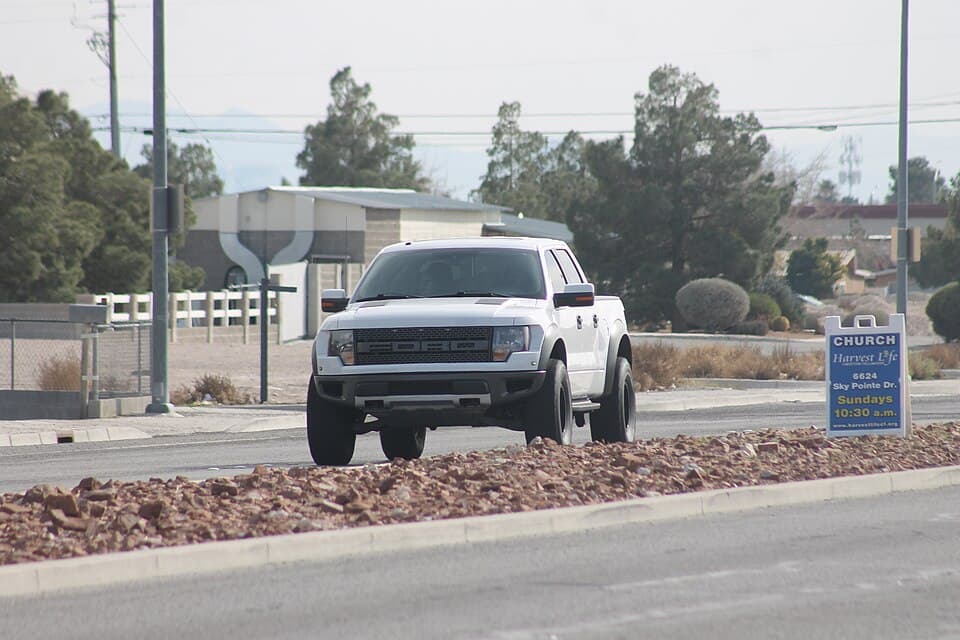
A clean 2011 F-150 Raptor runs $28,000-36,000 in 2026, the low end of the wider $28,000-45,000 Gen 1 price band, and that makes it the cheapest way into Raptor ownership today. It is also the oldest: 15 years old this year, with every Gen 1 wear item that age brings. The defining trait of the model year is the engine question getting settled for good. The optional 6.2L V8 that arrived mid-year in 2010 became the only engine offered in 2011, and Ford added a four-door SuperCrew body to go with it. If you are looking at a 2011, you are looking at the first year Gen 1 became the truck most people picture when they hear the name.
Here are the numbers, then the reasoning.
| Spec | 2011 F-150 SVT Raptor |
|---|---|
| Engine | 6.2L Boss V8 (sole engine; the 5.4L Triton base is gone) |
| Power | 411 hp @ 5,500 rpm |
| Torque | 434 lb-ft @ 4,500 rpm |
| Transmission | 6R80 six-speed automatic |
| Shocks | Fox internal triple-bypass (not Live Valve, that starts on Gen 2 in 2019) |
| Suspension travel | 11.2 in front / 12.1 in rear |
| Cab configs | SuperCab (2-door, rear-hinged half doors) and SuperCrew (4-door, new for 2011) |
| Payload / towing | ~950 lb / 8,000 lb |
| Curb weight | ~5,950 lb (SuperCrew); SuperCab is lighter by a few hundred pounds |
| EPA fuel economy | 11 city / 16 hwy |
| 0-60 mph | ~7.0 sec |
What actually changed for 2011
The 2010 Raptor launched with a 310 hp 5.4L 3-valve Triton as the base engine, with the 6.2L V8 arriving partway through the model year as the truck buyers actually wanted. For 2011, Ford stopped offering the 5.4 entirely. Every 2011 Raptor, SuperCab or SuperCrew, carries the 6.2L Boss V8 (411 hp, 434 lb-ft) paired to a 6R80 six-speed automatic. If you are shopping a 2011, you do not need to check which engine is under the hood the way you would on a 2010; there is only one option, and that alone makes 2011 a cleaner starting point than the launch year.
The other headline change is the SuperCrew cab. 2010 Raptors came only as a two-door SuperCab with rear-hinged half doors for back-seat access. 2011 added a true four-door SuperCrew with full-size rear doors and a back seat adults can actually use, riding on a wheelbase about a foot longer than the SuperCab. Most buyers searching for a used Raptor today want the SuperCrew, and 2011 is the first year it exists, which is a real reason to prefer 2011 over 2010 even setting the engine question aside.
What a 2011 does not have, and why that matters when you are shopping
It is worth being direct about what did not arrive yet, because sellers occasionally blur early and late Gen 1 years the same way they blur 2010 and 2011 engines. The Torsen front limited-slip differential, a front-facing camera, and HID headlamps all arrived starting with the 2012 model year, not 2011. A 2011 Raptor does not have any of them. If a listing for a "2011" Raptor advertises a front camera or Torsen diff, either the year is wrong or the truck has had aftermarket work done to add features Ford did not put on it that year. Neither is a dealbreaker, but it is a question worth asking before you agree to a price built on 2012-and-later features.
The cam phaser rattle: the same issue as every 6.2 in this generation
The 6.2L V8 in a 2011 carries the same cam phaser rattle every 6.2-powered Gen 1 does, and at 15 years old, most 2011s have crossed well past the 90,000-mile point where it commonly shows up. The test is simple and free: the engine has to be stone cold, meaning it has not run in several hours. Start it yourself and listen for a five-to-ten-second diesel-like rattle from the front of the engine that quiets once oil pressure builds. That rattle means a cam phaser losing its ability to hold oil pressure at startup, and it does not fix itself. Budget $2,200-4,000 for phasers, tensioners, chains, guides, and a PCM reflash if you hear it. If the seller has already warmed the truck up before you arrive, that is not a coincidence, and you should assume the rattle is there until you have cold-started it yourself.
Because 2011 sits early in the Gen 1 run, treat an undocumented truck as a phaser-work candidate by default rather than an exception. A seller who can produce a receipt for the fix, or a truck that passes a genuine cold start clean, is worth paying toward the top of the price range for. One that cannot answer the question plainly should price several thousand below it.
Frame rust, IWE grinding, and the rest of the Gen 1 inspection
Gen 1 is the only Raptor generation with a steel body, so frame and rear-quarter rust is specific to this truck and not something you need to check on a Gen 2 or Gen 3. Get under the bed and look at the frame rails at the rear shock mounts, where salt-belt trucks scale first. A chalky, flaking rust you can scrape off with a fingernail is a $800-2,500 fix; actual perforation, where metal is gone, is a bodyshop conversation and a real reason to walk on a 2011 specifically, since it has had three more years than a 2014 to accumulate it.
The IWE (integrated wheel end, the vacuum actuator that locks the front hubs into 4WD) fails on every Gen 1 built, 2011 included, at some point in its life. Engage 4WD at walking pace and listen for a grind or growl from the front hubs. It is the cheap item on this list, about $180 in parts if you do it yourself versus $700-1,100 at a shop, and it is covered in more detail in why your IWE is grinding and what it costs.
The 6R80 six-speed is generally a durable transmission across the whole Gen 1 run, but a fluid service every 60,000-100,000 miles matters more on a truck this old. Watch for a steady vibration under light throttle between 40 and 50 mph or a hard clunk into second gear when cold; that points to a converter, not just fluid, and runs $1,800-2,600 versus a $400 fluid service if it is caught early. Ask for diff and transfer case fluid records too. A 2011 with no service history behind it is a project wearing clean paint, regardless of how the panels look.
What a 2011 actually costs in 2026
Clean 2011 Raptors run $28,000-36,000 today, positioned at the bottom of the broader $28,000-45,000 Gen 1 band because 2011 is the oldest year that still carries the 6.2L standard and the SuperCrew option, without the extra years of ownership newer Gen 1s have on their side. A documented truck, phaser work confirmed or a clean cold start, service records for diff and transfer case fluid, a frame with no scale, can land toward the top of that range even at this age. An undocumented truck with an audible rattle or visible frame rust should price several thousand below it, and that gap is a legitimate opening position in a negotiation, not a lowball. These ranges move by region and season, so confirm against live listings before you make an offer, and the full inspection process is covered in more detail in the Gen 1 buying guide.
2011 versus later Gen 1 years
Nothing mechanical separates a 2011 from a 2012-2014 truck at the engine or transmission level; the 6.2 and 6R80 carry through unchanged for the rest of the generation. What separates them is equipment. 2012 added the Torsen front diff, front camera, and HID headlamps. 2013 brought a MyFord Touch interior refresh that introduced its own minor electronics complaints, a $600-900 APIM module failure being the worst of it. If a well-documented 2013 and a well-documented 2011 are priced close together, the 2013 is usually the better buy for the added equipment. If the 2011 is priced a real few thousand below it because it lacks that equipment, the math can go either way depending on whether you care about the camera and the diff.
Who should buy a 2011 today
A 2011 makes sense if your priority is the lowest entry price into a real Raptor, you are comfortable doing your own cold-start and IWE checks before you buy, and you do not need the Torsen diff, front camera, or 2013's touchscreen badly enough to pay for a later year. It is a worse buy if you are set on a truck under 100,000 miles with full documentation, since those examples exist more often in 2013-2014 than in 2011, or if you find frame scale and an audible phaser rattle on the same truck and the seller will not move enough on price to cover both. At 15 years old, a 2011 is not a truck you buy on the badge alone. Cold start it, get under the bed, ask for the fluid records, and let what you find set the number.
Deal alert
Shopping for one? Get new listings first
We sweep US dealer inventory and send you new Raptors matching your search — real listings, real asking prices, no spam.