Ford Raptor Electronic Locking Rear Differential: Failure Symptoms and What It Costs
The Raptor's electronic-locking rear diff is core to its off-road capability, and when it acts up owners see dash warnings, clunks engaging 4WD, or a diff that won't lock at all. Here's how to diagnose it, what typically causes it, and what repair actually costs versus a routine fluid service.
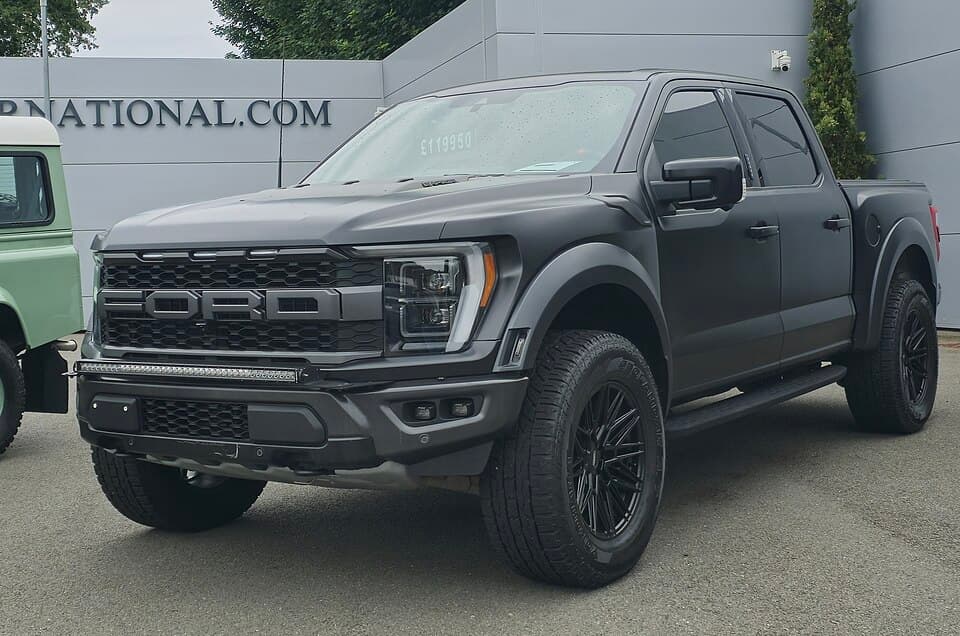
The short answer: the electronic-locking rear differential on a Raptor is a solid, low-drama system across all generations, and when it does act up the usual causes are a stuck or failing locking actuator, a rear axle module fault, low or contaminated diff fluid, or occasionally a bad wheel speed sensor feeding it bad data. Most of what gets blamed on "the diff" is actually a sensor or wiring problem that costs a few hundred dollars to fix, not the diff housing itself. A genuine locker or ring-and-pinion replacement is rare and expensive, and nobody has published a real failure rate for this component on any Raptor generation, so treat anything you read (including this) as owner-forum pattern, not an engineering fact.
How the system actually works
Every Raptor since the 2010 Gen 1 (/trucks/f150-raptor-gen-1) has run an electronically controlled locking rear differential. The driver selects the lock, usually through the 4x4 dial or a dedicated switch depending on generation and trim, and a solenoid-driven actuator mounted on the differential housing physically engages the locking mechanism.
The front axle is a different story, and it is not the same hardware across every truck. The Gen 1 and Gen 2 F-150 Raptor run a Torsen-style limited-slip front differential that works automatically, biasing torque between the front wheels based on wheel speed with no driver-commanded lock at the front axle at all. Later trucks, including the Gen 3 F-150 Raptor and others in the lineup, have changed front-axle hardware and control logic generation to generation. If you are working on a specific truck, confirm what front differential it actually has, Torsen limited-slip versus a locking unit, against the Ford workshop manual or a parts lookup by VIN before you assume anything about how the front axle behaves. Do not carry a Gen 1 or Gen 2 assumption onto a Gen 3, Raptor R (/trucks/f150-raptor-r), Ranger Raptor (/trucks/ranger-raptor), or Bronco Raptor (/trucks/bronco-raptor).
The rear locker's actuator type, the control module it talks to, and the exact fault codes it throws have also changed across generations, from the Gen 1 (/trucks/f150-raptor-gen-1) and Gen 2 (/trucks/f150-raptor-gen-2) F-150-based trucks to the Gen 3 (/trucks/f150-raptor-gen-3) and the smaller-platform trucks. We are not going to pretend every generation uses identical hardware. If you are diagnosing a specific truck, pull up the wiring diagram and module list for that model year before you start throwing parts at it, because the actuator a parts counter hands you for a Gen 2 will not be correct for a Gen 3 or a Bronco Raptor.
Reported symptoms
Owners describe the same handful of complaints across generations:
- A diff-lock warning light or message on the dash, sometimes paired with a 4x4 fault light, that comes on intermittently or stays on after an attempted lock.
- A clunk or clank on engagement, usually felt as you shift into 4H or 4L and the system tries to lock the rear axle, most noticeable at low speed or stopped.
- The diff failing to lock, or failing to unlock, on the trail. This is the one that actually ruins a day, because an unlocked diff when you expected traction, or a locked diff that will not release on pavement, both change how the truck handles.
- Fluid seepage at the pinion seal, visible as a wet or dusty residue at the front of the differential housing where the driveshaft enters, sometimes mistaken for a locker problem when it is really just a seal that has given up with age and mileage.
None of these on their own confirms a bad locker. A clunk on engagement is frequently normal mechanical noise from the dog clutch inside the differential taking up slack, not a failure. The diagnosis matters more than the symptom list.
How to diagnose it
A shop or a competent DIYer works through this in order, cheapest and most likely first:
- Check the fluid. Low or badly degraded differential fluid is the single most common cause of a locker that hesitates or will not fully engage. Check level and condition before replacing any electrical part. If the Raptor has towed hard, seen deep water crossings, or simply never had the fluid changed, start here.
- Scan for codes. The powertrain control module and the relevant 4x4 or axle control module will log a fault if the actuator, a wheel speed sensor, or the wiring harness is out of range. A shop with Ford's diagnostic software will see more detail than a generic OBD-II reader. Ask your dealer whether Ford has published a technical service bulletin for your specific model year and build date covering diff-lock faults; a TSB describes a known repair procedure, it is not an admission of a widespread defect, and the dealer can check it against your VIN rather than a number pulled off a forum.
- Inspect the actuator and connector. A corroded or loose connector at the rear axle actuator causes intermittent faults that look electrical but are really a cheap connector problem, often well under $100 in parts. This is worth 20 minutes before condemning the actuator itself.
- Road test with a lift and visual confirmation. On most trucks you can jack a rear wheel, command the lock, and watch or listen for the mechanism engaging. A locker that engages on a lift but not under load points to a software or sensor issue rather than a dead actuator.
- Pull the actuator or inspect internally only after the above are ruled out. This is where cost starts climbing.
If a shop jumps straight to "you need a new differential" without checking fluid, codes, and connectors first, get a second opinion.
What it costs
These are planning ranges, not quotes, and every number below should be confirmed against current parts and labor pricing in your area before you commit:
| Repair path | What it involves | Rough cost range |
|---|---|---|
| Routine diff fluid service | Drain and refill with the correct gear oil, inspect for metal in the pan | Budget roughly $150-300 at a shop, DIY parts cost is lower |
| Pinion seal replacement | Remove driveshaft, replace seal, refill fluid | Roughly $300-600 depending on whether the shop needs to pull anything else to access it |
| Actuator or solenoid replacement | Replace the locking actuator assembly, reset and verify with scan tool | Budget $600-1,200 as an estimate; parts and labor both swing depending on generation and actuator design |
| Full differential replacement | Ring and pinion or complete third-member swap, needed only for internal gear damage | Call this $2,000-4,000 or more as a planning number, and this is the outcome you want to avoid by catching problems early |
Labor hours vary by how buried the differential is behind skid plates, bumpers, or aftermarket brackets, so a built truck running a skid plate package or rock sliders may add an hour or two just for access. A dealer will quote at list labor rate; an independent shop comfortable with Ford drivetrains is sometimes cheaper for the actuator and seal jobs, though full differential replacement often makes more sense at a dealer if any part of it is still under the powertrain warranty. Get a written quote before committing either way, since all of the above swings by region and by shop.
What Ford covers
The rear differential, its locking mechanism, and the front differential are covered under Ford's powertrain warranty for the term and mileage that applies to your specific truck and purchase date. If the truck is still within that window, a failed actuator or an internally damaged differential is normally a warranty repair, not an out-of-pocket one, assuming the failure is not traced to abuse, modification, or lack of maintenance. Once you are out of powertrain warranty, any TSB-based repair is still a paid repair unless Ford or the dealer extends goodwill, which is discretionary and not something you can count on walking in. Call your dealer with the VIN; coverage specifics vary by build date and whether you bought an extended service plan.
Is this actually a common failure?
No. Compared to the cam phaser rattle that shows up on certain 3.5 EcoBoost model years, or turbo wear on high-mileage EcoBoost trucks, the locking rear differential is a lower-frequency complaint. Owners report the symptoms above on both older and newer generations, but nobody, including this site, has a published failure rate worth quoting. Treat it as an occasional issue to check during a pre-purchase inspection, not a systemic defect to build a buying decision around. If you are shopping a used truck, the used Gen 2 Raptor buying guide covers what to physically check at the rear axle before you sign, and the recall history by generation will tell you whether your specific VIN falls under any actual recall rather than a forum rumor. For a broader view of what tends to wear out and when, see how long Ford Raptors actually last by generation.
The short version
- A diff-lock warning light, a clunk on engagement, or a locker that will not engage on the trail usually traces back to low fluid, a bad connector, or a failing actuator, not a destroyed differential.
- The front axle is not the same across generations: Gen 1 and Gen 2 F-150 Raptors run an automatic Torsen-style limited-slip front diff with no driver-commanded front lock, and you should confirm what later trucks run by VIN before assuming otherwise.
- Diagnose cheapest first: fluid condition, scan tool codes, then the actuator and its wiring.
- Treat the cost ranges here as planning estimates only: roughly $150-300 for routine fluid service, $600-1,200 for actuator replacement, and $2,000-4,000 or more for a full differential swap, all needing confirmation against current local labor rates.
- If the truck is in powertrain warranty, this is normally Ford's repair to make. Out of warranty, it is a paid job unless the dealer offers goodwill.
- This is a lower-frequency issue than cam phaser rattle or turbo wear, and the data to call it a systemic problem does not exist. Check it on a pre-purchase inspection, do not panic over it on a truck that is driving fine.
Deal alert
Shopping for one? Get new listings first
We sweep US dealer inventory and send you new Raptors matching your search — real listings, real asking prices, no spam.