Raptor Intercooler Upgrade: Is It Worth It on the EcoBoost?
Discover if upgrading your Raptor's intercooler is worth it for the EcoBoost engine. Learn about heat soak, tune interactions, and more.
Gear in this article
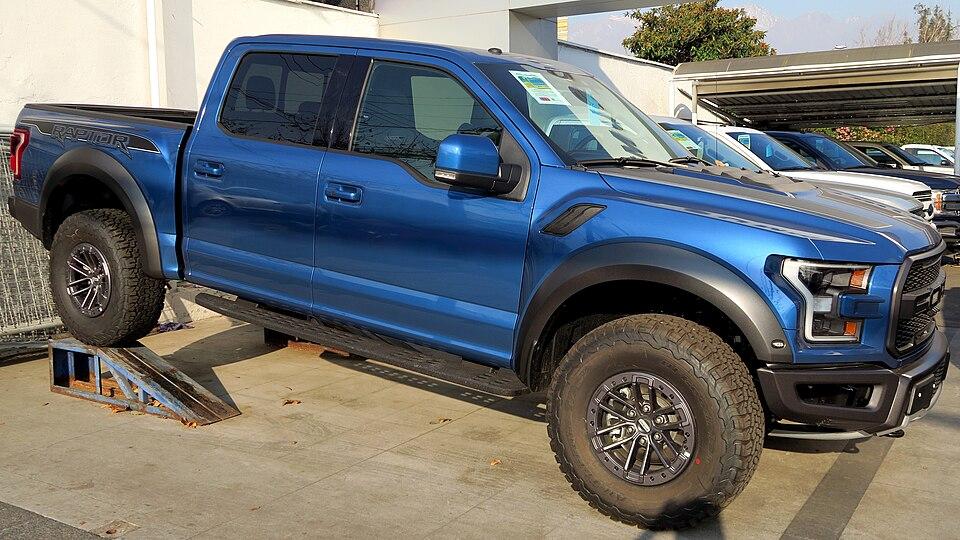
The honest answer: for a stock-tune, street-driven 3.5-liter EcoBoost Raptor, an upgraded intercooler is a low-value mod. It solves a problem most owners never actually hit. If you have already added a tune, you are running sustained high-load conditions like towing or repeated desert passes, or you are chasing consistent numbers on a dyno, the case gets real. For everyone else, the factory core does the job it was designed for.
This applies to the Gen 2 F-150 Raptor (2017-2020) and Gen 3 F-150 Raptor (2021-present), both built around the twin-turbo 3.5-liter EcoBoost. It does not apply to the Raptor R, which runs a supercharged 5.2-liter V8 with a different charge-air-cooling setup entirely, so none of the heat soak math here carries over to that truck.
What the stock intercooler actually does
The 3.5 EcoBoost is a twin-turbo engine, so compressed intake air coming off the turbos is hot, sometimes well over 200 degrees F under load. The intercooler (an air-to-air heat exchanger mounted at the front of the truck, ahead of the radiator) pulls that heat out before the air hits the intake manifold. Cooler, denser air means more oxygen per cylinder fill, which means the ECU can run more ignition timing and more boost without the engine knocking.
Ford sized the factory core for the duty cycle Ford expects: daily driving, occasional towing within the rated limits, and off-road bursts that are measured in minutes, not hours. It is not undersized for that job. Where it gets exposed is sustained high-load running, which is a narrower slice of actual ownership than forum threads make it sound.
What heat soak actually looks like on this engine
Heat soak is the intercooler core reaching a temperature where it can no longer pull meaningful heat out of the incoming air, so intake air temperature (IAT) climbs even though boost pressure has not changed. The ECU sees rising IAT, assumes rising knock risk, and pulls timing to protect the engine. You feel it as a flattening of power on a long pull, sometimes with the truck feeling noticeably softer on, say, the third or fourth hot lap through whoops, or two hours into towing a trailer up a grade in July.
It is a real phenomenon on this platform, and owners report it consistently in exactly those conditions: sustained towing in heat, repeated high-RPM desert running, or back-to-back dyno pulls. What nobody has published is a hard failure-rate or a specific IAT threshold where it starts costing you timing on a stock truck, so treat any number you see quoted online, including anywhere on this site, as an estimate unless it is pulled straight off a datalogger on your own truck.
Does a stock-tune daily driver need this
For most ownership, no. A stock 3.5 EcoBoost Raptor doing commuting, weekend trail days, and occasional towing within its rated capacity is not spending enough time at sustained high boost for the factory core to lose the fight. The symptom you are trying to prevent (progressive power loss over a long hard pull) needs a long hard pull to happen in the first place.
Where it starts to matter:
- Trucks carrying a tune. A performance tune raises boost targets, which raises the heat load the intercooler has to reject on every pull, not just the occasional one.
- Regular towing near the rated limit, especially in hot climates or on long grades, where the load is sustained for many minutes at a time.
- Repeated high-load off-road running, think extended time in soft sand or dunes at speed, rather than a short trail crawl. See the whoops comparison between King, Fox, and ICON 3.0 coilovers for the kind of sustained running that actually generates this heat.
- Dyno work, where back-to-back pulls with no cooling-off time between them are the single fastest way to heat-soak a stock core.
If none of those describe how you drive the truck, the upgraded core is money that would do more for the truck somewhere else, and that is the straight answer whether or not it is the one that gets clicks.
How an upgraded intercooler and a tune interact
This is the part that actually matters, and it is also the part people get backwards. The intercooler by itself does not make power. It protects the power a tune is asking the engine to make.
A custom 93-octane tune raises boost and advances timing within the limits the tuner has calibrated for. On a stock intercooler, that extra heat load means the ECU is more likely to hit the point where it starts pulling timing back during a sustained pull, which is the tune quietly giving back some of what it promised. An upgraded core with more surface area and fin density buys the tune more headroom before that happens. In that pairing, the upgrade is not cosmetic, it is the thing keeping a tuned truck consistent on the fourth pull instead of just the first.
Run the tune without the bigger core and you may still see gains in most real-world driving, since most driving does not sustain peak load long enough to heat-soak the stock intercooler anyway. Run the intercooler without the tune and you are cooling air the stock calibration was never asking to be any cooler. The upgrade earns its keep specifically on trucks that are already pushing more boost than Ford calibrated for. For the broader question of what a tune changes and what it risks on warranty and reliability, see our breakdown of what a Raptor tune actually changes.
A cold air intake is worth mentioning here too, since it attacks the same intake-temperature problem from a different angle: cooler, less restricted air going into the turbos in the first place. The aFe Momentum GT cold air intake is one option built for this platform, but it is a modest, incremental gain on top of an intercooler upgrade, not a replacement for one.
Install difficulty and what it actually takes
Swapping the intercooler on a 3.5 EcoBoost Raptor is a front-end job: dropping or partially removing the front bumper or fascia, disconnecting the charge pipes on both sides, unbolting the factory core from its mounts, and installing the new one in the stock location with new or reused hardware. Most aftermarket cores for this platform are designed as direct bolt-ins, so there is no cutting or fabrication involved.
Shops typically quote this in the range of 2-4 hours of labor, though a first-time DIYer working around bumper fasteners and charge pipe clamps should expect to spend longer than that. If you are already pulling the front bumper for an aftermarket unit like the ADD Stealth Fighter front bumper, doing the intercooler at the same time saves a second teardown.
What it costs
| Item | Typical range | Why it swings |
|---|---|---|
| Upgraded intercooler core | roughly $400-600 (estimate, varies by brand) | Core size, end tank material, fitment kit included or not |
| Labor if shop-installed | roughly 2-4 hours | Whether the bumper comes off clean or fights you |
| Pairing with a 93-octane tune | roughly $185-640 depending on tuner and package | Single-user license versus multi-vehicle, custom dyno tune versus canned file |
Treat every number here as a starting point for your own quote, not a promise. Regional labor rates and the specific intercooler brand move the total meaningfully.
What Ford's warranty covers here
Installing an intercooler by itself is a bolt-on hardware change and does not touch the ECU, so it does not inherently create a Magnuson-Moss Warranty Act problem the way an engine tune can. Ford's powertrain warranty still covers unrelated powertrain failures regardless of the intercooler swap. Pairing it with a tune is a different situation: flashing the ECU is detectable, and a dealer can decline a warranty claim on anything the tune could plausibly have caused, engine or transmission, while you are running it. Goodwill beyond what the warranty strictly owes is always at the dealer's discretion, not a guarantee. If you are weighing a tune against warranty risk at all, read the full math in our extended warranty breakdown before you flash anything.
It is also worth knowing what carbon buildup does on this engine independent of any of this, since direct-injection EcoBoosts accumulate intake valve deposits over time regardless of intercooler or tune status. That is a separate maintenance item, covered in our carbon buildup explainer for the EcoBoost, and it is not something an intercooler upgrade changes one way or the other.
The short version
- A bigger intercooler is a real fix for a real problem, but the problem only shows up under sustained high load: towing, repeated hot desert running, or back-to-back dyno pulls.
- Pairing the upgrade with a performance tune is where it earns its cost, since the tune is what raises the heat load the stock core starts to struggle with.
- Budget roughly $400-600 for the core plus 2-4 hours of labor if you are not doing it yourself, and treat both figures as estimates that move with brand and shop.
- Stock-tune daily drivers are better off spending that money elsewhere; this mod is for trucks already asking more of the turbos than Ford calibrated for.
Deal alert
Shopping for one? Get new listings first
We sweep US dealer inventory and send you new Raptors matching your search — real listings, real asking prices, no spam.