Ranger Raptor Drive Modes Explained: Normal to Baja, and When to Use Each
The Ranger Raptor has seven selectable drive modes, Baja included. Here is what each mode is for, how the 4H, 4L and 4A transfer case and the front and rear lockers fit in, and which settings Ford actually documents.
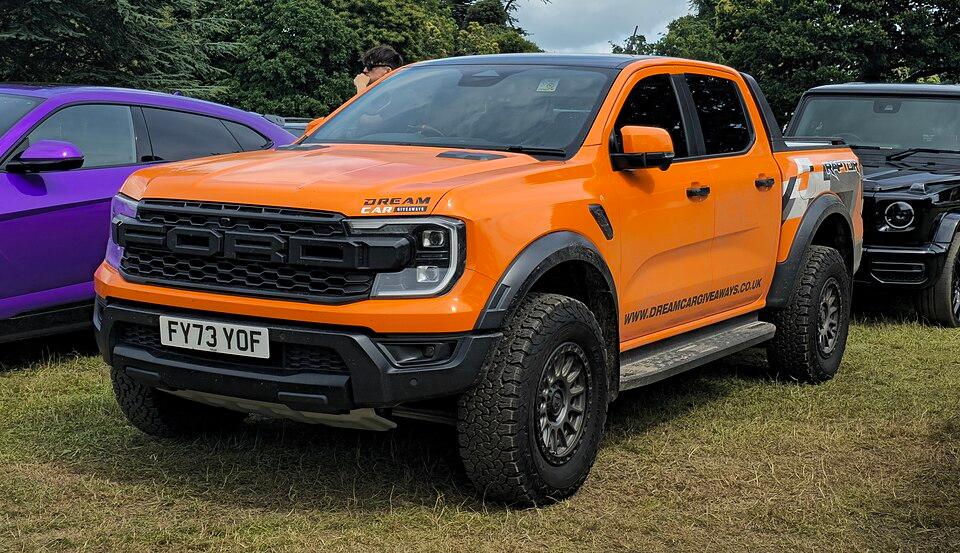
The Ranger Raptor has seven selectable drive modes: Normal, Sport and Slippery for on-road use, and Rock Crawl, Sand, Mud/Ruts and Baja for off-road, as SlashGear documented in its first drive and as Ford's own site confirms. Each mode recalibrates throttle mapping, shift points and traction control intervention, and works with the Fox 2.5-inch Live Valve shocks (electronically adjustable dampers that change stiffness in real time) to match the surface you are on. Baja is the one built for sustained high-speed off-road running, and it has no business being engaged on a public road.
That is the summary. The rest of this is which mode does what, how the transfer case and the lockers fit into the picture, and where Ford's own paperwork disagrees with itself on specs that matter to this truck.
What each mode is actually for
Ford groups the seven modes into on-road and off-road categories, and the split tells you how to think about them.
On-road: Normal, Sport, Slippery. Normal is the default daily setting. The other two are named for what they are for: Sport for spirited road driving, Slippery for wet pavement, snow and ice. Ford does not publish exactly what each one changes, so read the names as intent, not as a calibration spec.
Off-road: Rock Crawl, Sand, Mud/Ruts, Baja. Rock Crawl is for slow, technical terrain, Sand for loose, deep terrain where momentum matters, and Mud/Ruts for low-traction, rutted ground. Again, those are the jobs the names describe; the specific settings behind them are in the owner's manual, not in Ford's spec sheets. Baja is the high-speed desert mode, built around the kind of running this truck was developed for.
Ford does not publish a plain-language table of exactly what throttle percentage, shift point or traction control threshold changes in each mode, and neither will we. If you want the precise behavior for your specific truck, read the current owner's manual for your model year. Do not trust a forum post, including this one, for anything more granular than "this mode is for this terrain."
The transfer case and the lockers, and how the modes use them
The Ranger Raptor runs a 2-speed transfer case with 4H, 4L and 4A settings, plus electronic locking differentials at both the front and rear axle, confirmed across the 2024, 2025 and 2026 Ford spec sheets. A front locker at this price point is the Ranger Raptor's real party trick. Most competitors in this class do not offer one.
4A (automatic 4WD) is what you leave the truck in for everyday driving on mixed surfaces. It sends power to whichever end needs it without you choosing a setting. 4H is high-range four-wheel drive for sustained gravel, sand or snow running at normal speeds. 4L drops into low range for technical, low-speed work, think rock crawling or a steep, loose climb. Ford's Ranger drive-mode support page describes Rock Crawl as a four-wheel-drive-low mode; confirm the pairing for your truck in the owner's manual.
The drive mode and the transfer case setting are two separate controls on the console. How Ford pairs each mode with 4A, 4H or 4L, and whether a mode changes the transfer case on its own, is laid out in the owner's manual for your model year; check it there rather than guessing from a dash icon.
On the locker side: the modes bias how aggressively the system wants to lock, but the driver can also lock the front and rear differentials manually regardless of drive mode. If a locker will not engage, or a mode behaves in a way the owner's manual does not describe, that is a dealer visit, not a workaround. Ford's recall record for the truck is worth a look too before you assume a drivetrain fault is unique to your build; see the 2024, 2025 and 2026 Ranger Raptor recall pages for what has actually been issued.
Where Ford's own specs disagree, and why it matters here
This is where buyers and owners get tripped up, because Ford's own documents do not agree year to year, and this directly touches the off-road modes.
Crawl ratio. The 2024 Ranger Raptor spec sheet lists a max crawl ratio of 61.59:1 (an earlier 2024 launch document said 67.88:1). The 2025 and 2026 sheets both say 67.88:1. We are not going to average those or pick the one that sounds better. If the crawl ratio matters to a purchase decision, check the spec sheet for the exact model year you are buying, not a number carried over from a different year.
Axle ratio. The 2024 and 2025 sheets both list a 4.27 rear axle ratio, and the 2025 sheet also lists 4.27 front. An earlier 2024 launch document said 4.70 front and 3.73 rear instead. That is a meaningful gap for anyone calculating crawl ratio or gearing by hand, and it is one more reason to pull the sheet for your actual VIN's model year rather than quote a number from memory.
Neither discrepancy changes how the drive modes work day to day, but both affect math that off-road builders do when they are planning gearing, tire size or crawl speed. Pull the correct year's sheet from our 2024, 2025 or 2026 spec pages before you run those numbers.
Why Baja mode is not a road setting
Baja mode is named for high-speed desert running, the kind of driving the Ranger Raptor was built for, and modes built for that job generally trade away road-oriented stability assistance. That same calibration is a bad idea on pavement. Looser stability control and a throttle map tuned for wide-open desert running is how you lose a vehicle in a corner with no runoff and other cars on the road. Use Baja mode off-road, on terrain you would actually describe as Baja-style running, and switch back out of it before you get back on the highway. This is general safety advice, not a Ford warning label, but it is the advice every off-road instructor gives and it applies here without exception.
How to find the exact behavior for your truck
Ford does not publish, and we will not guess at, the specific throttle percentages, shift-point RPMs or traction control thresholds for each of the seven modes. That level of detail sits in the owner's manual for your specific model year, and it is worth actually reading once rather than relying on what a dealer rep or a forum thread tells you it does. The manual also covers the exact combinations of transfer case setting and drive mode Ford recommends for each terrain type, which is more reliable than guessing from the dash icon.
If you are cross-shopping before you buy, the Ranger Raptor generation page has the full spec and ownership picture, and the used Ranger Raptor buying guide covers what to check on a used truck beyond the drive mode switch, including the front locker, which is worth cycling on any test drive. The Ranger Raptor reliability page is also worth a scan before you sign for one, used or new.
The short version
- Seven modes: Normal, Sport, Slippery on-road; Rock Crawl, Sand, Mud/Ruts, Baja off-road.
- 4H, 4L and 4A are separate from drive mode selection. Check the owner's manual for how the two work together on your model year.
- Front and rear electronic lockers exist independent of drive mode and can be engaged manually.
- Ford's own spec sheets disagree on crawl ratio and axle ratio by model year. Check the sheet for your exact year before you do gearing math.
- Baja mode is for off-road, high-speed running. Switch out of it before you are back on pavement.
- For exact mode-by-mode behavior, the owner's manual for your model year is the only source worth trusting.
Deal alert
Shopping for one? Get new listings first
We sweep US dealer inventory and send you new Raptors matching your search — real listings, real asking prices, no spam.