Ford Raptor vs. Rivian R1T: Gas Off-Road Icon vs. Electric Challenger
The R1T markets itself as a genuinely capable off-roader with instant torque and available quad-motor traction control, putting it in the same conversation as the Raptor for the first time. This comparison looks at real off-road hardware, the towing-range penalty EVs face, and total cost of ownership to see whether the electric option actually competes.
Gear in this article
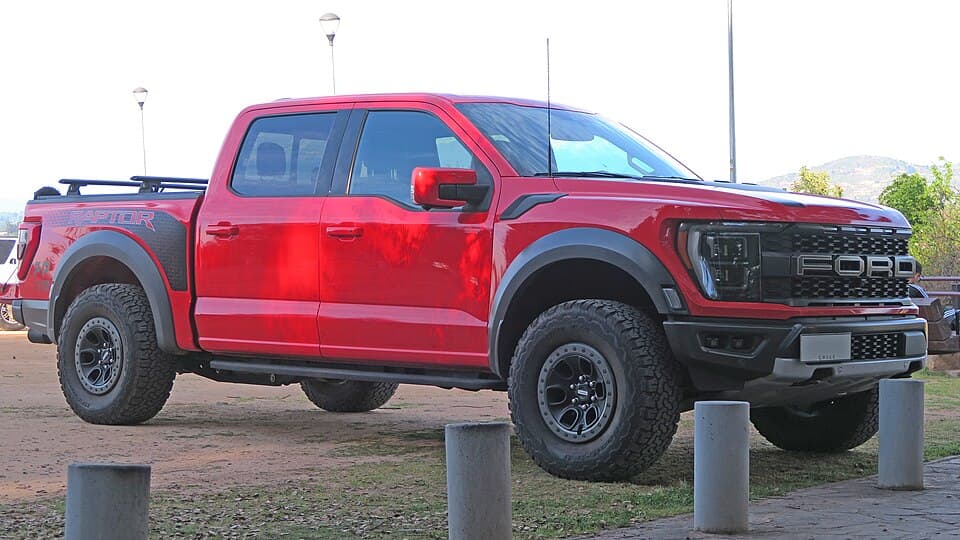
The short answer: the Rivian R1T is a genuinely capable off-road truck with hardware the Raptor does not have, but it is not yet a replacement for a Raptor on a remote trip, because towing or hard wheeling drains its battery fast and there is no five-minute fix for that in the backcountry. For pavement commuting with occasional trail use, the R1T competes. For the kind of trip where you are 60 miles from the nearest fuel and towing a trailer to get there, the Raptor still wins on logistics, not on hardware.
That is the real split in this comparison. Judged purely on what each truck can do when the wheels leave the ground, the R1T is closer to Raptor territory than any gas truck has gotten in years. Judged on what happens three hours into a trip when something needs refueling, they are not in the same conversation yet.
What "off-road hardware" actually means on each truck
The Raptor's off-road case is built on mechanical simplicity that has been field-proven for over a decade. The Gen 2 and Gen 3 F-150 Raptor run an electronically locking rear differential and a Torsen-type limited-slip front differential (a gear-based unit that biases torque to the wheel with grip, not a clutch pack), paired with dedicated long-travel suspension: Fox 3.0 internal bypass shocks on Gen 2, Live Valve adaptive Fox shocks on Gen 3. The Raptor R adds a supercharged 5.2L V8 on top of the same suspension architecture. None of it is exotic. A shop can diagnose a failed shock or a stuck locker with tools that have existed since the 1990s, and if you want to go further, the aftermarket for King or ICON coilovers is mature and well understood.
The R1T takes a different approach entirely: four independent motors, one per wheel, doing part of the job a locking differential does through software instead of mechanical linkage. Rivian calls this torque vectoring, and in principle it can send power to a wheel with traction faster than a mechanical locker can engage one, since there is no clutch pack or locking collar to actuate. The R1T also runs adjustable air suspension that changes ride height for clearance or aero on demand, something no Raptor trim offers from the factory.
What we will not do here is hand you a wheel-travel or articulation number for either truck, because both have changed across model years and trims, and quoting an old figure as current would be dishonest. If articulation or suspension travel numbers matter to your decision, pull them from the current factory spec sheet for the exact trim and model year you are cross-shopping, not from a launch-year press article for either vehicle.
The practical difference owners report: the Raptor's locking diffs and Fox or Live Valve shocks are mechanical systems a trail mechanic can understand and partially work around. A seized locker actuator or a blown shock is a known failure with a known workaround. The R1T's traction control is a software layer across four motors, which means when it works it is very good, and when something goes wrong, there is no equivalent of "lock the diff manually and limp out." Nobody has published a large enough fleet failure-rate number on R1T drive units run hard off-road to say how often that actually happens.
The towing-range penalty is the real gap, not off-road grip
This is where the comparison actually breaks for most buyers. Every electric truck on the market loses a meaningful chunk of range when towing, because aerodynamic drag and rolling resistance on a loaded trailer hit an EV's efficiency far harder than they hit a gas engine's. The exact percentage varies by trailer weight, trailer aero, speed, and which R1T battery pack and motor configuration you are running, and any precise number you see quoted should be attributed to a specific, dated real-world tow test, not repeated as a general fact. Before you plan a towed trip around an R1T, look up the most recent independent towing range test for your exact configuration rather than trusting a number that may be a model year or two stale.
What is not in dispute is the direction and magnitude of the problem: towing cuts a truck-sized EV's range by something close to half in most published real-world tests, hard enough that a few hundred miles of unloaded range becomes a tow-day range measured in low triple digits or less, with recovery charging that is slow compared to a fuel stop. The Raptor does not have this problem in the same way. Check our Raptor towing capacity breakdown by generation for the real numbers, but the short version is that towing a Raptor costs you fuel economy, not functional range in the way an EV loses it, and a five-minute stop at any gas station anywhere restores you to full range.
Fueling versus charging when you are actually in the dirt
This is the part that does not show up in a spec comparison but matters more than anything else on a real trip. Gas exists at every exit for a hundred miles around almost every trailhead in the country. A Raptor that runs low on fuel on the way to Johnson Valley or Sand Hollow is a ten-minute problem solved by the next town.
An R1T in the same position is a different kind of problem. DC fast charging infrastructure is real and growing, but it clusters around interstates and population centers, not the dirt roads leading into Moab or out to Glamis. If you tow an R1T to a remote dune field, run it hard all day, and the nearest fast charger is well out of your way, that is not a minor inconvenience, it is a trip-ending logistics problem. Rivian's own charging network has expanded and is generally reliable where it exists, but "where it exists" is still the operative phrase for anyone planning a trip beyond a couple hours from a metro area.
This is also where generator-based overlanding culture runs into a wall with EVs: you cannot carry a jerry can of electrons. A dead Raptor on fuel is solved by a buddy with a five-gallon can. A dead R1T battery at a remote camp is solved by a flatbed.
Cost of ownership: different problems, not necessarily cheaper
Raw running costs do not shake out as simply as "EV is cheaper." Our cost of ownership breakdown for the Raptor covers the gas-side numbers in detail, fuel, maintenance intervals, insurance by generation, so we will not re-derive them here. The relevant comparison point is that the R1T eliminates oil changes, spark plugs, and the 10R80 transmission service items that show up on every Raptor maintenance schedule, but it introduces its own cost unknowns: battery degradation over time, the price of out-of-warranty motor or inverter work, and tire wear that tends to run faster on a truck this heavy with this much instant torque. Nobody has a large enough fleet of high-mileage, off-road-flogged R1Ts yet to publish a trustworthy long-term cost number, and anyone who quotes you a precise figure is guessing.
On price, the R1T's trim lineup and MSRP have shifted since launch, so check Rivian's current configurator for your exact motor and battery combination rather than trusting an older number. For a rough sense of what you are cross-shopping, our own used-market data puts Raptor R 2023 model year trucks averaging around $100,000 and 2024s around $113,000, with 2025s higher still. Cross-shopping a well-equipped R1T against that is fair; cross-shopping it against a base Gen 3 Raptor is not, the base gas truck is meaningfully cheaper to get into.
The honest verdict by use case
| Use case | Better choice | Why |
|---|---|---|
| Daily driver with occasional weekend trail | R1T | Torque vectoring and instant power are genuinely good on moderate trails, and you never visit a gas station |
| Towing a trailer to a remote trailhead | Raptor | No range penalty that matters, refuels anywhere in minutes |
| All-day dune or desert running, far from infrastructure | Raptor | Fuel logistics are trivial; EV charging at remote OHV areas is mostly nonexistent |
| Low-speed technical trail work | R1T | Independent motor control at low speed is a real advantage over a mechanical locker |
| Long-distance overlanding with a loaded trailer | Raptor | The range-while-towing penalty on EVs is severe and charging coverage is sparse on the routes that matter |
Neither truck is the wrong answer in a vacuum. The R1T's quad-motor traction control is not marketing, it is a legitimate off-road tool, and treating it as a toy misses what Rivian actually built. But the Raptor's advantage was never really about raw capability in isolation, it is about never having to think about range math before a trip. That gap closes as charging infrastructure fills in, but it has not closed yet, and anyone planning a trip to Silver Lake or further out should plan around the truck they actually have, not the one the spec sheet promises.
The short version
- The R1T's quad-motor torque vectoring is a real off-road advantage at low speed; the Raptor's mechanical lockers and Fox or Live Valve shocks are simpler, better understood, and easier to work around in the field.
- Towing cuts an EV's range hard. The exact percentage depends on trailer weight, speed, and battery configuration, so verify a current, dated real-world tow test for your exact R1T build before planning a towed trip, don't trust an old press number.
- Fuel is available everywhere; fast charging is not, and that gap is what actually decides this comparison for remote off-road trips.
- Buy the R1T if your trail use is local and your driving is mostly pavement. Buy the Raptor if you tow to get there or run all day far from infrastructure.
Deal alert
Shopping for one? Get new listings first
We sweep US dealer inventory and send you new Raptors matching your search — real listings, real asking prices, no spam.