Raptor Roof Racks and Chase Racks: What Fits and What It Costs You
A Raptor takes standard F-150 SuperCrew roof platforms like the Prinsu and Front Runner Slimline II, not a truck-specific rack. A chase rack skips the roof entirely for desert work, and every option here costs you something in noise, mpg, or bed space.
Gear in this article
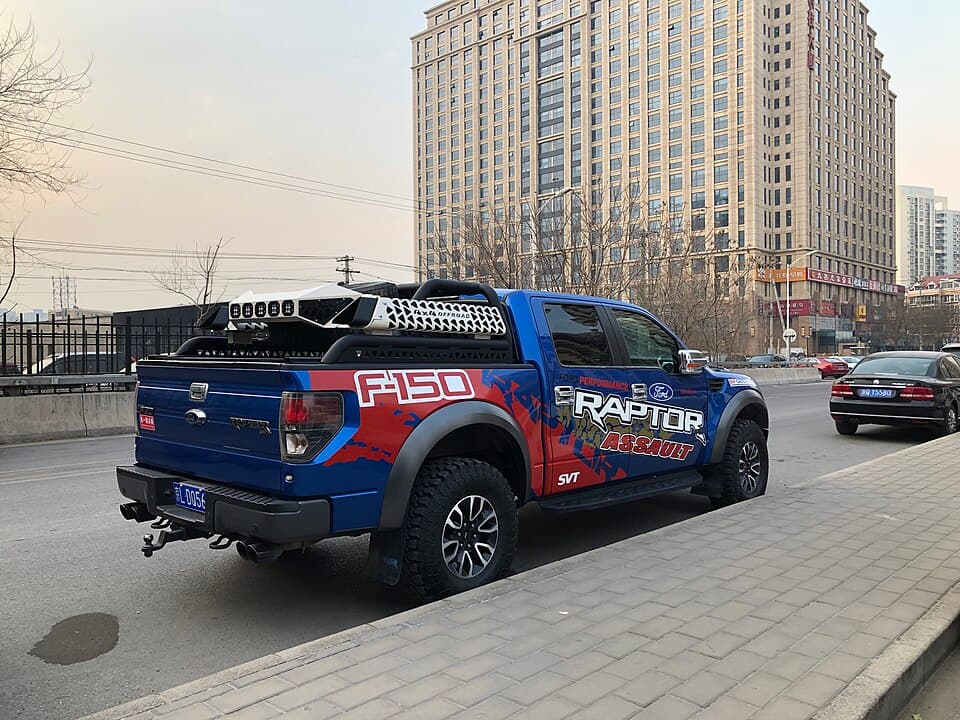
The F-150 Raptor takes standard F-150 SuperCrew roof rack platforms, not a Raptor-specific part, and the go-to fits are the Prinsu Roof Rack or a Front Runner Slimline II built for the same cab. A chase rack is the desert answer instead: weight out of the airflow, off the cab. Both cost you something, noise and mpg up top, bed space out back.
| Option | Examples | Approx. price | Weight capacity | What it costs you |
|---|---|---|---|---|
| Track-mount roof platform | Prinsu Roof Rack, Front Runner Slimline II | $650-1,400 installed | Dynamic ~150-165 lb; static up to 500-700 lb, confirm the split for your rack | Noise above ~55-60 mph, mpg down an estimated 1-2 mpg loaded, adds 3-5 inches to your roofline |
| Low-profile crossbar rack | Yakima or Rhino-Rack round bars on track feet | $350-650 | Dynamic 130-220 lb, rated separately from the mount | Quietest roof option, smallest mpg hit, but no real platform for a tent |
| Chase rack (bed cage) | Rago Fabrication and similar prerunner-shop builds | $1,800-3,500 fabricated | Built around a specific load, a spare 37, a jack, fuel; rated per component | Minimal noise or mpg penalty, nothing sits over the cab, but it takes most of the bed |
| Bed rack, mid-height | Leitner Designs ACS, RCI or similar bolt-on racks | $1,200-2,600 | Roughly 300-500 lb static, varies by design | Some bed access survives under a low-profile cover; less space than bare, no cab noise penalty |
Why the Raptor doesn't come with one
Unlike the Bronco Raptor's factory modular rack, the F-150 Raptor, Gen 2, Gen 3 and the Raptor R alike, ships with no roof rack option at all. Every rack on these trucks is aftermarket, mounted to the same factory roof points a regular F-150 SuperCrew uses, so a rack built for that cab bolts straight to a Raptor. The Prinsu Roof Rack is the name that comes up most in the mod database, a low-profile aluminum platform that clamps on without drilling. Front Runner's Slimline II does the same job on a heavier platform, more deck for more weight up high.
Dynamic versus static, and why the number on the box lies to you
Every rack ships with two ratings, and mixing them up is how a rooftop tent ends up on the shoulder of the highway. Dynamic is what the rack carries while moving, accounting for the g-forces of a hard brake or a sharp lane change, the low number, commonly 130-165 lb on a Raptor-fit rack. Static is what it holds parked, the number that lets a 150-200 lb tent look like it fits. A rack rated 700 lb static and 150 lb dynamic does not mean you can drive with a loaded tent up there; it means you can sleep in it once stopped. Read both numbers off the product page, not a forum post.
Garage clearance is the other check nobody runs first. A Gen 2 or Gen 3 already sits roughly 78-80 inches tall before anything goes on top, depending on tire size. A platform rack typically adds 3-5 inches, and a folded rooftop tent stacks another 8-12 on top of that. Run that math against your own garage door, most residential doors are 80-84 inches, before you buy a tent you can't park under.
The wind noise and mpg reality
The physics are the ones we tested on the Bronco Raptor's factory rack: a square-edged crossbar sheds air in a string of small vortices that becomes an audible tone above roughly 55-60 mph, and a rounder, lower-profile bar does it less. Anything bolted to an F-150 Raptor's roof is subject to the same effect, worse the taller and boxier it is.
Fuel economy takes the same hit, more frontal drag at highway speed. What Raptor owners actually see for mpg is already thin for a half-ton truck, so a roof-mounted anything subtracts from a number that wasn't generous to start with. Call the real-world hit an estimate in the 1-2 mpg range with a bulky tent or box up there, closer to negligible with bare low-profile bars. Nobody publishes an EPA number with a rack on the roof, so any figure here, ours included, is an estimate.
Chase racks explained properly
A chase rack skips the roof and moves the load into the bed instead, and the reason isn't looks. Weight sitting high over the cab raises the center of gravity right where it hurts most on washboard and whoops, fighting what the long-travel suspension is built to do. A chase rack, sometimes called a bed cage, is a fabricated frame that bolts or welds into the bed and carries a desert-truck payload: a spare 37 mounted flat, a Hi-Lift or bottle jack, fuel cans, sometimes a light bar at the rear for the truck following the race car at night. Rago Fabrication is the name that comes up repeatedly for Raptor-specific builds. There's no off-the-shelf universal chase rack; it's built around your spare size and your bed, which is why it runs $1,800-3,500 and up rather than a catalog number.
The bed rack middle ground
Between a bare bed and a full chase cage sits the bed rack: a lower, lighter frame bolting to the factory stake pockets that carries a tent or cargo box over the bed instead of over the cab, weight lower and further back without eating the whole bed. The catch is cover compatibility. Most bed racks put their mounting legs exactly where a roll-up or folding tonneau needs its rails, fighting for the same bed-rail space. We cover which bed covers actually clear a rack's mounting hardware separately; check fitment before buying either piece, since a rack ordered first can lock you out of the cover you wanted.
Lights are the natural pairing
A roof rack, a chase rack or a bed rack all give you a mounting point a stock Raptor doesn't have: somewhere to run a real light bar without drilling the fascia. A Baja Designs S8 light bar on a roof platform or the top of a chase rack is the pairing we see most, and it's worth budgeting the wiring, a relay and a dash switch alongside the rack itself. It stacks on top of whatever noise and mpg penalty the rack already carries.
Install reality: drilling versus clamp-on
Track-mount roof platforms like the Prinsu and the Slimline II clamp to existing points, no drilling, an afternoon job for a handy owner. Bed racks are usually similar, bolting through factory stake-pocket holes. A chase rack is a different job: shop-fabricated to your bed and gear, bolted through reinforcement plates and sometimes welded in. Ask any shop to show you a build they've actually done for this truck before you pay a deposit.
Price tiers, budget to fabricated
Low-profile bars run under $650 if noise and mpg matter more than capacity. A full platform rack like the Prinsu or the Slimline II runs $650-1,400 installed, the pick for most owners who want a tent option without a fabrication job. A bed rack lands at $1,200-2,600 for owners who want bed access as much as cargo up top. A proper chase rack starts around $1,800 and climbs past $3,500 once a fuel cell mount and lighting are part of the build, and that's a shop quote away from being real.
The short version
- The F-150 Raptor has no factory roof rack; the Prinsu Roof Rack and Front Runner Slimline II are the standard aftermarket platforms for the shared SuperCrew cab.
- Dynamic and static load ratings are different numbers; read both before loading anything, and check your garage door clearance against your specific rack and tire size.
- Anything on the roof adds noise above roughly 55-60 mph and an estimated 1-2 mpg penalty with real weight up there, the same vortex-shedding physics measured on the Bronco Raptor's rack.
- A chase rack keeps weight low and aft in the bed instead of high over the cab, built around a spare 37, a jack and fuel rather than pulled off a shelf.
- A bed rack splits the difference but fights most tonneau covers for the same bed-rail space; confirm cover fitment before buying either.
- Racks of every kind are the natural place to add a real light bar, which stacks its own drag and wiring cost on top of whatever the rack already carries.
Owner questions
- Ford Raptor roof rack options
- The F-150 Raptor takes standard SuperCrew platforms since there's no Raptor-specific rack: the Prinsu Roof Rack and the Front Runner Slimline II are the go-to fits, running $650-1,400 installed. A quieter, cheaper alternative is a low-profile crossbar rack, like Yakima or Rhino-Rack round bars on track feet, at $350-650, though it offers no real platform for a tent.
- Raptor chase rack for desert racing
- A chase rack is a fabricated bed cage, with Rago Fabrication the name that comes up repeatedly for Raptor-specific builds, running $1,800-3,500 and up. It's built around a specific load rather than pulled off a shelf, typically a spare 37 mounted flat, a Hi-Lift or bottle jack, fuel cans, and sometimes a rear light bar, keeping weight low and aft instead of high over the cab.
- What's the difference between dynamic and static roof rack ratings on a Raptor?
- Dynamic is what the rack carries while moving, accounting for braking and cornering forces, commonly 130-165 lb on a Raptor-fit rack. Static is what it holds parked, the number that lets a 150-200 lb tent look like it fits, sometimes rated 700 lb. A rack rated 700 lb static and 150 lb dynamic doesn't mean you can drive with a loaded tent up there, only sleep in it once stopped.
- How much does a roof rack hurt Raptor mpg and noise?
- A square-edged crossbar sheds air into vortices that become audible above roughly 55-60 mph, worse the taller and boxier the rack is, the same effect measured on the Bronco Raptor's factory rack. Fuel economy takes a similar hit, an estimated 1-2 mpg with a bulky tent or box loaded, closer to negligible with bare low-profile bars, since Raptor mpg wasn't generous to begin with.
- Will a bed rack fit under my Raptor's tonneau cover?
- Maybe not automatically: bed racks like the Leitner Designs ACS or RCI-style bolt-on units run $1,200-2,600 and mount to factory stake pockets, but their mounting legs often sit exactly where a roll-up or folding tonneau needs its rails. Some bed access survives under a low-profile cover, but fitment should be confirmed before buying either the rack or the cover first, since ordering one can lock you out of the other.
Deal alert
Shopping for one? Get new listings first
We sweep US dealer inventory and send you new Raptors matching your search — real listings, real asking prices, no spam.