Ford Raptor Bed Covers That Actually Fit
Every F-150 Raptor has the same 5.5-ft bed, so cover fitment is not the hard part, the bed rail and rack compatibility are. Here is the honest short list by type, with real prices, security tradeoffs, and what a cover actually does to your mpg.
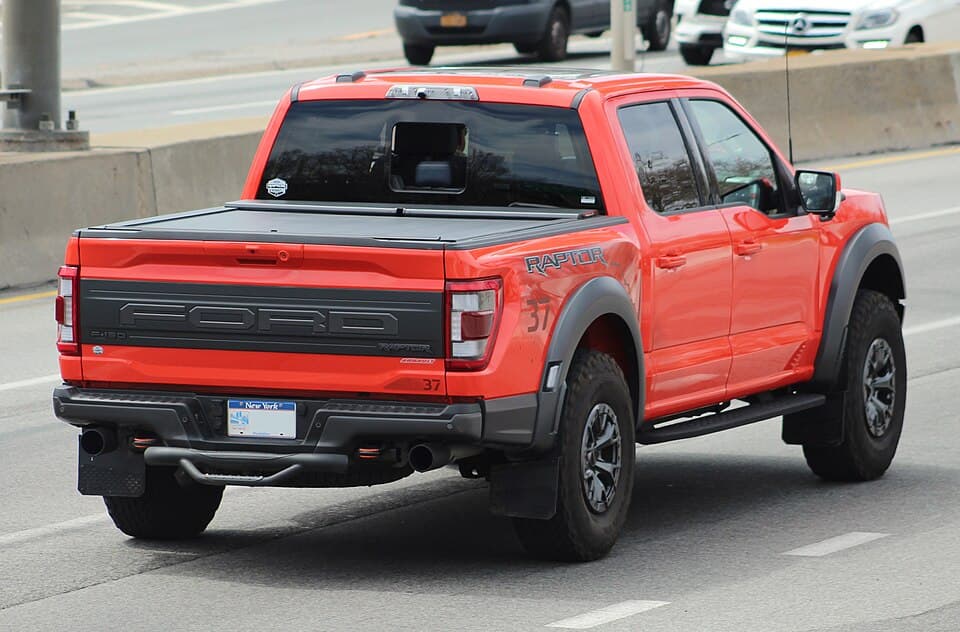
Every F-150 Raptor, Gen 1 through Gen 3, only comes in SuperCrew with a 5.5-ft bed, so any cover built for a 5.5-ft F-150 bed bolts on mechanically. The Raptor-specific gotchas are not the bed length, they are the bed rail and cargo cleat system underneath, and whether you can keep a roof-rack or bed-rack setup once the cover is on. Quick answers: best retractable is the Retrax PRO XR, best tri-fold is the Extang Trifecta e-Series, best soft roll-up is the Access Original Roll-Up, and best hinged hard cover is the DiamondBack HD.
| Cover type | Pick | Approx price | Security | Lives with a rack |
|---|---|---|---|---|
| Retractable, low-profile hard | Retrax PRO XR | $1,700-2,200 | High, sealed canister and no exposed latch | Yes, with rack legs clamped clear of the canister at the cab |
| Tri-fold, aluminum-panel hybrid | Extang Trifecta e-Series | $750-1,050 | Medium, integrated locks per panel | Yes, most clamp-on racks clear the folded stack |
| Roll-up, soft vinyl | Access Original Roll-Up | $400-600 | Low, snaps or a hasp lock, no real security | Yes, easiest of the four since it rolls flat against the cab |
| Hinged, aluminum panels | DiamondBack HD | $2,200-2,900 | High, keyed latches and a rigid lid | Only with a rack the maker rates for the closed lid |
What actually varies by truck
The bed itself is not the fitment question. What varies is the bed rail cap, the factory tie-down cleats, and whether a spray-in liner changes the height a clamp-on rail sits at. Buy by bed length first (5.5-ft F-150, every Raptor qualifies), then confirm the maker lists your specific model year, since clamp geometry around the tailgate has shifted between Gen 2 and Gen 3.
Cross-shopping a Ranger Raptor or Bronco Raptor: stop here. The Ranger Raptor runs a 5-ft bed and the Bronco Raptor has no bed at all, so none of this carries over. This guide is F-150 Raptor only.
The honest short list
BAK Revolver X4s is a hard rolling cover built from aluminum slats that stack into a low canister at the cab. Most owners land here when they want hard security without giving up much bed depth, and BAK's rail system is a known clean fit on the 5.5-ft bed.
Retrax PRO XR is the retractable pick because the panels are a single low-profile sheet rather than slats, fewer seams for sand to find and a canister that sits lower than most rolling designs. It costs more than the BAK for that reason.
DiamondBack HD is the buy if you load the bed hard, tow with a bed-mounted hitch extension, or want a rooftop tent or rack on top. Aluminum, hinged in sections, priced like it, and rated for real static load in a way the rolling covers are not.
Extang Trifecta e-Series splits the difference: aluminum-panel tri-fold that folds forward for full bed access without removing anything, cheaper than the hard rolling covers, and honest about being a step down in security from a sealed canister.
Roll-N-Lock M-Series is the other retractable worth pricing, and the one to call first if you already run or plan to run a bed rack, since Roll-N-Lock sells its own rail and cargo-manager system built around the cover instead of fighting it.
Soft versus hard, honestly
A soft roll-up or tri-fold is fine if the truck lives in a driveway and the worry is rain and prying eyes at a glance, not a determined thief. Vinyl unzips or cuts open with a pocketknife in under a minute. A hard cover, rolling or hinged, adds real resistance: aluminum panels, keyed latches, and usually a lock tied into the tailgate. None of these, hard or soft, is a vault. If you are hauling something worth stealing, a locking toolbox or the truck's own lockable interior beats any tonneau.
The retractable trade-off nobody tells you upfront
Every retractable cover, BAK, Retrax, or Roll-N-Lock, gives up 4 to 7 inches of usable bed length at the cab wall to the canister that houses the rolled-up panel. On a 5.5-ft bed that is a real percentage of your load floor, and it matters if you regularly haul something that rides right up against the cab. A hinged cover like the DiamondBack HD does not eat that space because there is no canister, which is part of why serious haulers pick hinged over retractable even though it is heavier to open by hand.
Dust and drainage once you actually go off road
A hard cover's rail system runs a rubber seal channel the length of the bed, and that channel is exactly where desert dust and fine silt accumulate on a truck that sees real trail miles. Left uncleaned for a season, grit works into the seal and the drain path, and water that should run out the back end pools instead, corroding rail hardware faster than the same truck would in a wet climate. Rinse the rail channel a few times a year if you wheel in sand country. Soft roll-up covers do not build a sealed channel to clog, but they let more dust past the panel edges to begin with, a different failure mode, not a better one.
Install difficulty and the tie-down fight
A clamp-on rail system, the kind almost every hard cover uses, bolts to the factory bed rail cap with C-clamps underneath, no drilling on most designs. Budget an hour or two for a DIY install. The friction point is the factory tie-down cleats: on some model years the clamp brackets land close enough to a cleat that you either notch the bracket, relocate the cleat, or give up that tie-down point entirely. Check the maker's fitment notes for your exact year before you order, and if a shop installs it, have them confirm cleat clearance before they drill anything.
Weight capacity, plainly
Hard cover weight ratings, DiamondBack's included, describe evenly distributed load, the kind a rooftop tent or a person standing and walking on the panel puts down, not a single heavy item resting on two or three points. Strapping a spare 37-inch tire and wheel straight to the top of a hard cover concentrates 75 to 100 lb onto whatever spot the straps cross, right at a hinge or a seam in most layouts, and that is how owners crack a panel or bend a hinge that was never rated for a point load like that. If you need to carry a spare up top, buy a rack or a tire carrier the cover maker specifically rates for it. Do not lash a spare directly to the lid and call it done.
What a cover does to your mpg
Not much. The aerodynamic drag on a truck this size is dominated by the cab, the mirrors, and the open wheel wells, not by a foot of exposed bed. Real-world owner numbers on a covered bed run somewhere around half a mile per gallon to a bit over one mpg on the highway, and that is often smaller than the swing you get from tire pressure, a headwind, or how heavy your right foot is on a given tank. See our full mpg breakdown by generation if you want the real numbers instead of the marketing claim. Buy a cover for security, weather, and looks. Do not buy one expecting a tank-stretching mpg fix.
Price tiers and the short version
Budget $400-600 for a soft roll-up, $750-1,050 for a tri-fold hybrid, and $1,700-2,900 for a hard rolling or hinged cover depending on brand and rack hardware, and confirm every number with an actual quote since freight and regional markup both move these prices. If security and looks matter more than dollars, buy the Retrax PRO XR or the DiamondBack HD. If the bed rarely loads past the rails, the Access Original Roll-Up does the job for a fraction of the cost. Whatever you buy, check the maker's fitment page against your exact model year first, and browse the rest of our mods database for racks and bed accessories that pair with these covers instead of fighting them. Pricing recovery gear for the same truck: our winch fitment guide covers the other end of the bumper-to-bed budget.
Owner questions
- Ford Raptor bed cover recommendations
- Best retractable is the Retrax PRO XR ($1,700-2,200), best tri-fold is the Extang Trifecta e-Series ($750-1,050), best soft roll-up is the Access Original Roll-Up ($400-600), and best hinged hard cover is the DiamondBack HD ($2,200-2,900). BAK Revolver X4s and Roll-N-Lock M-Series round out the honest short list.
- How much bed length do I lose with a retractable cover on my Raptor?
- Every retractable cover, BAK, Retrax, or Roll-N-Lock, gives up 4 to 7 inches of usable bed length at the cab wall to the canister housing the rolled-up panel. On a 5.5-ft bed, which every F-150 Raptor has, that's a real percentage of your load floor, especially if you haul items right up against the cab.
- Will a Ford Raptor bed cover hurt my gas mileage?
- Not much. Aerodynamic drag on a truck this size is dominated by the cab, mirrors, and open wheel wells, not a foot of exposed bed. Real-world owner numbers on a covered bed run around half a mile per gallon to a bit over one mpg on the highway, often smaller than swings from tire pressure or a headwind.
- Can I strap a spare tire directly to the top of a hard bed cover?
- No. Hard cover weight ratings describe evenly distributed load, not a single heavy item on a few points. Strapping a 37-inch spare and wheel to the top concentrates 75 to 100 lb where the straps cross, often at a hinge or seam, which is how owners crack a panel or bend a hinge. Buy a rack or tire carrier the maker specifically rates instead.
- Do bed covers fit the same on Ranger Raptor or Bronco Raptor as the F-150 Raptor?
- No. This guide covers the F-150 Raptor only, which is always SuperCrew with a 5.5-ft bed across Gen 1 through Gen 3. The Ranger Raptor runs a 5-ft bed and the Bronco Raptor has no bed at all, so none of the F-150 fitment or product picks carry over to those trucks.
Deal alert
Shopping for one? Get new listings first
We sweep US dealer inventory and send you new Raptors matching your search — real listings, real asking prices, no spam.