Best Recovery Gear for a Raptor: The Kit Worth Carrying
Essential recovery gear for your Ford Raptor, including winches, ropes, mounts, and compressors. Find the best kit to carry for your next adventure.
Gear in this article
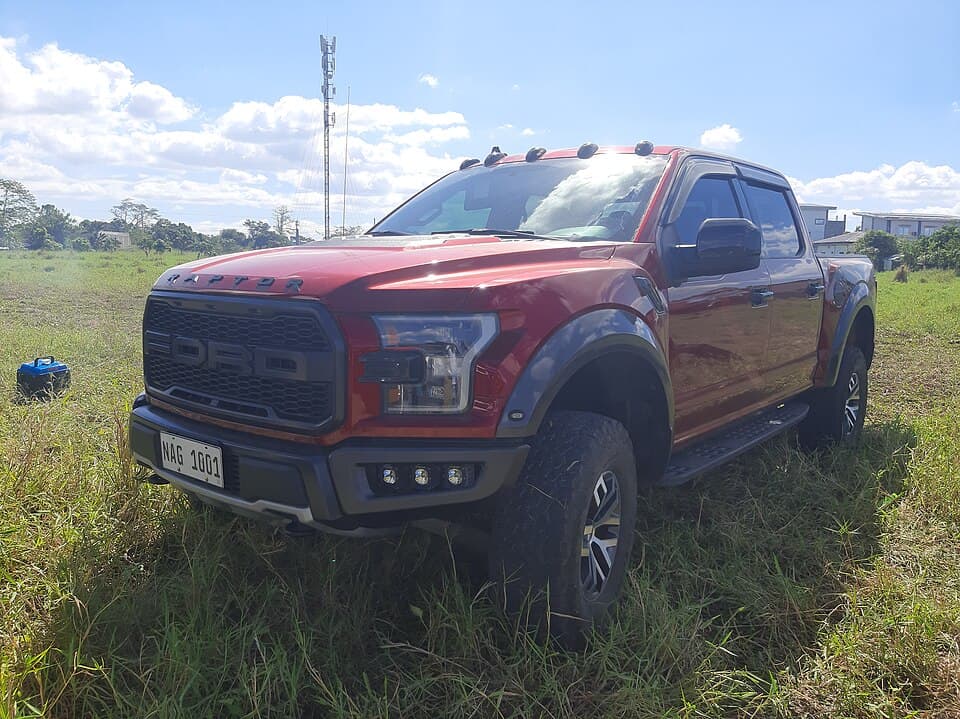
Stuck is not a question of if, it is a question of when, and the gear that matters is the stuff you bought before you needed it. The short list: a winch sized for your truck's loaded weight with real margin, a synthetic rope to run with it, a soft shackle or a hook mount that will not fold back on you, and an onboard compressor to air back up once you are out. Skip any one of those and you are the guy standing in the sand waiting for someone else's truck.
This is not a parts-store list. It is what actually belongs in the bed or behind the bumper of a Raptor, Ranger Raptor, or Bronco Raptor that leaves pavement on purpose, and what each piece costs to add.
Do you actually need a winch, or just a strap
If you wheel with a buddy and never go alone, a kinetic recovery rope and a couple of soft shackles will get you out of most stuck situations for well under $200 total. A winch is for the rest of it: solo runs, deep sand at Glamis or Silver Lake Sand Dunes, rock trails where there is nothing to hook a strap to without a winch to pull it tight.
The catch on any Raptor is the front bumper. The stock F-150 Raptor bumper on Gen 2 and Gen 3 has no winch provision at all, so you are either modifying brackets or buying an aftermarket bumper like the ADD Stealth Fighter or the ADD HoneyBadger that already has a winch plate built in. Budget for the bumper swap, not just the winch, before you commit. The full breakdown of what clears the stock fascia and what does not is in Best Winch for a Raptor That Actually Fits Behind the Stock Bumper.
Winch: what to buy and why the rating matters
Winch capacity should be sized off how much the truck actually weighs when it is stuck: curb weight plus occupants, gear, a winch bumper, fuel, and water, not the number on a window sticker. That loaded weight sits a lot closer to the truck's gross vehicle weight rating (GVWR, the maximum weight Ford certifies the truck to carry fully loaded) than to curb weight alone, and GVWR varies by cab style, bed length, and options. The real number for your exact truck is on the certification sticker in the driver's door jamb, not a forum post, including this one.
As a rough frame: curb weight on a Gen 2 or Gen 3 F-150 Raptor runs somewhere in the high 5,000 to low 6,000 lb range depending on cab and equipment (estimate, confirm against your door sticker), and GVWR is rated meaningfully above that once you account for passenger and cargo capacity. A Bronco Raptor and a Ranger Raptor both weigh less than the full-size truck, both at the curb and on GVWR, though exact figures again depend on trim and options.
The rule of thumb most riggers use is a winch rated at roughly 1.5x the truck's loaded weight, not its curb weight. Run that math against GVWR rather than curb weight and a 9,500-10,000 lb class winch comes out as the right size for every current Raptor variant, full-size or not, with margin left over for an underbuilt anchor point or a bad angle on the pull.
The Warn Zeon 10-S is built around that number: a 10,000 lb-rated winch with a sealed, waterproof motor and a built-in contactor control pack rather than a separate solenoid box bolted somewhere else in the engine bay, which matters when you are running water crossings. It is not the cheapest 10K winch on the market, but it is one of the few with a genuinely sealed electrical system, and that is the part that fails on cheaper units after a season of mud and dunes.
Expect to pay for the winch itself, then a separate bill for mounting. If your bumper already has a winch plate, installation runs roughly 2-3 hours of labor for wiring and a control pack mount, as an estimate, it varies by shop and whether the truck already has an auxiliary battery or fuse provision. If you are also swapping the bumper to get a winch plate in the first place, that is a separate job, often 4-6 hours depending on whether the shop has to relocate the IWE (integrated wheel end, the vacuum actuator on the front hubs) lines or tow hooks to clear the new bumper.
Rope: synthetic over steel, no real argument left
Steel cable still shows up on cheap winch kits because it is cheaper to manufacture, not because it is better. Synthetic rope weighs a fraction of steel, floats instead of soaking up sand and grit, and does not store the kind of kinetic energy a steel cable does if it fails under load. If a synthetic line parts, it drops; a steel cable under tension can whip back with enough force to go through a windshield or a person.
A synthetic winch rope kit at 3/8 inch by 80 feet is the standard pairing for a 9,500-10,000 lb class winch, and most kits in that spec include a thimble and a protective sleeve for the first few feet near the drum, which is the section that takes the most abrasion against the fairlead. Replace the rope, not the whole winch, when it frays. A re-rope is a short job you can do with hand tools in well under an hour and costs far less than a new unit.
Shackle mount: the small part that keeps the winch from folding the rope on itself
A hawse fairlead by itself does not fully solve how the rope loads when you are pulling at an angle instead of dead straight ahead. A shackle mount gives the rope a hard anchor point so it cannot saw against the fairlead edge or fold back and chafe itself. The Factor 55 FlatLink E replaces the stock clevis hook with a closed-link mount rated well above anything a 9,500-10,000 lb winch will ever ask of it, and it is a bolt-on swap, no drilling, done in well under an hour with hand tools.
Skip this and the failure mode is not dramatic, it is just slow abrasion. You will not notice a frayed rope until it lets go mid-pull, at the worst possible moment, with your truck halfway out of a hole.
Compressor: airing down is free, airing back up is not
Every serious trip to sand or rock involves dropping tire pressure, sometimes into the high teens, to get more sidewall flex and float. That part costs nothing. Getting back to street pressure before the highway drive home is where an onboard compressor earns its keep, because a gas station air pump is not always nearby and a cheap 12V inflator from the auto parts store takes a long time per tire on a 35 or 37.
The ARB Twin Onboard Air Compressor is a dual-piston 12V unit that mounts under the hood and runs a hard line to a fitting, usually near the grille or in the bed. Installation runs roughly 3-5 hours as an estimate, depending on where you route the air line and whether you add a second outlet in the bed for convenience. Once it is in, airing a set of 37s back to street pressure takes a few minutes per tire instead of twenty, and it is one of the few items on this list that gets used on every single trip, not just the ones where something goes wrong.
What this actually costs, start to finish
| Component | What it does | What drives the cost |
|---|---|---|
| Winch (Warn Zeon 10-S class) | Self-recovery when you are stuck alone | Winch price plus bumper swap if your current bumper has no winch plate |
| Rope (synthetic, 3/8 x 80ft) | Replaces steel cable, safer failure mode | Rope kit only, cheap to replace when worn |
| Shackle mount (Factor 55 FlatLink E) | Keeps rope from chafing against the fairlead | Bolt-on part, minimal labor |
| Compressor (ARB Twin) | Airs tires back up after every trip | Install labor, line routing |
The honest number for doing all four on a truck that does not already have a winch-ready bumper is close to a full day of shop time once you add it up, more if you are also upgrading the bumper itself. Call a shop with your exact truck and bumper and get a real quote, labor rates and whether they pull the bumper to route wiring both move the number by a lot.
If you are speccing this gear alongside tires and a lift for an actual build, the budget math works better if you price the cost of putting 37s on a Gen 2 Raptor first, since wheel and tire choice changes what bumper and skid plate clearance you are working with.
The short version
- A winch only matters if you run solo or run terrain where a strap has nothing to hook to; most trail groups can get by on a kinetic rope and soft shackles.
- Size the winch off the truck's loaded weight, which tracks closer to GVWR than curb weight, check your door jamb sticker for the real number. A 9,500-10,000 lb winch covers every current Raptor variant with margin once you do that math.
- Your bumper has to have a winch plate first, which is its own cost, often bigger than the winch itself.
- An onboard compressor is the piece that gets used every trip, not just the bad ones, because airing back up after airing down is the part nobody wants to do by hand.
Deal alert
Shopping for one? Get new listings first
We sweep US dealer inventory and send you new Raptors matching your search — real listings, real asking prices, no spam.