Best Onboard Air Compressor for a Raptor
Find the best onboard air compressor for your Ford Raptor, especially for airing down 35s/37s. Get practical advice and pricing.
Gear in this article
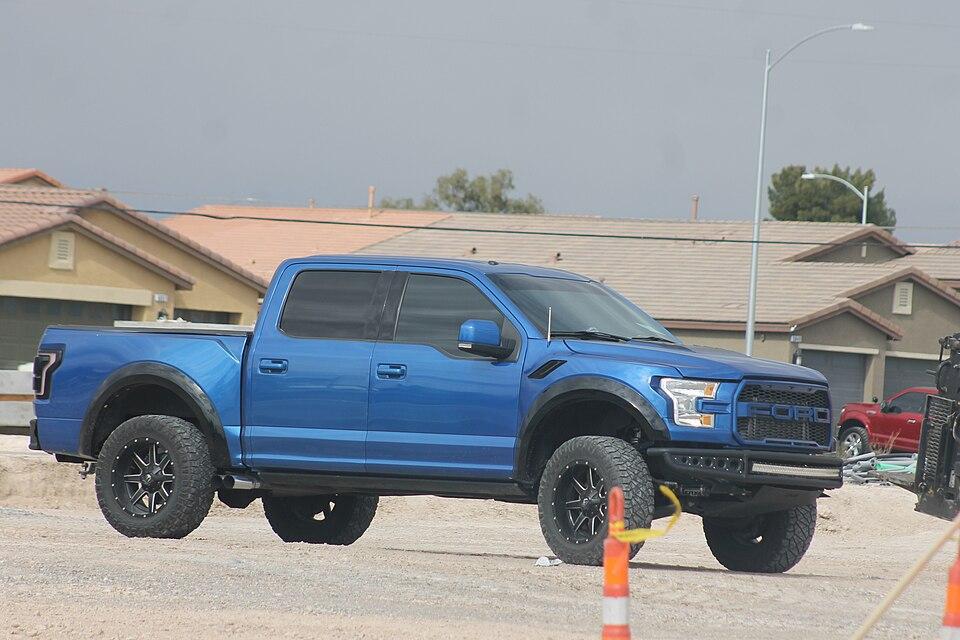
The [ARB Twin](/mods/arb-twin-onboard-air-compressor) Onboard Air Compressor is the compressor most Raptor owners land on for airing down and back up on 35s or 37s, and for good reason: it is a true twin-piston unit built to refill a 37-inch tire in a few minutes instead of the ten-plus minutes a small portable unit takes. It is not the cheapest option, and it is not a bolt-on five-minute job, but if you air down regularly enough to own a compressor at all, it is the one that stops feeling like a chore.
This guide walks through what actually matters when you are airing down 35s or 37s on a Raptor, where the ARB Twin fits against cheaper and simpler options, what the install really involves, and what it costs.
Why airing down 35s/37s changes what compressor you need
Airing down on sand or rock softens the tire's contact patch so it floats instead of digs. On 35s and 37s, that softer carcass also holds a lot more air volume than the factory 33s or 35s most trucks left the lot with, which means bringing pressure back up from trail pressure to street pressure takes meaningfully longer.
Street pressure for your truck and tire combination is whatever your door jamb placard specifies, and that number does not change just because you fitted bigger tires. A cheap single-cylinder 12-volt compressor rated for a stock-size tire will get there eventually on a 37, it just takes a while and runs hot doing it. That gap is the entire reason onboard twin compressors exist for this audience: speed and duty cycle, not just the ability to fill air.
If you have not settled on tire size yet, the tradeoffs between the two are covered in 35s vs 37s on a Raptor: Every Tradeoff, Measured, and a broader rundown of what owners actually run is in Best Tires for a Ford Raptor.
The options, compared
| Option | Fill speed on 37s | Install | Rough cost |
|---|---|---|---|
| Portable 12V plug-in compressor | Slow, often 10-20+ minutes per tire, estimate | None, plug into accessory outlet | Budget $80-200, varies widely by unit |
| Single-piston onboard compressor | Moderate, several minutes per tire | Permanent mount, wiring, 2-4 hours labor estimate | Budget $300-500 |
| ARB Twin Onboard Air Compressor | Fast, a few minutes per tire per ARB's own description | Permanent mount, dedicated wiring, bracket, 3-5 hours labor estimate | Priced at $659.95 from ARB directly at last check, and that moves with ARB's own pricing and any dealer markup |
| CO2 tank system | Instant per fill, limited by tank volume | Bracket mount, refill logistics | Budget varies heavily depending on tank size and refill access |
The portable plug-in unit is the right call if you air down once or twice a season and do not mind standing around. The moment you are airing down on every trip, or running a group where you are the guy who brought the compressor, the math flips toward something permanently mounted.
ARB Twin Onboard Air Compressor: what you actually get
The ARB Twin Onboard Air Compressor is a twin-cylinder unit that mounts under the hood and wires straight to the battery, rather than plugging into a 12-volt outlet. Running both pistons together gets you ARB's fastest fill rate, which is what lets it bring a 37 back from trail pressure to street pressure in a few minutes instead of a slow crawl. It also runs in single-piston mode for lower-draw, longer-duration jobs like running air tools or filling a locker, though you should pull ARB's current spec sheet for the exact duty-cycle numbers rather than trust a forum figure.
Owner feedback in the site's mod database currently sits at 4.5 out of 5, which tracks with what most buyers report: it works as advertised, and the complaints that do show up are mostly about mounting space, not performance.
Installation and fitment by generation
Installation is listed at roughly 3-5 hours of labor, and that holds reasonably well across the lineup, though where the unit actually lives under the hood differs by truck:
- Gen 1 (2010-2014) and Gen 2 (2017-2020) F-150 Raptor, both running the 3.5 EcoBoost, generally have enough room in the engine bay for ARB's standard bracket with minor fabrication.
- Gen 3 F-150 Raptor and Raptor R, covered on the F-150 Raptor Gen 3 and F-150 Raptor R pages, have a tighter bay, especially on the Raptor R with the supercharged 5.2, so expect more bracket fitting and possibly a relocated battery or washer fluid reservoir to clear space.
- Ranger Raptor, on the Ranger Raptor platform, and Bronco Raptor, on the Bronco Raptor platform, both run the 3.0L EcoBoost V6 in a smaller engine bay than the F-150, and owners mounting a twin compressor there more often end up relocating it to a frame rail or inner fender rather than directly on top of the engine.
None of these trucks require a tune to run the compressor, since it is purely an electrical accessory and does not touch engine calibration. What it does need is a clean, dedicated 12-volt feed straight to the battery with an inline fuse, not a tap off an accessory circuit, because the draw under twin-piston load is too high for most factory circuits to handle safely.
Budget for either a weekend of your own time with a drill, wire loom, and a multimeter, or a shop quote at roughly the same 3-5 hours of labor if you would rather hand it off.
What else belongs in the kit
An onboard compressor solves airing back up. It does nothing for a stuck truck or a torn bead, so most owners pair it with a tire deflator set, a shovel, and recovery straps or a strap-and-shackle kit before they call the setup finished. A fuller rundown of what actually belongs in that kit is in Best Recovery Gear for a Raptor. If you are still deciding on wheel and tire size before any of this matters, How Much Does It Cost to Put 37s on a Gen 2 Raptor? covers the full tire-and-wheel budget, not just the compressor.
The short version
- For owners airing down regularly on 35s or 37s, the ARB Twin Onboard Air Compressor is the unit most people land on because it fills fast and keeps up in twin-piston mode.
- Budget around $659.95 for the unit at last check direct from ARB, plus roughly 3-5 hours of labor whether you do it yourself or pay a shop.
- A portable plug-in compressor is fine for occasional airing down; it just gets slow and hot on 37s.
- Engine bay space is tighter on the Ranger Raptor and Bronco Raptor than on the F-150, so expect to relocate the bracket rather than bolt it straight to the factory mount.
- Wire it straight to the battery with its own fuse. Do not tap an accessory circuit.
Deal alert
Shopping for one? Get new listings first
We sweep US dealer inventory and send you new Raptors matching your search — real listings, real asking prices, no spam.