Ranger Raptor vs. Tacoma TRD Pro: Which Off-Road Mid-Size Wins?
Both trucks promise factory-built off-road capability without stepping up to full-size, but they get there with very different engineering. Here's how they actually compare on power, suspension, livability, and price.
Gear in this article
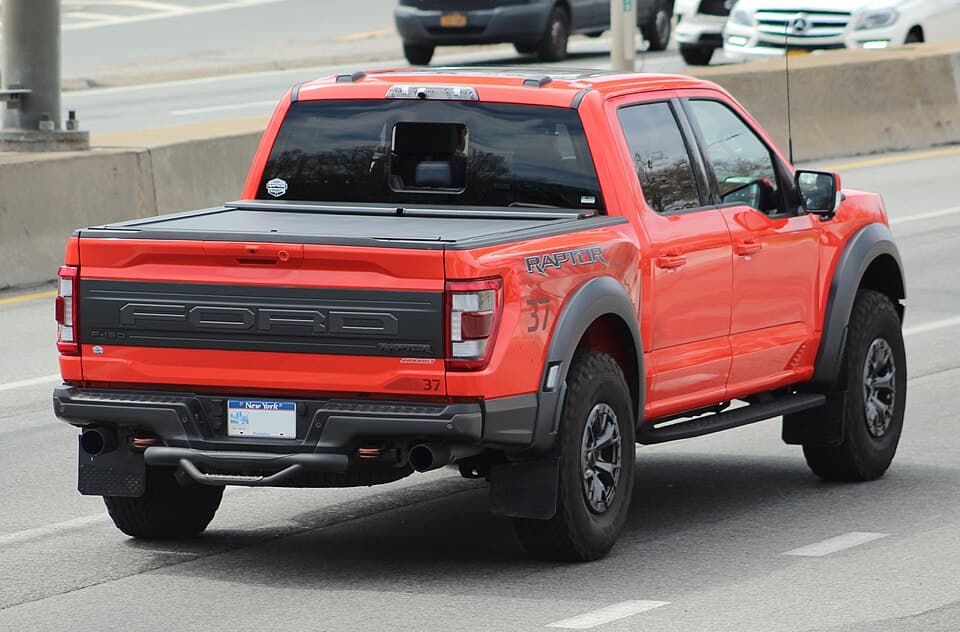
Ford's Ranger Raptor and Toyota's Tacoma TRD Pro are both factory-built off-road mid-size trucks with adaptive Fox Live Valve shocks, but they solve the same problem two different ways: the Ranger Raptor is tuned for high-speed desert running, the Tacoma TRD Pro is tuned for low-speed trail work and daily comfort. There is no flat winner here, the right truck depends on where you actually drive. If you spend most of your time on whoops and washboard, the Ranger Raptor is the better tool. If you spend most of your time crawling technical terrain or want the easier daily driver, the TRD Pro wins.
Both trucks are legitimate off-road machines, not badge-engineered trim packages, and both cost real money to get into. Here's how they actually stack up.
Powertrains: twin-turbo V6 versus turbo hybrid
The Ranger Raptor sold in the US since model year 2024 runs a 3.0L twin-turbo EcoBoost V6. We cover the full breakdown, including verified horsepower and torque figures and independently-tested 0-60 times, on the Ranger Raptor specs and engine page. The short version: it is a proper twin-turbo six with a 10-speed automatic, and it pulls hard everywhere in the rev range rather than needing a hybrid boost to fill in low-end torque.
The current Tacoma TRD Pro uses Toyota's i-FORCE MAX powertrain, a turbocharged 2.4L four-cylinder paired with an electric motor built into the transmission housing and a battery pack packaged under the rear seat. That hybrid assist is what gives the Tacoma its low-end punch, and it changes the character of the power delivery: strong immediate torque off idle, then the turbo four carries it from there.
Horsepower and torque figures on both trucks change by model year as each manufacturer runs mid-cycle updates, so do not lean on a number you saw in an older review and assume it still applies. Pull the current-year spec sheet from Ford and Toyota directly before you make a buying decision off a horsepower number. What does not change year to year is the character: the Ranger Raptor's twin-turbo six revs out and stays linear at speed, the Tacoma's hybrid four hits hard low and tapers as revs climb.
Suspension: same shock brand, different tuning philosophy
Both trucks run Fox Live Valve shocks, adaptive dampers that read wheel speed, steering input, and body motion dozens of times a second and adjust damping force in real time. That is a genuine point of convergence, both manufacturers picked the same shock technology because it's one of the few ways to get a factory truck to behave well at both low speed and high speed without a driver-adjustable dial.
Where they diverge is tuning. The Ranger Raptor's Live Valve calibration is biased toward high-speed compliance, soaking up whoops and rough desert two-track without kicking the chassis around. That bias comes at a small cost in ride quality on pavement, where the shocks are working harder than a standard Ranger's would to stay ready for the next hit.
The Tacoma TRD Pro's Live Valve tune leans toward low-speed articulation and a more compliant daily ride. It will still take a hard hit at speed without folding, but it is not chasing the same high-speed desert-running brief the Ranger Raptor is. On a slow rock crawl or a rutted forest road, the Tacoma's suspension tends to feel more settled and predictable, because that's the terrain Toyota tuned it for.
Neither truck ships with the kind of long-travel internal-bypass hardware you'd find on a full-size Raptor, like the Fox 3.0 internal bypass shocks some Gen 2 and Gen 3 owners add later, or the remote-reservoir setups tested in our King vs Fox vs ICON whoops comparison. Both are mid-size trucks with mid-size wheel travel, and both hit a ceiling in truly high-speed desert use that a full-size Raptor does not, though exactly how much front travel a full-size Raptor has depends on generation and trim, so check the F-150 Raptor generation pages rather than trust a single number quoted online.
Pricing and trims: what you actually get at each price point
Both trucks carry a real premium over a base trim of the same model, and that premium buys the same core hardware list: Fox Live Valve shocks, wider fenders, upgraded brakes, and an off-road-focused tire and wheel package.
| Ranger Raptor | Tacoma TRD Pro | |
|---|---|---|
| Powertrain | 3.0L twin-turbo EcoBoost V6 | i-FORCE MAX turbo hybrid |
| Suspension | Fox Live Valve, desert-speed bias | Fox Live Valve, low-speed bias |
| Cab configs | SuperCrew only (4-door) | Double Cab only (4-door) |
| Best use case | High-speed desert, open trail | Technical trail, rock terrain |
Verify exact MSRP and trim pricing against current Ford and Toyota configurators before you set a budget, since both trucks get annual price adjustments and regional market adjustments from dealers that can move the out-the-door number well past sticker. As a reference point for what buyers are actually paying on the Ford side, our live used-market data shows the standard Ranger (not the Raptor trim) averaging in the mid-$50,000s to low-$60,000s across recent model years, which gives you a sense of where the Raptor-badged version sits relative to the rest of the lineup once you add the performance package on top. We do not have the same live pricing feed running on Tacoma listings, so treat any Tacoma TRD Pro number you see quoted elsewhere as a starting point, not gospel, and confirm it against a dealer quote with a specific VIN or build sheet.
Neither the Ranger Raptor nor the Tacoma TRD Pro comes cheap for a mid-size truck, and that is the honest tradeoff for factory-fitted adaptive suspension and a proper off-road drivetrain instead of an aftermarket build. If you're cross-shopping against a full-size option instead, our Ranger Raptor vs F-150 Raptor breakdown covers that decision directly.
Livability: cab space, bed size, and daily driving
This is where the two trucks split the most, and it's worth reading in full before you commit. Our deep dive on Ranger Raptor cab and bed practicality covers rear seat legroom, bed length, and how the truck actually lives day to day versus a full-size F-150 Raptor.
The short version that matters for this comparison: both trucks are genuinely smaller inside than a full-size Raptor, and both ask you to give up cargo and passenger room in exchange for maneuverability and a lower price of entry. The Tacoma's Double Cab and the Ranger Raptor's SuperCrew are comparable in the back seat, neither is spacious for adults on a long trip, and both beds run shorter than a full-size truck bed. If you regularly haul four adults and gear, or tow anything substantial, that's a real constraint on both trucks, not just one.
The short version
- Ranger Raptor: twin-turbo EcoBoost V6, Fox Live Valve tuned for high-speed desert running, better pick if you spend your weekends at Glamis or open desert two-track.
- Tacoma TRD Pro: i-FORCE MAX turbo hybrid, Fox Live Valve tuned for low-speed compliance, better pick for technical trail work and a more settled daily ride.
- Both trucks share Fox Live Valve shock technology but tune it toward opposite priorities, so drive both before deciding on badge alone.
- There is no single winner across every use case. Verify current-year horsepower, torque, and MSRP directly from Ford and Toyota before you buy, since both figures move by model year and neither manufacturer holds them flat.
Deal alert
Shopping for one? Get new listings first
We sweep US dealer inventory and send you new Raptors matching your search — real listings, real asking prices, no spam.