Ford Raptor Water Pump Failure: Symptoms, Risk, and Cost
Learn about the symptoms, risk factors, and repair costs associated with internal water pump failure in Ford Raptor models with the 3.5L EcoBoost engine.
Internal water pump failure on the 3.5L EcoBoost is a timing-cover job, not a hose-and-clamp job, and that is why it costs real money. The pump sits inside the engine, driven off the timing chain, so when its seal lets go, coolant does not drip on your driveway, it mixes with the oil. Budget $1,900-3,400 for the repair, and treat any milky film on the dipstick as a reason to stop driving the truck, not a reason to top off and wait.
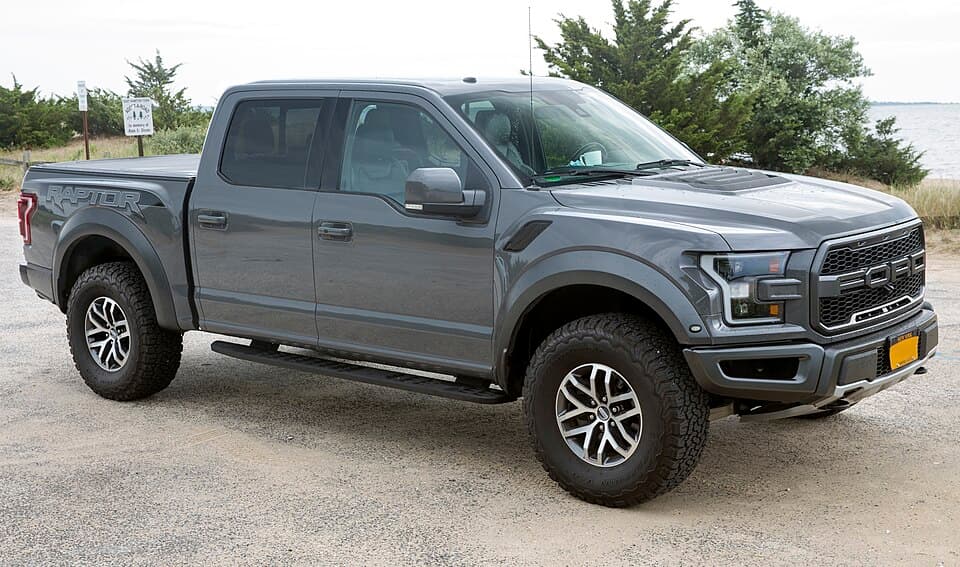
This affects the Gen 2 Raptor (2017-2020) and the Gen 3 Raptor (2021 and up), both of which run a version of the 3.5L EcoBoost V6. It does not apply to the Raptor R's supercharged 5.2L V8, the Ranger Raptor's 3.0L EcoBoost V6, or the Bronco Raptor's 3.0L EcoBoost V6, those are different engine families with different water pump layouts. If you own one of those trucks, this specific failure mode is not your problem, though it is worth reading the 3.5 EcoBoost problems by year rundown if you are cross-shopping a 3.5L truck against one of them.
Why the water pump is inside the engine in the first place
On most trucks, the water pump bolts to the outside of the block and you can see it leak. Ford's 3.5L EcoBoost does not work that way. The pump impeller lives inside the front timing cover, driven directly by the timing chain, the same chain that times the cam phasers (the variable valve timing units bolted to the front of each camshaft). That is a packaging decision Ford made to keep the front of the engine compact, and it is also why this failure is expensive: when the shaft seal on that impeller wears out, coolant does not go on the ground, it goes straight into the engine oil.
That architecture is shared with other 3.5L EcoBoost applications across the Ford lineup, not just the Raptor, so this is not a Raptor-specific quirk. It is a known characteristic of the engine family that Gen 2 and Gen 3 Raptor owners inherited along with the horsepower.
Symptoms: what you will actually notice
The two signs that point at this failure, in the order owners usually notice them:
- Coolant level drops with no visible leak. No puddle under the truck, no wet spot on the ground, the overflow tank just reads low more often than it should.
- Milky or frothy oil on the dipstick, sometimes described as looking like a chocolate milkshake, or a film under the oil cap. This is coolant emulsifying with the oil and it means the seal has already failed, not that it is about to.
Some owners also report a sweet coolant smell from the exhaust, a rising coolant temp gauge under load, or a check engine light for a lean or misfire code if enough coolant has made it into a cylinder. None of those three are guaranteed to show up, the dipstick and the coolant tank are the two things worth checking regularly.
How shops get this wrong
A shop that pressure-tests the cooling system and finds no external leak will sometimes chase a head gasket instead, because the symptom picture (coolant loss, contaminated oil, possible overheating) overlaps. The way to tell them apart without pulling the heads is a cooling system pressure test combined with an oil analysis or a straightforward look at the dipstick. If the oil is milky and the system holds pressure with no external leak, the water pump living inside the front cover is the far more likely culprit on this engine. An independent shop that has not worked on a 3.5L EcoBoost before is the one most likely to spend diagnostic hours chasing the wrong part, ask if they have done this specific job before you let them start.
Which model years and how many miles
Both the Gen 2 (2017-2020) and Gen 3 (2021+) 3.5L EcoBoost Raptors use this internal pump design, so the exposure is not limited to one generation. Owners report trouble showing up anywhere from roughly 80,000 miles on, though nobody has published a hard failure rate worth quoting, and plenty of these engines run well past 100,000 miles without an issue. Treat 80,000 miles as a point to start paying closer attention to the dipstick and coolant tank on a used truck, not as a date the pump is guaranteed to fail.
What the repair actually involves
Fixing this is not a parts-counter job. The front timing cover has to come off to get at the pump, which means the timing chain, tensioners, and often the cam phasers are disturbed in the process. A shop doing this job properly will typically:
- Remove the front cover and timing chain assembly.
- Replace the water pump and all associated seals and gaskets.
- Inspect the timing chain, guides, and phasers while everything is apart, since they are already exposed to contaminated oil.
- Flush the cooling system and do a full oil and filter change, sometimes more than one, to clear coolant-contaminated oil out of the galleys.
- Replace the oil cooler if it shows contamination, which adds to the bill.
Because the front cover job overlaps so much with cam phaser work, shops generally quote this in the range of 8-12 hours of labor as a rough estimate, longer if the engine ran on contaminated oil for a while before anyone caught it and the shop finds chain stretch or phaser wear while it is apart.
What it costs, and why the range swings
| Repair path | Labor estimate | Price range (parts and labor) | What drives the swing |
|---|---|---|---|
| Dealer | 8-12 hrs (estimate) | roughly $2,400-3,400 | OEM parts, dealer labor rate, phaser kit if worn |
| Independent shop experienced with EcoBoost | 8-12 hrs (estimate) | roughly $1,900-2,800 | Lower labor rate, aftermarket pump option |
| DIY (engine-out level skill) | parts cost plus your time | roughly $500-900 in parts | No labor cost, but requires timing chain expertise and the right tools |
These are estimates and will move with your region, your dealer's labor rate, and whether the contamination has already damaged the phasers or oil cooler. If a shop finds chain stretch or phaser rattle while the front cover is off anyway, that is worth doing at the same time rather than paying to open the engine twice, see the cam phaser rattle cost breakdown for what that adds.
DIY is realistic only if you are comfortable with timing chain work and have done front cover jobs before. Get the timing marks wrong on reassembly and you are looking at a bent valve, not a cheap mistake to walk back.
What Ford covers
Ford's powertrain warranty on these trucks runs 5 years or 60,000 miles, whichever comes first, and it covers internal engine components including the water pump if the truck is still within that window. Past 60,000 miles, this is an out-of-pocket repair unless you bought an extended service contract that specifically covers engine internals, check the terms, not the brochure. There is no widely confirmed recall for this specific failure as of this writing, check NHTSA.gov and the recall digest for your generation directly rather than trusting a forum post.
If your truck is out of warranty, calling the dealer and asking about goodwill is worth the phone call, but goodwill is discretionary, Ford does not owe it, and it is more likely to be extended on a truck with a full dealer service history than one that has been doing its own oil changes with no records. If you are deciding whether an extended plan is worth buying in the first place, the honest tradeoffs are laid out in the extended warranty breakdown.
The short version
- A milky dipstick with no visible coolant leak on a 3.5L EcoBoost Raptor means the internal water pump, not the head gasket, most likely.
- This affects Gen 2 (2017-2020) and Gen 3 (2021+) Raptors, not the Raptor R, Ranger Raptor, or Bronco Raptor.
- The fix requires pulling the front timing cover, so budget $1,900-3,400 depending on shop and whether contamination reached the phasers or oil cooler.
- Ford's powertrain warranty covers it through 5 years/60,000 miles, after that it is an out-of-pocket repair or a goodwill conversation with no guarantee attached.
- Do not keep driving on milky oil hoping it clears up. It will not, and every mile adds wear to parts that are already expensive to replace.
Deal alert
Shopping for one? Get new listings first
We sweep US dealer inventory and send you new Raptors matching your search — real listings, real asking prices, no spam.