Does a Raptor Actually Need a Lift Kit?
Most trucks wearing the word lift are running a leveling kit or a perch collar for tire clearance and looks, not a real suspension upgrade. We priced the leveling kit, the coilover path, and a true long-travel build against what each one actually does to factory geometry.
Gear in this article
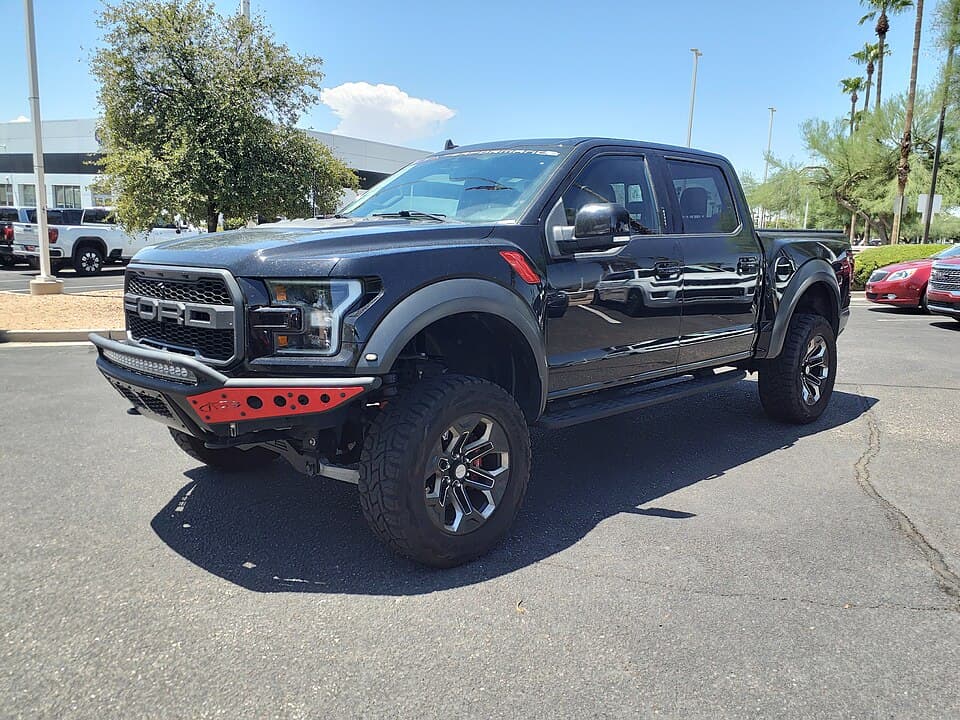
No. A stock Raptor already carries more suspension travel than almost anything you can bolt under a regular F-150, so the question is not whether to lift it, it is what you are actually trying to buy. Most trucks wearing the word "lift" are running a leveling kit or a perch collar spin for tire clearance and looks. A true long-travel lift is a different, much more expensive project, and it is not what most owners need.
| Option | What it actually is | Cost range | What it does to factory geometry |
|---|---|---|---|
| Leveling kit / strut spacer | A spacer or extended perch that raises front ride height 1.5-2 inches to match the rear | $150-500 parts, $300-700 installed | Uses up shock stroke that used to be down-travel; nothing else on the truck changes |
| Coilover upgrade (Icon 2.5 VS, King 2.5/3.0, Fox 3.0) | A better shock and spring at stock-ish ride height, with real damping adjustment | $1,900-4,600 installed | Restores or improves the travel and damping the truck already had; this is the real upgrade |
| Long-travel kit (Camburg, Geiser, ADD, Foutz-style) | New control arms, relocated mounts, often a new rear cradle, plus fiberglass fenders to clear it | $6,000-22,000+ | Genuinely increases wheel travel beyond factory geometry |
Why the Raptor case is different from a regular F-150
A base F-150 rides on twin-tube shocks tuned for a smooth highway ride and modest travel, so a 2-3 inch leveling kit or a coil spacer is a real upgrade in capability as well as looks. A Gen 2 Raptor does not start from that baseline. It ships with 13.0 inches of front travel and 13.9 inches of rear travel on Fox 3.0 internal bypass shocks (Fox 3.0 Live Valve electronic dampers from 2019 on), and a Gen 3 goes further still at 14.0 inches front and 15.0 inches rear on Fox 3.1 Live Valve shocks with remote reservoirs. That is more travel than most body-on-frame trucks get from a dedicated long-travel kit, stock, from the factory.
Ford engineered the whole chassis, control arm geometry, bump stop location, and shock valving around that travel figure. Raising the truck with a spacer does not add travel, it uses up stroke that was there to let the wheel drop away from the frame on a bad landing. On a regular F-150 a 2-inch level buys you tire clearance and not much sacrifice, because there was not much down-travel to protect in the first place. On a Raptor, that same spacer eats into the one thing you bought the truck for.
What a leveling kit or perch collar actually costs, and what it ruins if done wrong
A basic strut spacer or extended perch collar for a Raptor runs $150-500 in parts and $300-700 installed, cheap next to almost anything else in this article. What it buys is 1.5-2 inches of front ride height to match a rear that already sits slightly higher unloaded, plus room for a bigger tire.
What it costs you is down-travel. Every inch you spin the perch up or shim in with a spacer is an inch the front shock cannot compress into before the wheel hits the bump stop on a hard landing. Owners who level a Raptor and then run it hard off-road, not just drive it to the trailhead, describe a harsher bottom-out and a shock that runs hotter working a smaller window of its total stroke. It also changes the geometry the factory arms were designed around, which can add uneven tire wear depending on how the alignment shop resets caster and camber afterward. None of this makes a leveling kit a bad idea for someone who wants the stance and a slightly bigger tire and does not run whoops at speed. It makes it a cosmetic decision with a real mechanical tradeoff, not a free upgrade, and the shop doing the install should say so, not just hand you a receipt.
37s without a lift: what actually clears and what rubs
You do not need a lift to run 37s on most Raptors, and we priced that build out separately down to the dollar. The short version: a Gen 2's stock tire measures 34.6 inches, so a 37 is only about 1.2 inches more radius per corner, and the fitment is tight rather than impossible. The rub point owners report is the front tire chewing the inner fender liner at full steering lock, worst in reverse, plus occasional light contact with the lower control arm on a hard landing if you have also gone wider on the wheel. Keep the wheel width close to stock and you are trimming plastic liner. Push the wheel out for a wider stance or a beadlock and you are more likely cutting sheet metal. None of that requires raising the truck. Gen 3 sidesteps the whole conversation on the top trims, since the factory 37 Performance Package ships 37s on beadlock-capable wheels from the dealer.
The coilover upgrade path: the closest thing to a real lift
If what you actually want is a Raptor that handles bigger hits better and sits a little taller doing it, the answer is not a spacer, it is a coilover. Icon 2.5 VS coilovers run $1,900-2,700 installed and add real external compression adjustment at stock-ish ride height. King 2.5 remote reservoir coilovers run $3,200-4,600 and pull heat out of the fluid on long descents. Fox 3.0 internal bypass and King 3.0 bypass shocks, $2,600-3,900 depending on which end and which brand, ramp up damping through the stroke instead of relying on one valve stack. We ran all three brands back to back on the same Gen 2 in whoops and the results did not match the marketing pages; read the full comparison here before you buy rather than picking by logo.
None of these kits meaningfully change the truck's ride height on their own, and that is the point. They are a damping and adjustability upgrade sold at close to factory geometry, which is a better use of the same or less money than a leveling kit that trades away stroke you already own.
Long-travel kits: who they are actually for
A real long-travel kit is a different category and a different budget: new control arms that relocate the ball joints, a wider track, often a new rear cradle in place of the leaf pack, plus fiberglass fenders and bedsides to clear the wider stance the kit creates. Figure $6,000 on the low end for arms and coilovers alone, up to $22,000 or more with a full rear conversion like the Geiser race cradle kit at $6,500-9,200 installed, plus fiberglass and fender work most shops quote separately at $1,500-4,000 depending on how much cutting is involved. This is the truck for an owner running sustained desert speed above 50 mph on a regular basis, not the one who wants to look the part in the school pickup line. Most owners who buy a long-travel kit do not need it and buy it anyway; if you are not out there several weekends a season, spend that money on tires, fuel, and a shock rebuild fund instead.
Warranty and insurance, stated plainly
Bolting on a coilover or a long-travel kit does not automatically void a Raptor's factory powertrain warranty. Under the Magnuson-Moss Warranty Act, Ford has to show the aftermarket suspension part actually caused a specific failure before it can deny an unrelated engine or transmission claim. Ford is not obligated to cover the shock, spring, arm, or cradle itself, and a dealer can and will deny a suspension-adjacent claim, like a wheel bearing or a driveline vibration, if the modified geometry is a plausible cause. Tell your insurer about a long-travel conversion specifically. A cosmetic leveling kit rarely changes a premium, but a five-figure long-travel build changes the truck's replacement cost and some carriers want it declared; call before you find out at claim time.
The verdict by generation, and what a look-only buyer should do
A Gen 1 with tired factory Fox shocks gets the most out of a straight Fox 3.0 or King 3.0 swap before anything else. A Gen 2 is the sweet spot for the coilover path above, since parts availability and shop familiarity are both best on this generation. A Gen 3 already ships with more travel and, on the right trim, factory 37s, so spend first on tires and a leveling of expectations rather than a leveling kit.
If you only want the stance and a bigger tire and you are not running whoops at speed, buy a leveling kit or perch collar for $300-700, accept the down-travel tradeoff honestly, and stop there. Do not tell yourself it is a performance upgrade, and do not let a shop sell you a spacer as a substitute for a coilover when what you actually described wanting was better damping. Save the long-travel money unless you can point to the weekends that justify it.
Owner questions
- Best lift kit for Ford Raptor
- The best option is a coilover upgrade, not a spacer-based lift. Icon 2.5 VS coilovers run $1,900-2,700 installed, King 2.5 remote reservoir coilovers run $3,200-4,600, and Fox 3.0 internal bypass or King 3.0 bypass shocks run $2,600-3,900, all adding real damping adjustment near stock ride height instead of eating into factory down-travel.
- Does a Raptor actually need a lift kit?
- No. A Gen 2 Raptor already has 13.0 inches of front travel and 13.9 inches of rear travel on Fox 3.0 shocks, and Gen 3 has 14.0 inches front and 15.0 inches rear on Fox 3.1 Live Valve shocks, more than most trucks get from a dedicated long-travel kit. A leveling kit just uses up that stroke.
- Can you fit 37-inch tires on a Raptor without a lift?
- Yes, on most Raptors. A Gen 2's stock tire measures 34.6 inches, so a 37 adds only about 1.2 inches of radius per corner. Owners report the front tire chewing the inner fender liner at full steering lock, worst in reverse, but no lift is required if you keep wheel width close to stock.
- How much does a leveling kit cost and what does it hurt on a Raptor?
- A strut spacer or extended perch collar runs $150-500 in parts and $300-700 installed, raising front ride height 1.5-2 inches. It doesn't add travel, it uses up front shock down-travel before hitting the bump stop, causing harsher bottom-outs and a hotter-running shock on hard landings.
- How much does a long-travel suspension kit cost for a Raptor?
- Figure $6,000 on the low end for new control arms and coilovers alone, up to $22,000 or more with a full rear conversion. A Geiser race cradle kit runs $6,500-9,200 installed, plus fiberglass fender and bedside work most shops quote separately at $1,500-4,000.
Deal alert
Shopping for one? Get new listings first
We sweep US dealer inventory and send you new Raptors matching your search — real listings, real asking prices, no spam.